Articles By: USGovernment
U.S. Air Force Bomber Sustainment and Modernization
The United States’ existing long-range bomber fleet of B-52s, B-1s, and B-2s are at a critical point in their operational life span. With the average age of each airframe being 50, 28, and 20 years old, respectively, military analysts are beginning to question just how long these aircraft can physically last and continue to be [...]
Integration of Drones into Domestic Airspace: Selected Legal Issues
Under the FAA Modernization and Reform Act of 2012, P.L. 112-95, Congress has tasked the Federal Aviation Administration (FAA) with integrating unmanned aircraft systems (UASs), sometimes referred to as unmanned aerial vehicles (UAVs) or drones, into the national airspace system by September 2015. Although the text of this act places safety as a predominant concern, [...]
Extracting Relevance from Mountains of Data
DARPA held a multi-program performer meeting for researchers to hear presentations on the latest innovations and promising approaches in the area of Big Data and data analytics. Speakers during the day-long event included representatives from the White House, FBI, universities from across the country and leading companies from the private sector who are focused on [...]
F-35B Resumes Flight Operations
F-35B flight clearance was restored February 12, rescinding a cautionary suspension issued January 18 after a fueldraulic hose failure. Government and industry engineering teams conducted a root cause investigation and determined the hose was improperly crimped. All affected hoses have been inspected, and those out of tolerances will be replaced. The hose enables actuator movement [...]
Integration of Drones into Domestic Airspace: Selected Legal Issues
Under the FAA Modernization and Reform Act of 2012, P.L. 112-95, Congress has tasked the Federal Aviation Administration (FAA) with integrating unmanned aircraft systems (UASs), sometimes referred to as unmanned aerial vehicles (UAVs) or drones, into the national airspace system by September 2015. Although the text of this act places safety as a predominant concern, [...]
Root Cause Determination on F-35B Flight Operations Suspension
Government and industry engineering teams investigating the origins of a failed propulsion fueldraulic line on an F-35B Short Takeoff and Vertical Landing (STOVL) variant have identified the probable cause and are developing a return to flight plan to lift the suspension of flight operations. The root cause investigation ruled out any design or maintenance issues. [...]
DARPA To Launch Just-In-Time Payloads From Bottom Of Sea
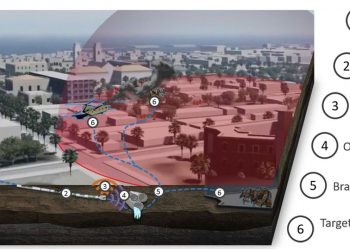
Today, cost and complexity limit the Navy to fewer weapons systems and platforms, so resources are strained to operate over vast maritime areas. Unmanned systems and sensors are commonly envisioned to fill coverage gaps and deliver action at a distance. However, for all of the advances in sensing, autonomy, and unmanned platforms in recent years, [...]
Precautionary Suspension of F-35 Flight Operations
The F-35 Joint Program Office issued a precautionary suspension of flight operations today (Friday — 18 Jan) for development and test F-35B Short Takeoff and Vertical Landing (STOVL) variants. A similar action was taken by Naval Air Systems Command for all F-35B production aircraft operating at Eglin Air Force Base, Fla.; Marine Corps Air Station [...]
Autonomous Landing Hazard Avoidance Technology
Autonomous is nearly a household word. We hear about autonomous cars, military drones and robots. But what about spacecraft? NASA is working on that – technology to autonomously land a spacecraft on Moon, Mars or even an asteroid. It’s called the Autonomous Landing Hazard Avoidance Technology, or ALHAT. ALHAT gives a landing craft the ability [...]