Thursday, March 12, 2026
  • About us
    • Write for us
    • Disclaimer
    • Terms of use
    • Privacy Policy
  • RSS Feeds
  • Advertise with us
  • Contact us
DefenceTalk
  • Home
  • Defense News
    • Defense & Geopolitics News
    • War Conflicts News
    • Army News
    • Air Force News
    • Navy News
    • Missiles Systems News
    • Nuclear Weapons
    • Defense Technology
    • Cybersecurity News
  • Military Photos
  • Defense Forum
  • Military Videos
  • Military Weapon Systems
    • Weapon Systems
    • Reports
No Result
View All Result
  • Home
  • Defense News
    • Defense & Geopolitics News
    • War Conflicts News
    • Army News
    • Air Force News
    • Navy News
    • Missiles Systems News
    • Nuclear Weapons
    • Defense Technology
    • Cybersecurity News
  • Military Photos
  • Defense Forum
  • Military Videos
  • Military Weapon Systems
    • Weapon Systems
    • Reports
No Result
View All Result
DefenceTalk
No Result
View All Result
Home Defence & Military News Air Force News

Building Toward an Unmanned Aircraft System Training Strategy

by RAND
August 4, 2014
in Air Force News
2 min read
0
Small Tactical Unmanned Air System Executes Early Operational Capability
14
VIEWS

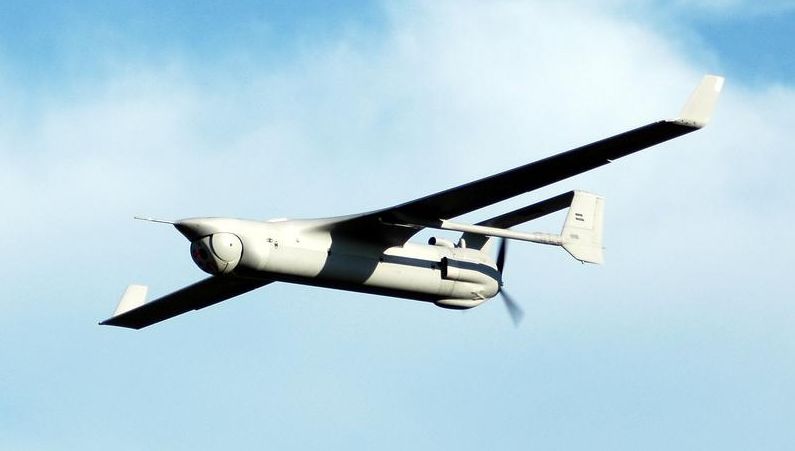
Unmanned aircraft systems (UASs) have become increasingly prevalent in and important to U.S. military operations. Initially serving only as reconnaissance or intelligence platforms, they now carry out such other missions as attacking enemy forces.

The swift expansion in their numbers and in the demand for their employment has, however, significantly increased demands on logistics and training systems. The challenge is not simply training system operators but also training operational forces and their commanders to integrate the systems into combat operations. Much of that aspect of training has thus far happened as units employ the systems in actual operations — essentially, on-the-job training.

UAS training, particularly for the employment of UASs, now needs to be integrated more formally and cost-effectively into service and joint training programs. This report develops a general concept for training military forces in employment of UASs and a framework for addressing the training requirements and discusses the limits of existing infrastructure in supporting UAS training.

Interoperability among services is another issue, because services have thus far mainly developed training suitable for their own needs. But the services have established a set of multiservice tactics, techniques, and procedures for UASs, which should facilitate interoperability training.

At present, units are not always ready for joint training, so the focus should be on improving training at the unit level in the employment of UAS capabilities, with the overall guiding principle being to “train as we fight.”

Key Findings in the Report

Each Service Needs to Resolve its Own Training Problems First

  • At this time, DoD should encourage each service to solve its own UAS training problems, incorporating the agreed multiservice tactics, techniques, and procedures.

Services Need to Address Qualification Levels

  • Army trainers have indicated that Army units are better at maintaining operator qualification for Shadows than for Ravens. Nevertheless, some units have trouble maintaining high qualification rates — some units have arrived at the NTC with one-half or fewer of their operators qualified.

Range and Beddown Space is an Issue

  • DoD should support current and future programs to develop more ranges and beddown and support facilities similar to those in the Army’s current programs.
  • As multiservice training in the employment of UAS capabilities becomes more of a priority, the Air Force’s current basing and beddown posture will become a problem. The Air Force could consider the location of Army training bases when choosing where to base its UAS fleet. Another possibility is deploying Air Force UASs and their supporting ground and launch-and-recovery elements to Army and Marine Corps training centers — essentially, the approach used now to deploy UASs for operations in theater.

Simulators Should Not Be a Priority at this Time

  • Given current budget limitations, the current state of UAS simulator technology, the importance of fully developing the opportunities for live training, and the relatively low cost of such training, diverting funds to a research and development program to develop combat simulators would seem to be unwise at this time.

Recommendations

  • Promulgate a training strategy focused on preparing operational forces to capitalize on UAS capabilities, built on a foundation of home station training as a prerequisite for multiservice interoperability training at the major maneuver training centers.
  • Support the services in building out the training infrastructure at home station.
  • Undertake a full cost and effectiveness analysis before proceeding on any investment for new UAS simulators.


Building Toward an Unmanned Aircraft System Training Strategy (618 downloads)
Tags: RANDtrainingUASUnmanned Aerial Vehicleunmanned aircraft system
Previous Post

Exercise RIMPAC Draws Australia Closer to Amphibious Future

Next Post

MD 530G Helicopter Fires Laser-Guided Rockets

Related Posts

Sikorsky Ramps Up Production of New Variant S-92 Helicopter

Sikorsky Ramps Up Production of New Variant S-92 Helicopter

March 9, 2026

Sikorsky, a Lockheed Martin company (NYSE: LMT) is preparing to build the first production batch of S-92A+™ helicopters, the latest...

Northrop Grumman Expands Aircraft Protection to Germany

Northrop Grumman Expands Aircraft Protection to Germany

March 9, 2026

For the first time, Northrop Grumman (NYSE: NOC) is providing its Common Infrared Countermeasures (CIRCM) system to Germany, reinforcing the...

Next Post
MD 530G Helicopter Fires Laser-Guided Rockets

MD 530G Helicopter Fires Laser-Guided Rockets

Latest Defense News

Israel cancels leave for combat units after Iran consulate strike

US says Iran campaign cost $11 billion in six days

March 12, 2026
US moves closer to retaliation over hacking as cyber woes grow

Cyberattack Disrupts Operations at MedTech Giant Stryker

March 11, 2026
Lebanon says Israeli strike kills 3 journalists

Israel strikes central Beirut as Lebanon death toll tops 630

March 11, 2026

Patriot missile defense system deployed in central Turkey

March 10, 2026
Iran unveils ballistic missile, ‘new generation’ engines

Iran says missile attacks to continue, US talks ‘not on agenda’

March 10, 2026
OpenAI robotics manager resigns over Pentagon deal

OpenAI robotics manager resigns over Pentagon deal

March 10, 2026

Defense Forum Discussions

  • German Bundeswehr
  • Australian Army Discussions and Updates
  • Royal Canadian Air Force (RCAF) News and Discussions
  • NATO Airbus A330 Taker KC-30A MRTT Multinational MRTT Fleet T-057 takeoff at RAF Fairford
  • Middle East Defence & Security
  • Indonesia: 'green water navy'
  • ADF General discussion thread
  • Military Aviation News and Discussion
  • The Russian-Ukrainian War Thread
  • The Indonesian Army
DefenceTalk

© 2003-2020 DefenceTalk.com

Navigate Site

  • Defence Forum
  • Military Photos
  • RSS Feeds
  • About us
  • Advertise with us
  • Contact us

Follow Us

No Result
View All Result
  • Home
  • Defense News
    • Defense & Geopolitics News
    • War Conflicts News
    • Army News
    • Air Force News
    • Navy News
    • Missiles Systems News
    • Nuclear Weapons
    • Defense Technology
    • Cybersecurity News
  • Military Photos
  • Defense Forum
  • Military Videos
  • Military Weapon Systems
    • Weapon Systems
    • Reports

© 2003-2020 DefenceTalk.com