Monday, March 23, 2026
  • About us
    • Write for us
    • Disclaimer
    • Terms of use
    • Privacy Policy
  • RSS Feeds
  • Advertise with us
  • Contact us
DefenceTalk
  • Home
  • Defense News
    • Defense & Geopolitics News
    • War Conflicts News
    • Army News
    • Air Force News
    • Navy News
    • Missiles Systems News
    • Nuclear Weapons
    • Defense Technology
    • Cybersecurity News
  • Military Photos
  • Defense Forum
  • Military Videos
  • Military Weapon Systems
    • Weapon Systems
    • Reports
No Result
View All Result
  • Home
  • Defense News
    • Defense & Geopolitics News
    • War Conflicts News
    • Army News
    • Air Force News
    • Navy News
    • Missiles Systems News
    • Nuclear Weapons
    • Defense Technology
    • Cybersecurity News
  • Military Photos
  • Defense Forum
  • Military Videos
  • Military Weapon Systems
    • Weapon Systems
    • Reports
No Result
View All Result
DefenceTalk
No Result
View All Result
Home Defence & Military News Technology News

New Missile Warning Satellite Delivers First Infrared Imagery

by Lockheed Martin
July 11, 2011
in Technology News
2 min read
0
New Missile Warning Satellite Delivers First Infrared Imagery
14
VIEWS

SBIRS GEO-1 Satellite to Provide a Quantum Leap in Infrared Surveillance Capabilities

The first Lockheed Martin built Space Based Infrared System (SBIRS) geosynchronous (GEO-1) spacecraft beamed down its first infrared image on June 21 to the SBIRS ground station. Following its May 7 launch, the satellite is performing as expected, and is now undergoing early orbit testing.

The U.S. Air Force’s SBIRS GEO-1 spacecraft is the most technologically advanced military infrared satellite ever developed. The system will enhance the military’s ability to detect missile launches around the globe, support the nation’s ballistic missile defense system, greatly expand technical intelligence gathering capability, and bolster situational awareness for warfighters on the battlefield.

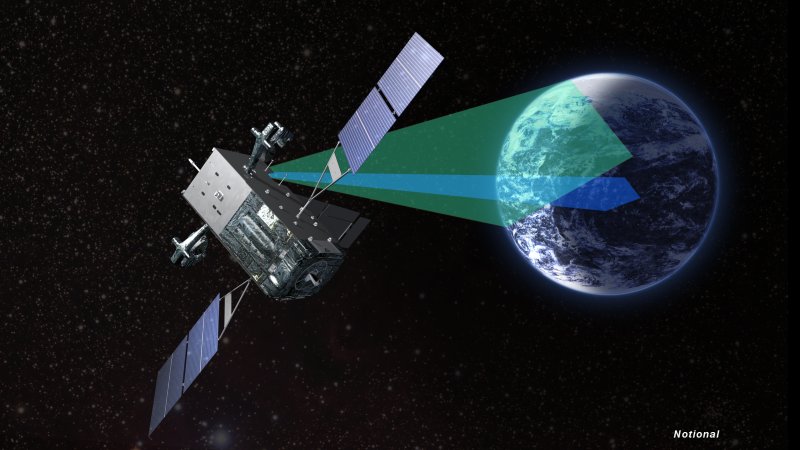
The satellite includes highly sophisticated scanning and staring sensors that deliver improved infrared sensitivity and a reduction in area revisit times over the current constellation. The scanning sensor will provide a wide area surveillance of missile launches and natural phenomena across the earth, while the staring sensor will be used to observe smaller areas of interest with superior sensitivity.

“We are tremendously proud of Team SBIRS for their superb efforts to initialize the Air Force’s newest, most capable infrared payload,” said Col. Mike Noble, Deputy Director of the U.S. Air Force Space and Missile Systems Center’s Infrared Space Systems Directorate. “This is another important milestone for the SBIRS’ Air Force and industry team. Successful payload activation is a major step toward fielding the all-new GEO capabilities for the nation and joint warfighters.”

After launch, the U.S. Air Force/Lockheed Martin SBIRS ground team executed a series of six Liquid Apogee Engine (LAE) burns to propel the spacecraft to its geosynchronous orbital slot. The team then deployed the satellite’s solar arrays, light shade and antenna wing assemblies. Most recently, the team opened the satellite’s payload doors and activated its sophisticated infrared sensors to begin the start of early orbit calibration and testing.

“SBIRS GEO-1 is performing flawlessly thus far, and the first image sent from the satellite is outstanding,” said Jeff Smith, vice president of Lockheed Martin’s Overhead Persistent Infrared (OPIR) mission area. “We are focused on executing an efficient and thorough checkout of the spacecraft and ultimately delivering unprecedented infrared surveillance capabilities to our nation.”

The SBIRS team is led by the Infrared Space Systems Directorate at the U.S. Air Force Space and Missile Systems Center. Lockheed Martin is the SBIRS prime contractor, with Northrop Grumman as the payload integrator. Air Force Space Command operates the SBIRS system.

Lockheed Martin’s original SBIRS contract includes HEO payloads, two geosynchronous orbit (GEO) satellites, as well as ground-based assets to receive and process the infrared data. The team is also under a follow-on production contract to deliver additional HEO payloads and the third and fourth GEO satellites, and associated ground modifications.

Headquartered in Bethesda, Md., Lockheed Martin is a global security company that employs about 126,000 people worldwide and is principally engaged in the research, design, development, manufacture, integration and sustainment of advanced technology systems, products and services. The Corporation’s 2010 sales from continuing operations were $45.8 billion.


Tags: GEO-1infraredlockheed martinmissileMissile WarningsatelliteSBIRS
Previous Post

Iran says fired missiles into Indian Ocean

Next Post

Pakistan military rejects ‘mischievous’ NYT reports

Related Posts

US needs top cyber coordinator, better hacker ‘deterrence’

‘Digital fog of war’ around Iranian cyberattacks

March 13, 2026

Hostilities on the digital front have intensified since the outbreak of war between the US, Israel and Iran, with many...

US moves closer to retaliation over hacking as cyber woes grow

Cyberattack Disrupts Operations at MedTech Giant Stryker

March 11, 2026

A cybersecurity incident affecting Stryker Corporation—one of the world’s largest manufacturers of medical devices—has drawn renewed attention to the growing...

Next Post
Pakistan: troops attack Taliban, half million flee

Pakistan military rejects 'mischievous' NYT reports

Latest Defense News

US needs top cyber coordinator, better hacker ‘deterrence’

‘Digital fog of war’ around Iranian cyberattacks

March 13, 2026
US military says aircraft crash in Iraq killed 4 crew members

US military says aircraft crash in Iraq killed 4 crew members

March 13, 2026
Northrop Grumman moves to boost B-21 Raider output

Northrop Grumman moves to boost B-21 Raider output

March 13, 2026
US Navy evacuates virus-struck aircraft carrier Roosevelt

US military ‘not ready’ to escort tankers through Hormuz Strait

March 12, 2026
Israel cancels leave for combat units after Iran consulate strike

US says Iran campaign cost $11 billion in six days

March 12, 2026
US moves closer to retaliation over hacking as cyber woes grow

Cyberattack Disrupts Operations at MedTech Giant Stryker

March 11, 2026

Defense Forum Discussions

  • Royal New Zealand Navy Discussions and Updates
  • Middle East Defence & Security
  • cyber warfare and attacks
  • Military Aviation News and Discussion
  • Turkish Air Force - Türk Hava Kuvvetleri
  • The Russian-Ukrainian War Thread
  • Royal Australian Air Force [RAAF] News, Discussions and Updates
  • Royal Australian Navy Discussions and Updates 2.0
  • Indonesia: 'green water navy'
  • Russia - General Discussion.
DefenceTalk

© 2003-2020 DefenceTalk.com

Navigate Site

  • Defence Forum
  • Military Photos
  • RSS Feeds
  • About us
  • Advertise with us
  • Contact us

Follow Us

No Result
View All Result
  • Home
  • Defense News
    • Defense & Geopolitics News
    • War Conflicts News
    • Army News
    • Air Force News
    • Navy News
    • Missiles Systems News
    • Nuclear Weapons
    • Defense Technology
    • Cybersecurity News
  • Military Photos
  • Defense Forum
  • Military Videos
  • Military Weapon Systems
    • Weapon Systems
    • Reports

© 2003-2020 DefenceTalk.com