Sunday, April 26, 2026
  • About us
    • Write for us
    • Disclaimer
    • Terms of use
    • Privacy Policy
  • RSS Feeds
  • Advertise with us
  • Contact us
DefenceTalk
  • Home
  • Defense News
    • Defense & Geopolitics News
    • War Conflicts News
    • Army News
    • Air Force News
    • Navy News
    • Missiles Systems News
    • Nuclear Weapons
    • Defense Technology
    • Cybersecurity News
  • Military Photos
  • Defense Forum
  • Military Videos
  • Military Weapon Systems
    • Weapon Systems
    • Reports
No Result
View All Result
  • Home
  • Defense News
    • Defense & Geopolitics News
    • War Conflicts News
    • Army News
    • Air Force News
    • Navy News
    • Missiles Systems News
    • Nuclear Weapons
    • Defense Technology
    • Cybersecurity News
  • Military Photos
  • Defense Forum
  • Military Videos
  • Military Weapon Systems
    • Weapon Systems
    • Reports
No Result
View All Result
DefenceTalk
No Result
View All Result
Home Defence & Military News Navy News

Flight Control Software to Help Pilots Stick Landings Aboard Carrier Decks

by US Navy
October 24, 2011
in Navy News
2 min read
0
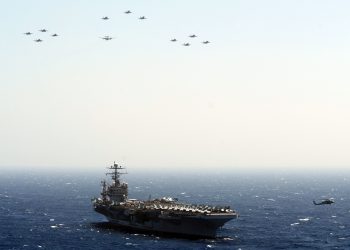
Navy UCAS Achieves Milestone Aboard Eisenhower
14
VIEWS

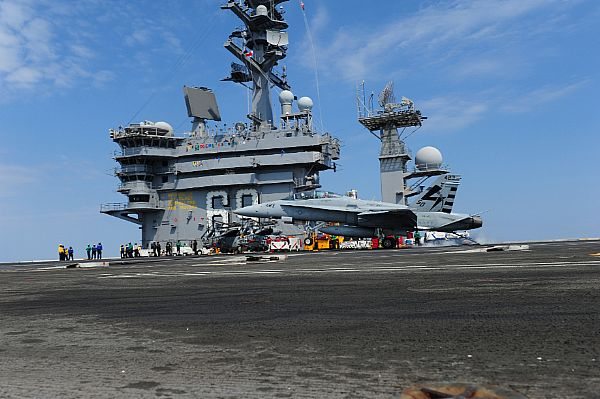
Select pilots in early 2012 will commence testing new flight control software, funded in part by the Office of Naval Research (ONR), intended to facilitate aircraft landings on Navy carrier decks with unprecedented accuracy.

“The precision that we can bring to carrier landings in the future will be substantial,” said Michael Deitchman, deputy chief of naval research for naval air warfare and weapons. “The flight control algorithm has the potential to alter the next 50 years of how pilots land on carrier decks.”

Navy and Marine Corps aviators conducting carrier landings today line up with a moving flight deck in a complicated process. They must constantly adjust their speed and manipulate the aircraft’s flight control surfaces-ailerons, rudders and elevators-to maintain the proper glide path and alignment to the flight deck for an arrested landing. Throughout their approach, pilots eye a set of lights-known as the Fresnel lens-located on the left side of the ship. It signals whether they are coming in too high or too low.

The new algorithm embedded in the flight control software augments the landing approach. Coupled with an experimental shipboard light system called a Bedford Array and accompanying cockpit heads-up display symbols, the software ties the movement of the pilot’s control stick directly to the aircraft’s flight path. Instead of constantly adjusting the plane’s trajectory indirectly through attitude changes, the pilot maneuvers the aircraft to project a dotted green line in the heads-up display over a target light shining in the landing area.

“It is almost like a video game,” said James “Buddy” Denham, the senior engineer who has been leading the research and development efforts at Naval Air Systems Command. “You’re tracking a shipboard stabilized visual target with a flight path reference, and the airplane knows what it needs to do to stay there.”

ONR funded the project as part of its focus on sea-based aviation, one of five Navy and Marine Corps research areas designated as a national naval responsibility.

The software has been incorporated into an F/A-18 E/F Super Hornet flight simulator. Researchers plan to conduct a study with U.S. Navy pilots and British Royal Navy pilots who will fly the simulator to obtain data on workload reduction and touchdown performance. Once the results are tabulated, the engineers plan to integrate the refined algorithm onto an actual aircraft for flight tests and demonstrations.

If the tests are successful, the software could be integrated aboard current and future aircraft to change the way carrier-based aviators have landed aboard ships for more than half a century-controlled crash landings. Increasing the precision of landings will boost pilot safety and reduce training requirements necessary to perfect carrier-landing skills. It could lower aircraft life cycle costs by reducing maintenance and avoiding repairs caused by hard landings.

ONR provides the science and technology necessary to maintain the Navy and Marine Corps’ technological advantage. Through its affiliates, ONR is a leader in science and technology with engagement in 50 states, 70 countries, 1,035 institutions of higher learning and 914 industry partners. ONR employs approximately 1,400 people, comprising uniformed, civilian and contract personnel, with additional employees at the Naval Research Lab in Washington, D.C.
Tags: aircraft carrierFlight ControlNavy & Maritime Security Newspilotssoftwaretraining
Previous Post

Army, Lockheed Demonstrate Multi-Sensor Situational Awareness Technology

Next Post

US Air Force Short-lists Three Bases for UAV Squadron

Related Posts

US Navy evacuates virus-struck aircraft carrier Roosevelt

US military ‘not ready’ to escort tankers through Hormuz Strait

March 12, 2026

The US military is currently "not ready" to escort tankers through the critical Strait of Hormuz because all its assets...

North Korea’s Kim oversees naval destroyer, cruise missile test

North Korea’s Kim oversees naval destroyer, cruise missile test

March 6, 2026

North Korean leader Kim Jong Un oversaw tests this week of his country's naval destroyer, claiming Pyongyang is in the...

Next Post
US Air Force Short-lists Three Bases for UAV Squadron

US Air Force Short-lists Three Bases for UAV Squadron

Latest Defense News

US needs top cyber coordinator, better hacker ‘deterrence’

‘Digital fog of war’ around Iranian cyberattacks

March 13, 2026
US military says aircraft crash in Iraq killed 4 crew members

US military says aircraft crash in Iraq killed 4 crew members

March 13, 2026
Northrop Grumman moves to boost B-21 Raider output

Northrop Grumman moves to boost B-21 Raider output

March 13, 2026
US Navy evacuates virus-struck aircraft carrier Roosevelt

US military ‘not ready’ to escort tankers through Hormuz Strait

March 12, 2026
Israel cancels leave for combat units after Iran consulate strike

US says Iran campaign cost $11 billion in six days

March 12, 2026
US moves closer to retaliation over hacking as cyber woes grow

Cyberattack Disrupts Operations at MedTech Giant Stryker

March 11, 2026

Defense Forum Discussions

  • Royal Canadian Navy Discussions and updates
  • ADF General discussion thread
  • Germany
  • Middle East Defence & Security
  • Indonesia: 'green water navy'
  • US Navy News and updates
  • Russian Navy Discussions and Updates
  • NZDF General discussion thread
  • Royal New Zealand Navy Discussions and Updates
  • Royal Australian Air Force [RAAF] News, Discussions and Updates
DefenceTalk

© 2003-2020 DefenceTalk.com

Navigate Site

  • Defence Forum
  • Military Photos
  • RSS Feeds
  • About us
  • Advertise with us
  • Contact us

Follow Us

No Result
View All Result
  • Home
  • Defense News
    • Defense & Geopolitics News
    • War Conflicts News
    • Army News
    • Air Force News
    • Navy News
    • Missiles Systems News
    • Nuclear Weapons
    • Defense Technology
    • Cybersecurity News
  • Military Photos
  • Defense Forum
  • Military Videos
  • Military Weapon Systems
    • Weapon Systems
    • Reports

© 2003-2020 DefenceTalk.com