Saturday, April 18, 2026
  • About us
    • Write for us
    • Disclaimer
    • Terms of use
    • Privacy Policy
  • RSS Feeds
  • Advertise with us
  • Contact us
DefenceTalk
  • Home
  • Defense News
    • Defense & Geopolitics News
    • War Conflicts News
    • Army News
    • Air Force News
    • Navy News
    • Missiles Systems News
    • Nuclear Weapons
    • Defense Technology
    • Cybersecurity News
  • Military Photos
  • Defense Forum
  • Military Videos
  • Military Weapon Systems
    • Weapon Systems
    • Reports
No Result
View All Result
  • Home
  • Defense News
    • Defense & Geopolitics News
    • War Conflicts News
    • Army News
    • Air Force News
    • Navy News
    • Missiles Systems News
    • Nuclear Weapons
    • Defense Technology
    • Cybersecurity News
  • Military Photos
  • Defense Forum
  • Military Videos
  • Military Weapon Systems
    • Weapon Systems
    • Reports
No Result
View All Result
DefenceTalk
No Result
View All Result
Home Defence & Military News Missile News

Anti-Ballistic Missile Treaty Between USSR, US in Details

by Editor
December 17, 2014
in Missile News
2 min read
0
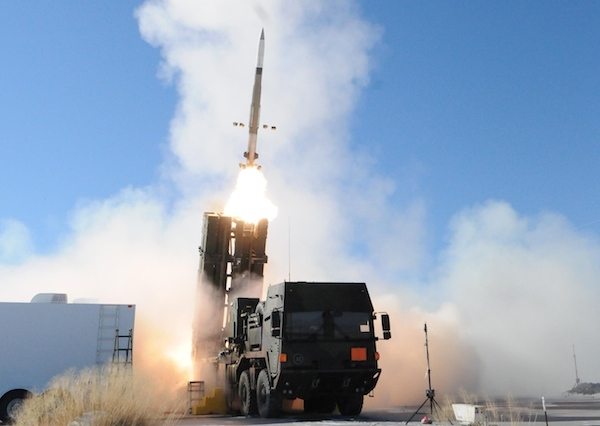
Unprecedented Dual Intercept Success for Meads at White Sands Missile Range
14
VIEWS

On December 13, 2002, US President George W. Bush announced that the United States will unilaterally withdraw from the Anti-Ballistic Missile (ABM) Treaty with the USSR. The Anti-Ballistic Missile Treaty (ABM Treaty) between the Soviet Union and the United States was signed on May 26, 1972 in Moscow and entered into force on October 3, 1972.

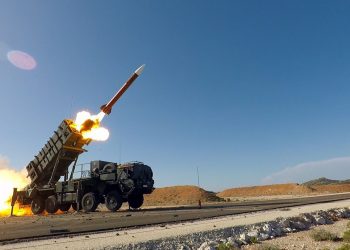
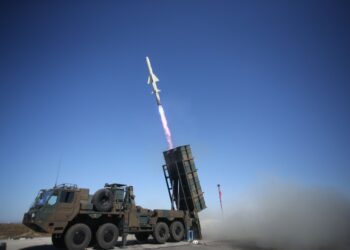
The treaty barred the parties from deploying anti-ballistic missile systems that could cover the entire territory of their countries, or providing a base for such broad-range defense.

The Treaty obligated the parties to limit their deployed ABM systems to two sites: one within a circle of 150-kilometer radius around the national capital, and the other within a circle of 150-kilometer radius around intercontinental ballistic missile (ICBM) silo launchers.

Within each of these sites the parties could deploy no more than 100 ABM launchers and no more than 100 ABM interceptor missiles.

These limitations did not apply to ABM systems used for development or testing, nor those located within agreed test ranges, where each party could have no more that a total of 15 ABM launchers. In addition, the treaty also limited the number and capacity of ABM radars.

The treaty allowed the deployment of fixed land-based defense ABM systems only. Both counties undertook not to develop, test, or deploy sea-based, air-based, space-based and mobile land-based ABM systems or components.

The parties also agreed not to develop, test or deploy ABM launchers for firing more than one ABM interceptor missile at a time from each launcher, as well as automatic or semi-automatic or other similar systems for rapid reload of ABM launchers.

The parties pledged not to transfer to other states and not to deploy outside their national territory ABM systems or their components limited by the ABM Treaty.

Compliance with the treaty was to be assured using national technical means of verification in a manner consistent with generally recognized principles of international law.

The treaty was of unlimited duration, but stipulated that each party had a right to withdraw if it decided that extraordinary events related to the subject matter of the treaty had jeopardized its supreme interests.

On July 3, 1974 the parties signed in Moscow a Protocol to the ABM Treaty, which reduced the number of sites to one per party. The Soviet Union pledged not to deploy ABM systems or their components around ICBM silo launchers, and the United States pledged not to deploy ABM systems or their components around the national capital.

For 30 years, the ABM Treaty served as the foundation of the existing system of international agreements on the limitation and reduction of strategic offensive weapons. Russia consistently advocated the continuation of the treaty. Its value has been repeatedly recognized by the international community. For three years in a row, the UN General Assembly overwhelmingly voted for a resolution to support the continuation of and compliance with the ABM Treaty at its 54th, 55th and 56th sessions in 1999-2001.

On December 13, 2001, President George W. Bush announced that the United States was unilaterally withdrawing from the Treaty. On June 13, 2002, the Treaty became invalid.
Tags: anti-ballistic missile treatymissile defensemissile treaty
Previous Post

Army installs first Ground-Based Sense-and-Avoid radar

Next Post

Future Russian Attack Submarines to Keep Double-Hull Design

Related Posts

Patriot missile defense system deployed in central Turkey

March 10, 2026

Turkey said Tuesday a Patriot missile defence system was being deployed in the centre of the country, a day after...

Japan to deploy counter-strike missiles closer to China

Japan to deploy counter-strike missiles closer to China

March 9, 2026

Japan will deploy a batch of long-range, counter-strike missiles in a southwest region near China by the end of March,...

Next Post
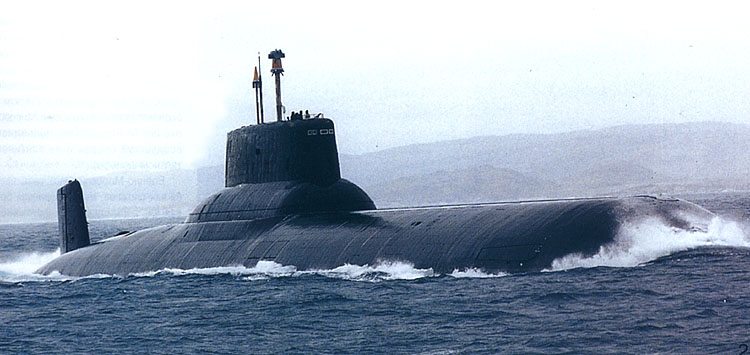
Typhoon class submarines to remain in service with Russian Navy

Future Russian Attack Submarines to Keep Double-Hull Design

Latest Defense News

US needs top cyber coordinator, better hacker ‘deterrence’

‘Digital fog of war’ around Iranian cyberattacks

March 13, 2026
US military says aircraft crash in Iraq killed 4 crew members

US military says aircraft crash in Iraq killed 4 crew members

March 13, 2026
Northrop Grumman moves to boost B-21 Raider output

Northrop Grumman moves to boost B-21 Raider output

March 13, 2026
US Navy evacuates virus-struck aircraft carrier Roosevelt

US military ‘not ready’ to escort tankers through Hormuz Strait

March 12, 2026
Israel cancels leave for combat units after Iran consulate strike

US says Iran campaign cost $11 billion in six days

March 12, 2026
US moves closer to retaliation over hacking as cyber woes grow

Cyberattack Disrupts Operations at MedTech Giant Stryker

March 11, 2026

Defense Forum Discussions

  • Royal Australian Air Force [RAAF] News, Discussions and Updates
  • ADF General discussion thread
  • Royal Australian Navy Discussions and Updates 2.0
  • Australian Army Discussions and Updates
  • Royal New Zealand Navy Discussions and Updates
  • China - Geostrategic & Geopolitical.
  • Indonesian Aero News
  • The Russian-Ukrainian War Thread
  • Indonesia: 'green water navy'
  • Middle East Defence & Security
DefenceTalk

© 2003-2020 DefenceTalk.com

Navigate Site

  • Defence Forum
  • Military Photos
  • RSS Feeds
  • About us
  • Advertise with us
  • Contact us

Follow Us

No Result
View All Result
  • Home
  • Defense News
    • Defense & Geopolitics News
    • War Conflicts News
    • Army News
    • Air Force News
    • Navy News
    • Missiles Systems News
    • Nuclear Weapons
    • Defense Technology
    • Cybersecurity News
  • Military Photos
  • Defense Forum
  • Military Videos
  • Military Weapon Systems
    • Weapon Systems
    • Reports

© 2003-2020 DefenceTalk.com