Top U.S. and South Korean military leaders spoke to reporters yesterday at Osan Air Base near the South Korean capital of Seoul to reinforce the alliance between the two countries and their combined resolve to deter North Korean threats.
In attendance were Army Gen. Vincent K. Brooks, commander of U.S. Forces Korea, Combined Forces Command and United Nations Command; Navy Adm. Harry Harris, commander of U.S. Pacific Command; and Air Force Gen. John E. Hyten, commander of U.S. Strategic Command.
Also at the briefing were Air Force Lt. Gen. Samuel A. Greaves, director of the U.S. Missile Defense Agency; Army Brig. Gen. Sean Gainey, commanding general of the 94th Army Air and Missile Defense Command in Hawaii; and South Korean Gen. Kim Byeong-joo, deputy commander of Combined Forces Command.
“Each of these leaders is important to us,” Brooks told local and international media members, “and they are here to have a firsthand look at our daily efforts in preserving the armistice and also in our daily efforts to be prepared to defend the Republic of Korea.”
NORTH KOREAN PROVOCATIONS
The briefing comes amid a series of provocations by North Korean leader Kim Jong Un — 28 in the past 18 months, Brooks said, including two nuclear tests.
Kim also threatened to launch missiles into the waters near the U.S. territory of Guam in the western Pacific Ocean in response to an annual joint U.S.-South Korea computer-simulated defensive exercise, Ulchi- Freedom Guardian, that began Aug. 21 and ends Aug. 28. But on Aug. 15, Kim apparently changed his mind about launching the missiles, according to media reports.
“Having a pause in provocations is always a good thing,” Brooks said. “That means there may be some success in the diplomatic efforts. But these decisions really have to be left up to Kim Jong Un.”
In the meantime, the general added, “We’re going to exercise, because we need to be ready. We’re a professional force, [and] this is an alliance of two very professional militaries supported by a broader coalition of the United Nations Command, and being [ready] to fight tonight if we have to is what we’ll do. … And we would certainly hope that Kim Jong Un would make wise decisions about that.”
MISSILE DEFENSE
In response to questions from reporters, PACOM’s Harris said he had complete confidence in the capability of U.S. weapons systems developed to defend the U.S. homeland and those of South Korea and other allies.
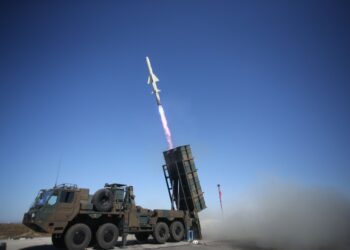
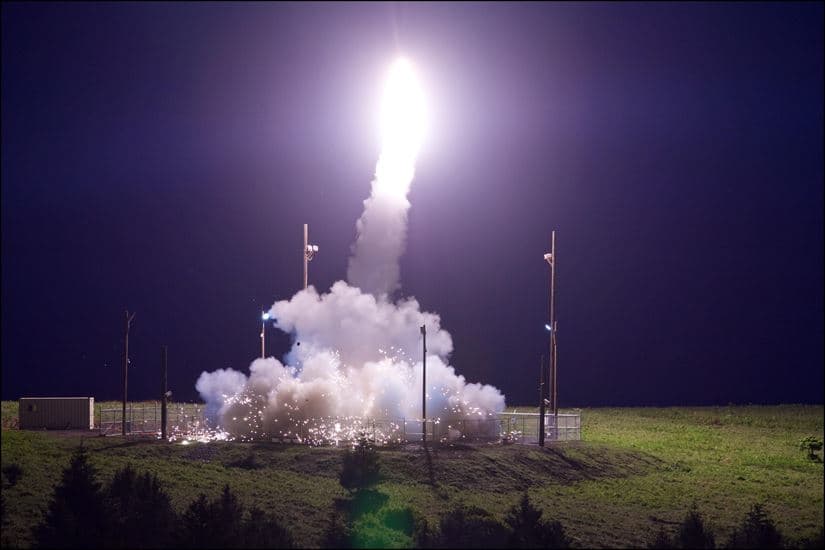
“We have had 15 tests of THAAD, [and] we’ve had 15 successes,” he said, referring to the terminal high-altitude area defense element that’s part of the Missile Defense Agency’s Ballistic Missile Defense System, or BMDS.
THAAD gives the BMDS a globally transportable and quickly deployable capability to intercept and destroy adversaries’ ballistic missiles inside or outside the atmosphere during the final, or terminal, phase of flight.
“I’m not a mathematician, but that’s almost like 100 percent,” Harris added. “So I’m confident in our ability to destroy any missiles that come into our defended area, which is important. If it’s not going to be in our defended area, then why waste an asset to shoot it down?”
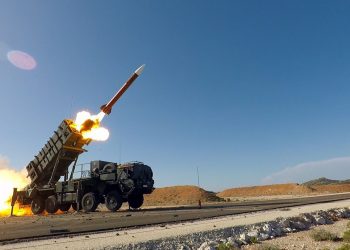
Also in the region, Harris said, are ballistic missile defense destroyers and cruisers that are part of the layered defense in depth, as are Patriot missile batteries deployed in South Korea, and now, THAAD.
“That’s why we have Patriot here,” he added. “That’s why, in conjunction with the Republic of Korea, the alliance decision was made to bring THAAD onto the peninsula, into South Korea. Because it’s part of an entire defense in-depth scheme.”
PROVIDING OPTIONS
STRATCOM’s Hyten said that dealing with threats from North Korea is a joint problem that the United States and its South Korean allies will work on together.
“I’m a supporting commander to General Brooks and the Combined Forces Command. I provide all the capabilities that Strategic Command has in order to provide him options to deal with” situations such as the North Korean threat, Hyten added.
STRATCOM’s capabilities include space, cyber, deterrence and missile defense, he said.
“We provide all those [capabilities] that give General Brooks options, … and then we work it inside the alliance to develop a collective defense of the peninsula. All those options will be considered by our military leadership and our political leadership,” the general said.
Hyten also expressed confidence in U.S. missile defense capabilities and those deployed in South Korea.
“Our missile defense capabilities that are deployed both in Alaska and in California have the ability to intercept any threat against the United States,” Hyten said, adding that he’s very confident in the capabilities deployed in South Korea — sea-based, Patriots and THAAD.
Greaves, the Missile Defense Agency director, said that great pains are taken with the systems MDA deploys, including Patriot and THAAD, “to design, build and test them both in a software lab with hardware in the loop, as we call it, as well as actual flight tests under very credible conditions.”
Operational testers in the Defense Department help craft those tests, set the metrics and “assess how well we’ve done against the threat that we were testing against,” Greaves said.
“From beginning to end,” he added, “these tests are credible, they’re robust and they’ve visibly demonstrated our ability to defend the area that the operational commanders have assigned.”