Monday, April 6, 2026
  • About us
    • Write for us
    • Disclaimer
    • Terms of use
    • Privacy Policy
  • RSS Feeds
  • Advertise with us
  • Contact us
DefenceTalk
  • Home
  • Defense News
    • Defense & Geopolitics News
    • War Conflicts News
    • Army News
    • Air Force News
    • Navy News
    • Missiles Systems News
    • Nuclear Weapons
    • Defense Technology
    • Cybersecurity News
  • Military Photos
  • Defense Forum
  • Military Videos
  • Military Weapon Systems
    • Weapon Systems
    • Reports
No Result
View All Result
  • Home
  • Defense News
    • Defense & Geopolitics News
    • War Conflicts News
    • Army News
    • Air Force News
    • Navy News
    • Missiles Systems News
    • Nuclear Weapons
    • Defense Technology
    • Cybersecurity News
  • Military Photos
  • Defense Forum
  • Military Videos
  • Military Weapon Systems
    • Weapon Systems
    • Reports
No Result
View All Result
DefenceTalk
No Result
View All Result
Home Defence & Military News Air Force News

US Air Force Tests New Rotor Design for F-35 Engine

by Air Force News Agency
January 22, 2020
in Air Force News
3 min read
0
US Air Force Tests New Rotor Design for F-35 Engine

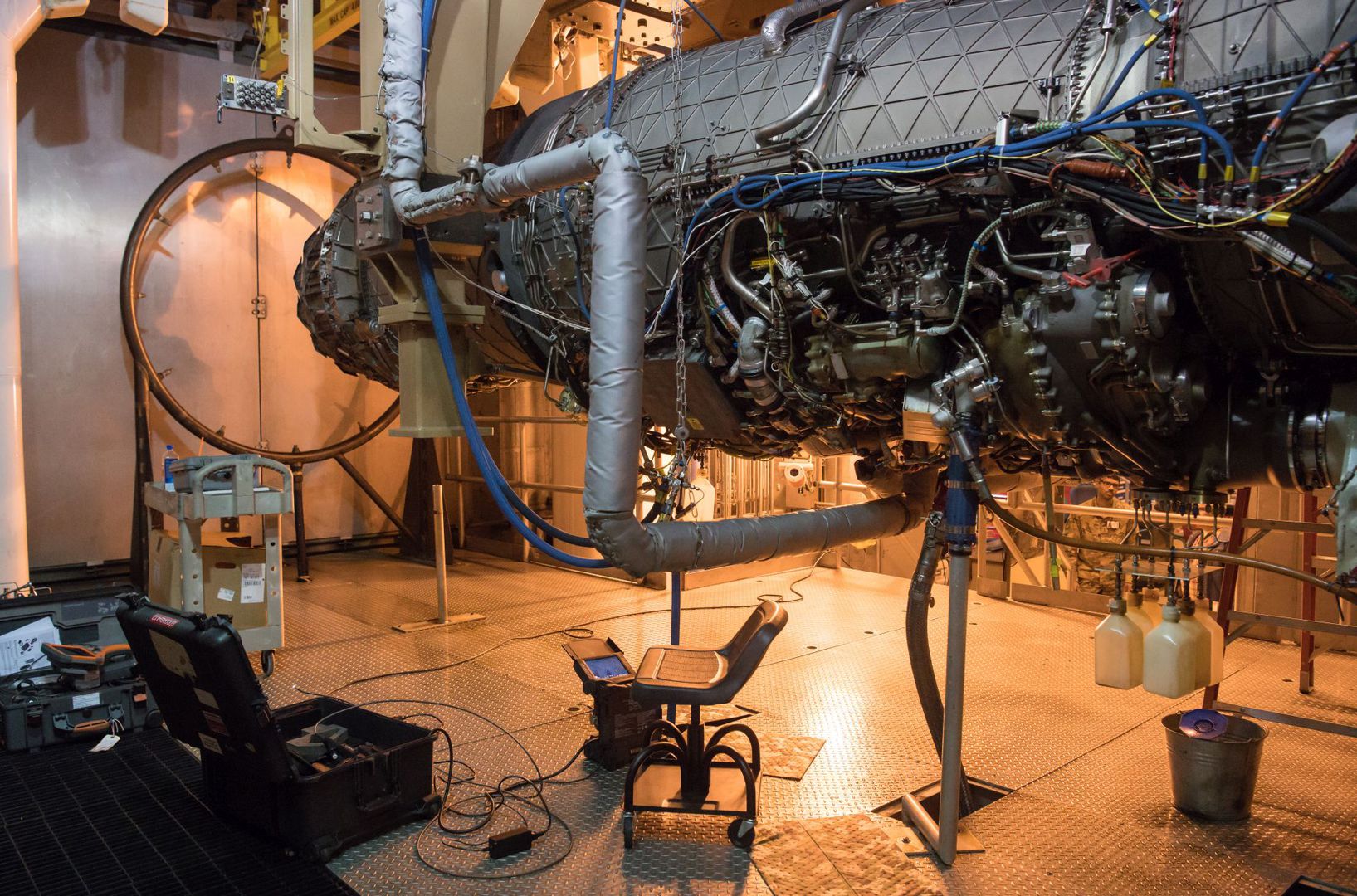
A scope sits below an F135 engine ready to be used by a technician to inspect interior elements of the engine in an Arnold Engineering Development Complex (AEDC) Engine Test Facility (ETF) test cell at Arnold Air Force Base, Tennessee between test runs. The F135 is undergoing Accelerated Mission Testing in the AEDC facility. It is one of two engines used to power the F-35 Joint Strike Fighter Lightning II. (U.S. Air Force photo by Jill Pickett)

14
VIEWS

ARNOLD AIR FORCE BASE: The Pratt & Whitney F135 engine has returned to Arnold Engineering Development Complex for another round of testing, with a fresh engine component the focus of the latest efforts.

The F135, which powers the F-35 Lightning II aircraft, is currently undergoing testing in one of the Sea Level Test Cells at Arnold. Since late June, a newly-designed fan rotor installed in the engine has been subjected to endurance and Accelerated Mission Testing.

Accelerated Mission Testing, or AMT, is a testing method used to rapidly age an engine, allowing for the identification and correction of issues before they would occur in normal use. Through AMT, a tested engine will accumulate several years of normal life in a short amount of time.

“The whole purpose of an AMT is to basically put some wear and tear on the engine, if you will, some life, that simulates what it would have out in the field,” said Test Manager Don Corona, now retired. “But instead of waiting several years to get that, we accomplish that in several months.”

Not only does the AMT consist of testing at ambient air conditions, but it also includes RAM. The term “RAM” refers to the use of test facility compressors to increase the engine inlet pressure and temperature to more closely simulate actual flight conditions.

Corona said RAM simulates high speed travel at a low altitude, allowing engineers to assess how these conditions impact the engine and its components.

“The Sea Level AMT does put wear and tear on the engine that you would see in operation. However, the RAM conditions ensure that we also have data that is representative of flying at high speed at low altitude conditions, which is actually a harsher environment for the engine,” Corona said.

Corona said the test is all about making sure the new fan rotor design checks out before it finds its way into the engine of an F-35.

“This testing will then allow that new design to be disseminated to the fleet,” he said. “We can’t just take a new design and put it out there on the engines, so this is going to be part of the testing to get it qualified to be put on an engine out in the fleet.”

After testing has concluded, the engine will be disassembled and examined.

“When the engine is done testing, they will tear the engine down and they will examine all the components in what is called an ACI – an Analytical Condition Inspection,” Corona said. “They will look at all the engine components at that time, and they’ll see if the wear on all the engine parts is consistent with what they would expect.”

The F135 also underwent testing last year to cover pre-AMT objectives. That testing concluded in late 2018, around six months before the AMT involving the newly-designed fan rotor began.

Testing of the F135, which is sponsored by the F-35 Joint Program Office, is set to continue into 2020.

“We are going to be testing it a little bit beyond its normal service life to collect data to support the decision makers with regard to extending the service life of the engine out in the field,” Corona said.

Corona commended the efforts of those who have worked on the recent F135 testing.

“The crews that have been running this test have been working very hard and very efficiently, and they have been doing such a good job that we are actually running ahead of schedule and under budget,” he said. “I think the crews really need to be commended for that, everybody associated with this project.

“They have also been very alert and notified the proper authorities when something needed attention so that it was remedied in a timely fashion. Overall, it has been an outstanding job by everybody on this project.”

Prior to the testing that began last year, the F135 program had tested well over 5,500 hours in various test cells across AEDC.


Tags: engineF-35F135pratt & whitneyUS air force
Previous Post

Iraq Examining Russian, Ukrainian, Chinese Air Defense Systems

Next Post

GA-ASI Begins Multi-Domain Operations Demo Using Gray Eagle ER

Related Posts

US military says aircraft crash in Iraq killed 4 crew members

US military says aircraft crash in Iraq killed 4 crew members

March 13, 2026

A US KC?135 aerial refueling aircraft crashed in western Iraq killing four crew members, the military said Friday, adding that...

Northrop Grumman moves to boost B-21 Raider output

Northrop Grumman moves to boost B-21 Raider output

March 13, 2026

Northrop Grumman and the U.S. Air Force are ramping up production capacity for the B-21 Raider to field the new...

Next Post
GA-ASI Begins Multi-Domain Operations Demo Using Gray Eagle ER

GA-ASI Begins Multi-Domain Operations Demo Using Gray Eagle ER

Latest Defense News

US needs top cyber coordinator, better hacker ‘deterrence’

‘Digital fog of war’ around Iranian cyberattacks

March 13, 2026
US military says aircraft crash in Iraq killed 4 crew members

US military says aircraft crash in Iraq killed 4 crew members

March 13, 2026
Northrop Grumman moves to boost B-21 Raider output

Northrop Grumman moves to boost B-21 Raider output

March 13, 2026
US Navy evacuates virus-struck aircraft carrier Roosevelt

US military ‘not ready’ to escort tankers through Hormuz Strait

March 12, 2026
Israel cancels leave for combat units after Iran consulate strike

US says Iran campaign cost $11 billion in six days

March 12, 2026
US moves closer to retaliation over hacking as cyber woes grow

Cyberattack Disrupts Operations at MedTech Giant Stryker

March 11, 2026

Defense Forum Discussions

  • Royal Australian Navy Discussions and Updates 2.0
  • Indonesian Aero News
  • Middle East Defence & Security
  • ADF General discussion thread
  • Philippine Navy Discussion and Updates
  • Royal Australian Air Force [RAAF] News, Discussions and Updates
  • New Zealand Army
  • General Naval News
  • The Russian-Ukrainian War Thread
  • Indonesia: 'green water navy'
DefenceTalk

© 2003-2020 DefenceTalk.com

Navigate Site

  • Defence Forum
  • Military Photos
  • RSS Feeds
  • About us
  • Advertise with us
  • Contact us

Follow Us

No Result
View All Result
  • Home
  • Defense News
    • Defense & Geopolitics News
    • War Conflicts News
    • Army News
    • Air Force News
    • Navy News
    • Missiles Systems News
    • Nuclear Weapons
    • Defense Technology
    • Cybersecurity News
  • Military Photos
  • Defense Forum
  • Military Videos
  • Military Weapon Systems
    • Weapon Systems
    • Reports

© 2003-2020 DefenceTalk.com