Friday, March 20, 2026
  • About us
    • Write for us
    • Disclaimer
    • Terms of use
    • Privacy Policy
  • RSS Feeds
  • Advertise with us
  • Contact us
DefenceTalk
  • Home
  • Defense News
    • Defense & Geopolitics News
    • War Conflicts News
    • Army News
    • Air Force News
    • Navy News
    • Missiles Systems News
    • Nuclear Weapons
    • Defense Technology
    • Cybersecurity News
  • Military Photos
  • Defense Forum
  • Military Videos
  • Military Weapon Systems
    • Weapon Systems
    • Reports
No Result
View All Result
  • Home
  • Defense News
    • Defense & Geopolitics News
    • War Conflicts News
    • Army News
    • Air Force News
    • Navy News
    • Missiles Systems News
    • Nuclear Weapons
    • Defense Technology
    • Cybersecurity News
  • Military Photos
  • Defense Forum
  • Military Videos
  • Military Weapon Systems
    • Weapon Systems
    • Reports
No Result
View All Result
DefenceTalk
No Result
View All Result
Home Defence & Military News Nuclear Weapons News

Satellite imagery detects thermal “uplift” signal of underground nuclear tests

by Oregon State University
January 12, 2012
in Nuclear Weapons News
3 min read
0
US secretly helped French nuclear program
14
VIEWS

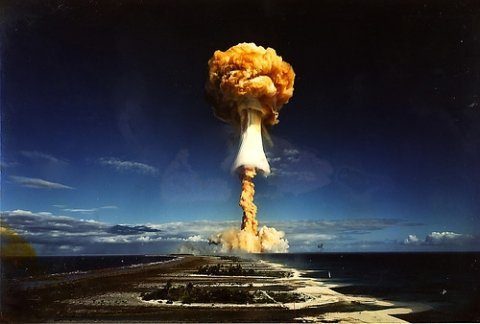
A new analysis of satellite data from the late 1990s documents for the first time the “uplift” of ground above a site of underground nuclear testing, providing researchers a potential new tool for analyzing the strength of detonation.

The study has just been published in Geophysical Research Letters.

Lead author Paul Vincent, a geophysicist at Oregon State University, cautions that the findings won’t lead to dramatic new ability to detect secret nuclear explosions because of the time lag between the test and the uplift signature, as well as geophysical requirements of the underlying terrain. However, he said, it does “provide another forensic tool for evaluation, especially for the potential explosive yield estimates.”

“In the past, satellites have been used to look at surface subsidence as a signal for nuclear testing,” said Vincent, an associate professor in OSU’s College of Earth, Ocean, and Atmospheric Sciences.

“This is the first time uplift of the ground has correlated to a nuclear test site. The conditions have to be just right and this won’t work in every location.

“But it is rather interesting,” he added. “It took four years for the source of the uplift signal – a thermal groundwater plume – to reach the surface.”

The focus of the study was Lop Nor, a nuclear testing site in China where three tests were conducted – May 21, 1992; May 15, 1995; and Aug. 17, 1995. Vincent and his colleagues analyzed interferometric synthetic aperture radar (InSAR) images from 1996-99 and detected a change in the surface beginning four years after the tests.

Though the uplift was less than two inches, it corresponds to known surface locations above past tests within the Lop Nor test site.

From past studies, the researchers knew that heat from underground detonation of nuclear devices propagates slowly toward the surface. At most sites – including the Nevada National Security Site – that heat signal dissipates laterally when it reaches the water table, which is usually deep beneath the surface.

At Lop Nor, however, the water table is only about three meters below the surface, and the heated groundwater plume took four years to reach that high, lifting the ground above the detonation site slightly – but enough to be detected through InSAR images.

Lop Nor also is characterized by a hard granite subsurface, which helps pipe the heated water vertically and prevents the subsidence frequently found at other testing sites.

A past study by Vincent, published in 2003, first shed light on how subsidence can manifest itself in different ways – from the force of the explosion creating a crater, to more subtle effects of “chimneying,” in which the blast opens up a chimney of sorts and draws material downward, creating a dimple at the ground surface.

Before joining the OSU faculty in 2007, Vincent spent several years as a physicist at the Lawrence Livermore National Laboratory.

Vincent said the analysis of nuclear explosions has become a specialized field. Seismology technology can provide an initial estimate of the energy of the explosion, but that data is only good if the seismic waves accurately reflect coupling to the connecting ground in a natural way, he explained. Efforts are sometimes made to “decouple” the explosive device from the ground by creating specializing testing chambers that can give off a false signal, potentially masking the true power of a test.

“Subsidence data combined with seismic data have helped narrow the margin of error in estimating the explosive yield,” Vincent noted, “and now there is the potential to use test-related thermal expansion as another forensic tool.”

Co-authors on the paper with Vincent include Sean Buckley of the Jet Propulsion Laboratory, Dochul Yang, the University of Texas-Austin, and Steve Carle, of Lawrence Livermore National Laboratory.


Tags: detectionimagerynuclear testsatellitethermal
Previous Post

Sixth Guard battalion transitions to Longbow Apache

Next Post

Lockheed Martin F-35 Program Exceeds 2011 Flight Test Goals

Related Posts

Finland gears up for historic NATO decision

Kremlin says nuclear weapons in Finland would threaten Russia

March 9, 2026

Russia said on Friday it saw Finland's move to lift restrictions on hosting nuclear weapons as a potential threat and...

Turkey says NATO summit ‘not the deadline’ for Finland, Sweden talks

Finland to allow nuclear weapons on its soil: government

March 6, 2026

Finland said Thursday it planned to lift restrictions prohibiting nuclear weapons on its soil, in order to bring the country...

Next Post
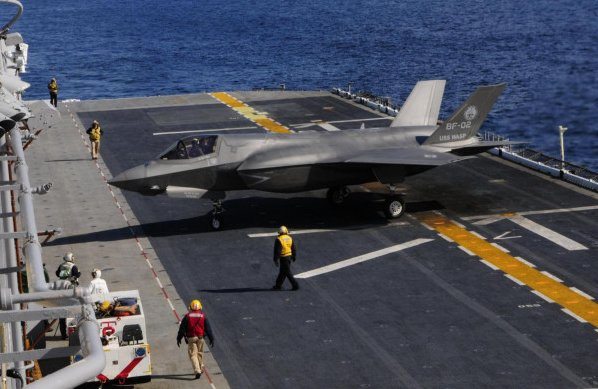
F-35B Completes Successful Initial Shipboard Vertical Landing Aboard USS WASP

Lockheed Martin F-35 Program Exceeds 2011 Flight Test Goals

Latest Defense News

US needs top cyber coordinator, better hacker ‘deterrence’

‘Digital fog of war’ around Iranian cyberattacks

March 13, 2026
US military says aircraft crash in Iraq killed 4 crew members

US military says aircraft crash in Iraq killed 4 crew members

March 13, 2026
Northrop Grumman moves to boost B-21 Raider output

Northrop Grumman moves to boost B-21 Raider output

March 13, 2026
US Navy evacuates virus-struck aircraft carrier Roosevelt

US military ‘not ready’ to escort tankers through Hormuz Strait

March 12, 2026
Israel cancels leave for combat units after Iran consulate strike

US says Iran campaign cost $11 billion in six days

March 12, 2026
US moves closer to retaliation over hacking as cyber woes grow

Cyberattack Disrupts Operations at MedTech Giant Stryker

March 11, 2026

Defense Forum Discussions

  • Marine Nationale (French Navy)
  • Middle East Defence & Security
  • F-35 Program - General Discussion
  • Royal Australian Air Force [RAAF] News, Discussions and Updates
  • Royal Australian Navy Discussions and Updates 2.0
  • German Navy
  • International Army News Thread
  • KAI KF-21
  • Indian Military Aviation; News, Updates & Discussions
  • Indo-Pakistani Tensions (2019 & Beyond)
DefenceTalk

© 2003-2020 DefenceTalk.com

Navigate Site

  • Defence Forum
  • Military Photos
  • RSS Feeds
  • About us
  • Advertise with us
  • Contact us

Follow Us

No Result
View All Result
  • Home
  • Defense News
    • Defense & Geopolitics News
    • War Conflicts News
    • Army News
    • Air Force News
    • Navy News
    • Missiles Systems News
    • Nuclear Weapons
    • Defense Technology
    • Cybersecurity News
  • Military Photos
  • Defense Forum
  • Military Videos
  • Military Weapon Systems
    • Weapon Systems
    • Reports

© 2003-2020 DefenceTalk.com