Wednesday, March 25, 2026
  • About us
    • Write for us
    • Disclaimer
    • Terms of use
    • Privacy Policy
  • RSS Feeds
  • Advertise with us
  • Contact us
DefenceTalk
  • Home
  • Defense News
    • Defense & Geopolitics News
    • War Conflicts News
    • Army News
    • Air Force News
    • Navy News
    • Missiles Systems News
    • Nuclear Weapons
    • Defense Technology
    • Cybersecurity News
  • Military Photos
  • Defense Forum
  • Military Videos
  • Military Weapon Systems
    • Weapon Systems
    • Reports
No Result
View All Result
  • Home
  • Defense News
    • Defense & Geopolitics News
    • War Conflicts News
    • Army News
    • Air Force News
    • Navy News
    • Missiles Systems News
    • Nuclear Weapons
    • Defense Technology
    • Cybersecurity News
  • Military Photos
  • Defense Forum
  • Military Videos
  • Military Weapon Systems
    • Weapon Systems
    • Reports
No Result
View All Result
DefenceTalk
No Result
View All Result
Home Defence & Military News

Rising Security Threats Sustain Expenditure on Military Naval Vessels Platforms

by FrostSullivan
January 16, 2015
in Defence & Military News
2 min read
0
Japan’s Defence White Paper 2012 and China’s Critical Response
14
VIEWS

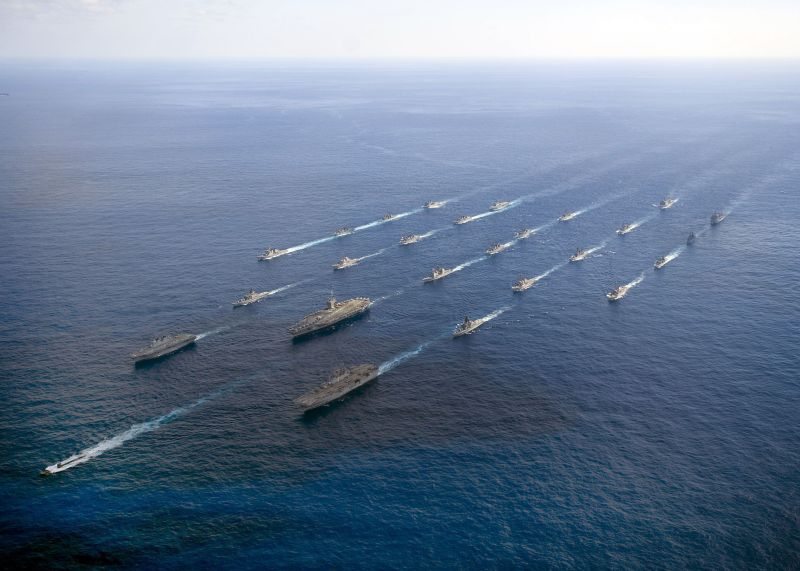
Deteriorating international relations across the world have caused countries to sanction extensive naval modernization and re-armament programs in Asia-Pacific, the Middle East and Russia. The Ukraine crisis, territorial disputes on the South China Sea and growing tensions in the Middle East have ensured that the market growth remains stable, although low.

New analysis from Frost & Sullivan, Global Military Naval Vessels Platforms Market Assessment, finds that the cumulative naval vessels new platforms segment’s expenditure is expected to reach $376.07 billion by 2023, at a compound annual growth rate (CAGR) of 1.0 percent. The military vessels’ modernisation/upgrade segment, estimated to be worth 59.26 billion from 2014 to 2023, is likely to generate the highest CAGR of 2.6 percent.

The market gained the most revenues from the procurement of multi-role frigates. The frigate is a very versatile warship, which merges together high speed, anti-ship missiles, air defence, and anti-submarine warfare capabilities with moderate operation and maintenance costs. Therefore, the frigate is becoming a primary vessel in most of the navy fleets.

“Military vessels based on the multi-mission modular vessel (MMMV) design will be more common and affordable for end users,” said Frost & Sullivan Aerospace & Defence Industry Analyst Dominik Kimla. “Additionally, Frost & Sullivan expects more standardisation among various MMMV designs across naval companies. This will translate to long-term cost efficiency on the procurement and support-in-service of MMMV vessels.”

North America is likely to retain its position as the top region in terms of military vessels spending during 2014-2023. Its share in global military naval vessels revenue is forecast to marginally grow from 34.4 percent in 2014 to 34.7 percent in 2023. This steady procurement spending is a result of ongoing projects; however, sequestration could impact procurement in in the next five to seven years.

The market is dominated by Western European, American, and Russian naval companies. However, shipyards in Asia-Pacific, particularly South Korea and Japan, will increase their market position in the naval domain due to intensifying competition among original equipment manufacturers (OEMs). It is expected that Japanese companies such as Mitsubishi Heavy Industries and Kawasaki Heavy Industries will substantially augment their presence in the naval market with the easing of a decades-old self-imposed defence export ban.

Significantly, Chinese shipyards are increasing their presence in the naval market by offering relatively advanced and low-cost solutions. They also strategically offer competitive financial packages to fund military vessel deals in acknowledgement of navies’ limited budgets in most countries.

There is a clear trend across regions toward procuring indigenous naval capabilities. National navies award projects to domestic shipbuilders, giving a boost to in-country construction and technology transfer. Technology transfers and partnerships with local shipyards are important decisive factors for most naval end-users.

“New models of acquiring naval capabilities, such as leasing or public-private partnerships, will be implemented to provide necessary military capabilities,” noted Kimla. “Therefore, naval companies need to adopt a proactive approach to addressing customers’ needs and provide naval capabilities in the framework of leasing and private-partnership agreements.”

Tags: budgetmaritime securitysecurityspendingwarships
Previous Post

Swiss Army Opts for Leguan Bridge Layers

Next Post

US Air Force moves to stem shortage of drone pilots

Related Posts

US needs top cyber coordinator, better hacker ‘deterrence’

‘Digital fog of war’ around Iranian cyberattacks

March 13, 2026

Hostilities on the digital front have intensified since the outbreak of war between the US, Israel and Iran, with many...

US military says aircraft crash in Iraq killed 4 crew members

US military says aircraft crash in Iraq killed 4 crew members

March 13, 2026

A US KC?135 aerial refueling aircraft crashed in western Iraq killing four crew members, the military said Friday, adding that...

Next Post
Long-Endurance Surveillance Drone for Security Missions

US Air Force moves to stem shortage of drone pilots

Latest Defense News

US needs top cyber coordinator, better hacker ‘deterrence’

‘Digital fog of war’ around Iranian cyberattacks

March 13, 2026
US military says aircraft crash in Iraq killed 4 crew members

US military says aircraft crash in Iraq killed 4 crew members

March 13, 2026
Northrop Grumman moves to boost B-21 Raider output

Northrop Grumman moves to boost B-21 Raider output

March 13, 2026
US Navy evacuates virus-struck aircraft carrier Roosevelt

US military ‘not ready’ to escort tankers through Hormuz Strait

March 12, 2026
Israel cancels leave for combat units after Iran consulate strike

US says Iran campaign cost $11 billion in six days

March 12, 2026
US moves closer to retaliation over hacking as cyber woes grow

Cyberattack Disrupts Operations at MedTech Giant Stryker

March 11, 2026

Defense Forum Discussions

  • Middle East Defence & Security
  • The Russian-Ukrainian War Thread
  • European Union, member states and Agencies
  • Royal Canadian Navy Discussions and updates
  • Royal Australian Navy Discussions and Updates 2.0
  • Indonesia: 'green water navy'
  • International Army News Thread
  • Royal Australian Air Force [RAAF] News, Discussions and Updates
  • USAF News and Discussion
  • Indonesian Aero News
DefenceTalk

© 2003-2020 DefenceTalk.com

Navigate Site

  • Defence Forum
  • Military Photos
  • RSS Feeds
  • About us
  • Advertise with us
  • Contact us

Follow Us

No Result
View All Result
  • Home
  • Defense News
    • Defense & Geopolitics News
    • War Conflicts News
    • Army News
    • Air Force News
    • Navy News
    • Missiles Systems News
    • Nuclear Weapons
    • Defense Technology
    • Cybersecurity News
  • Military Photos
  • Defense Forum
  • Military Videos
  • Military Weapon Systems
    • Weapon Systems
    • Reports

© 2003-2020 DefenceTalk.com