Wednesday, March 11, 2026
  • About us
    • Write for us
    • Disclaimer
    • Terms of use
    • Privacy Policy
  • RSS Feeds
  • Advertise with us
  • Contact us
DefenceTalk
  • Home
  • Defense News
    • Defense & Geopolitics News
    • War Conflicts News
    • Army News
    • Air Force News
    • Navy News
    • Missiles Systems News
    • Nuclear Weapons
    • Defense Technology
    • Cybersecurity News
  • Military Photos
  • Defense Forum
  • Military Videos
  • Military Weapon Systems
    • Weapon Systems
    • Reports
No Result
View All Result
  • Home
  • Defense News
    • Defense & Geopolitics News
    • War Conflicts News
    • Army News
    • Air Force News
    • Navy News
    • Missiles Systems News
    • Nuclear Weapons
    • Defense Technology
    • Cybersecurity News
  • Military Photos
  • Defense Forum
  • Military Videos
  • Military Weapon Systems
    • Weapon Systems
    • Reports
No Result
View All Result
DefenceTalk
No Result
View All Result
Home Defence & Military News Technology News

Researchers discover unique material design for brain-like computations

by US Army
June 25, 2020
in Technology News
2 min read
0
Researchers discover unique material design for brain-like computations
6
SHARES
14
VIEWS

Over the past few decades, computers have seen dramatic progress in processing power; however, even the most advanced computers are relatively rudimentary in comparison with the complexities and capabilities of the human brain.

Researchers at the U.S. Army Combat Capabilities Development Command’s Army Research Laboratory say this may be changing as they endeavor to design computers inspired by the human brain’s neural structure.

As part of a collaboration with Lehigh University, Army researchers have identified a design strategy for the development of neuromorphic materials.

“Neuromorphic materials is a name given to the material categories or combination of materials that provide both computing and memory capabilities in devices,” said Dr. Sina Najmaei, a research scientist and electrical engineer with the laboratory.

Najmaei and his colleagues published a paper, Dynamically reconfigurable electronic and phononic properties in intercalated Hafnium Disulfide (HfS2), in the May 2020 issue of Materials Today.

The neuromorphic computing concept is an in-memory solution that promises orders of magnitude reductions in power consumption over conventional transistors, and is suitable for complex data classification and processing. The limited power efficiency in conventional transistors is a fundamental technology shortcoming impeding future progress in computing.

Neuromorphic materials research conducted over the past 10 years has focused on understanding the unique properties of 2-D materials and their van der Waals multilayered structures.

“The findings show great promise for these materials in electronic applications, but also show the unique interfaces in these materials provide an unprecedented opportunity for design of material properties,” Najmaei said.

Over the past four years, the team conducted an effort focused on the design of material properties for high-performance electronic applications.

“Our research led to our Materials Today paper, which expands this effort to design of reconfigurable properties in these materials based on van der Waal/organometallic hybrid systems and neuromorphic material design,” Najmaei said.

Neuromorphic computing processes information using new models of computing similar to the brain’s cognitive processes.

“In order to process and make rational inferences from the input, information and a new paradigm of computing is needed,” Najmaei said. “Neuromorphic hardware with in-memory computer capabilities promises to bridge this ever-growing technology gap.”

This research is an important stepping stone towards development of in-memory computing in hybrid devices with unique functional properties for integration in cognitive sensory devices and overcomes significant technical challenges that impede a bottom up approach for streamlining of brain-inspired computing hardware, he said.

If the researchers can ultimately develop a computer that can behave like the brain, it would be extremely useful to the warfighter, Najmaei said.

Neuromorphic computing, like a neural system, would offer computing capability complete with perks, such as robustness to damage, ability to learn, adaptability to change and others. It would have the potential to reduce operational power by a magnitude of 1,000 to 1 million times in comparison to today’s computing paradigms.

This level of processing would be highly desirable for image recognition in autonomous systems, and for artificial intelligence in general. Given the significance of AI and autonomous systems in modern day warfare, neuromorphic computing may very well be a cornerstone for a wide range of future leap-ahead warfighting capabilities, Najmaei said.

Full Research Paper

Tags: artificial intelligencematerial design
Previous Post

US could extend Russia arms treaty with conditions

Next Post

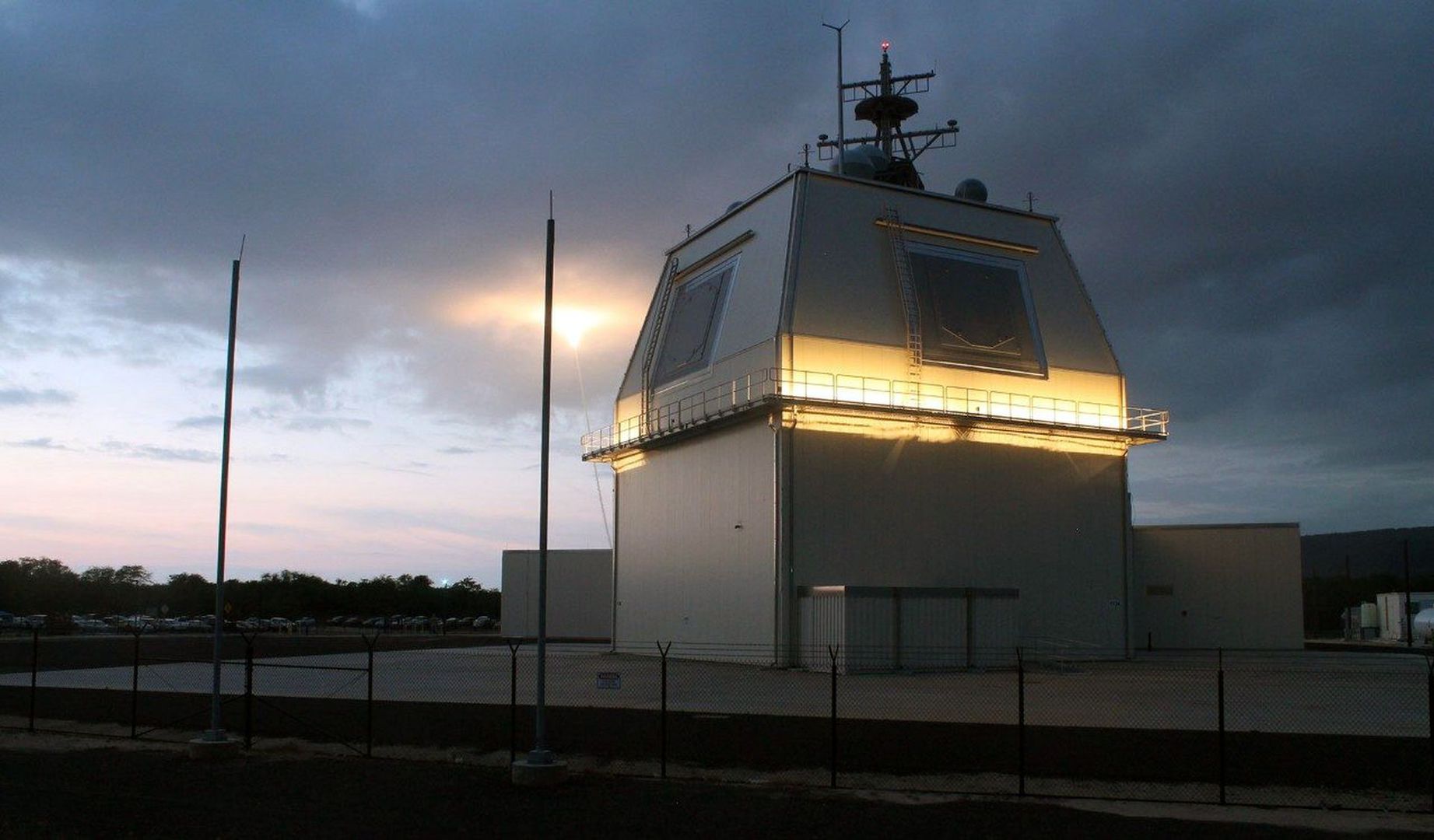
Japan confirms scrapping US missile defence system

Related Posts

OpenAI robotics manager resigns over Pentagon deal

OpenAI robotics manager resigns over Pentagon deal

March 10, 2026

A robotics manager at OpenAI said Saturday that she had resigned over the artificial intelligence giant's deal with the US...

Anthropic takes Trump administration to court over Pentagon row

Anthropic takes Trump administration to court over Pentagon row

March 10, 2026

Anthropic filed suit Monday against the Trump administration, alleging the US government retaliated against the AI company for refusing to...

Next Post
Four Nations to Be Protected with Lockheed Martin’s Next Gen Radar

Japan confirms scrapping US missile defence system

Latest Defense News

Patriot missile defense system deployed in central Turkey

March 10, 2026
Iran unveils ballistic missile, ‘new generation’ engines

Iran says missile attacks to continue, US talks ‘not on agenda’

March 10, 2026
OpenAI robotics manager resigns over Pentagon deal

OpenAI robotics manager resigns over Pentagon deal

March 10, 2026
Anthropic takes Trump administration to court over Pentagon row

Anthropic takes Trump administration to court over Pentagon row

March 10, 2026
Sikorsky Ramps Up Production of New Variant S-92 Helicopter

Sikorsky Ramps Up Production of New Variant S-92 Helicopter

March 9, 2026
Qatar arrests 313 people for sharing attacks footage, ‘rumors’

Qatar arrests 313 people for sharing attacks footage, ‘rumors’

March 9, 2026

Defense Forum Discussions

  • ADF General discussion thread
  • Military Aviation News and Discussion
  • The Indonesian Army
  • Royal Australian Navy Discussions and Updates 2.0
  • Middle East Defence & Security
  • The Russian-Ukrainian War Thread
  • General Naval News
  • Indonesian Aero News
  • 6th Generation Fighters Projects
  • Japan Ground Self Defense Force
DefenceTalk

© 2003-2020 DefenceTalk.com

Navigate Site

  • Defence Forum
  • Military Photos
  • RSS Feeds
  • About us
  • Advertise with us
  • Contact us

Follow Us

No Result
View All Result
  • Home
  • Defense News
    • Defense & Geopolitics News
    • War Conflicts News
    • Army News
    • Air Force News
    • Navy News
    • Missiles Systems News
    • Nuclear Weapons
    • Defense Technology
    • Cybersecurity News
  • Military Photos
  • Defense Forum
  • Military Videos
  • Military Weapon Systems
    • Weapon Systems
    • Reports

© 2003-2020 DefenceTalk.com