Monday, March 23, 2026
  • About us
    • Write for us
    • Disclaimer
    • Terms of use
    • Privacy Policy
  • RSS Feeds
  • Advertise with us
  • Contact us
DefenceTalk
  • Home
  • Defense News
    • Defense & Geopolitics News
    • War Conflicts News
    • Army News
    • Air Force News
    • Navy News
    • Missiles Systems News
    • Nuclear Weapons
    • Defense Technology
    • Cybersecurity News
  • Military Photos
  • Defense Forum
  • Military Videos
  • Military Weapon Systems
    • Weapon Systems
    • Reports
No Result
View All Result
  • Home
  • Defense News
    • Defense & Geopolitics News
    • War Conflicts News
    • Army News
    • Air Force News
    • Navy News
    • Missiles Systems News
    • Nuclear Weapons
    • Defense Technology
    • Cybersecurity News
  • Military Photos
  • Defense Forum
  • Military Videos
  • Military Weapon Systems
    • Weapon Systems
    • Reports
No Result
View All Result
DefenceTalk
No Result
View All Result
Home Defence & Military News Missile News

Report to US Congress on Hypersonic Weapons

by DefenceTalk
March 22, 2022
in Missile News
2 min read
0
US conducts ‘successful’ test of hypersonic missile technology
14
VIEWS

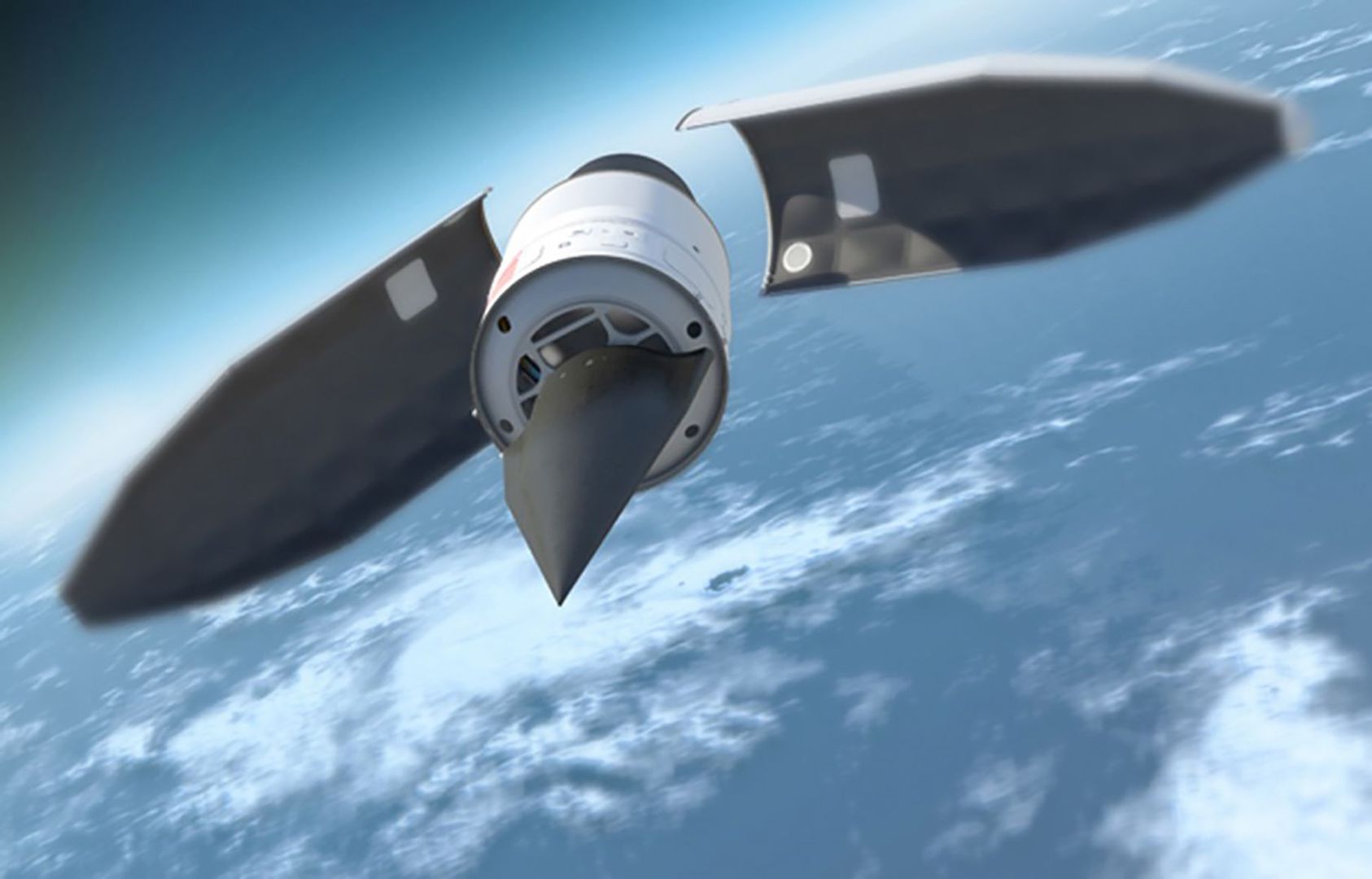
The United States has actively pursued the development of hypersonic weapons-maneuvering weapons that fly at speeds of at least Mach 5-as a part of its conventional prompt global strike program since the early 2000s. In recent years, the United States has focused such efforts on developing hypersonic glide vehicles, which are launched from a rocket before gliding to a target, and hypersonic cruise missiles, which are powered by high-speed, air-breathing engines during flight.

As former Vice Chairman of the Joint Chiefs of Staff and former Commander of U.S. Strategic Command General John Hyten has stated, these weapons could enable “responsive, long-range, strike options against distant, defended, and/or time-critical threats [such as road-mobile missiles] when other forces are unavailable, denied access, or not preferred.” Critics, on the other hand, contend that hypersonic weapons lack defined mission requirements, contribute little to U.S. military capability, and are unnecessary for deterrence.

Funding for hypersonic weapons has been relatively restrained in the past; however, both the Pentagon and Congress have shown a growing interest in pursuing the development and near-term deployment of hypersonic systems. This is due, in part, to the advances in these technologies in Russia and China, both of which have a number of hypersonic weapons programs and have likely fielded operational hypersonic glide vehicles-potentially armed with nuclear warheads.

Most U.S. hypersonic weapons, in contrast to those in Russia and China, are not being designed for use with a nuclear warhead. As a result, U.S. hypersonic weapons will likely require greater accuracy and will be more technically challenging to develop than nuclear-armed Chinese and Russian systems.

The Pentagon’s FY2022 budget request for hypersonic research is $3.8 billion-up from $3.2 billion in the FY2021 request. The Missile Defense Agency additionally requested $247.9 million for hypersonic defense. At present, the Department of Defense (DOD) has not established any programs of record for hypersonic weapons, suggesting that it may not have approved either mission requirements for the systems or long-term funding plans.

Indeed, as Principal Director for Hypersonics (Office of the Under Secretary of Defense for Research and Engineering) Mike White has stated, DOD has not yet made a decision to acquire hypersonic weapons and is instead developing prototypes to assist in the evaluation of potential weapon system concepts and mission sets.

As Congress reviews the Pentagon’s plans for U.S. hypersonic weapons programs, it might consider questions about the rationale for hypersonic weapons, their expected costs, and their implications for strategic stability and arms control. Potential questions include the following:

What mission(s) will hypersonic weapons be used for? Are hypersonic weapons the most cost-effective means of executing these potential missions? How will they be incorporated into joint operational doctrine and concepts?

Given the lack of defined mission requirements for hypersonic weapons, how should Congress evaluate funding requests for hypersonic weapons programs or the balance of funding requests for hypersonic weapons programs, enabling technologies, and supporting test infrastructure? Is an acceleration of research on hypersonic weapons, enabling technologies, or hypersonic missile defense options both necessary and technologically feasible?

How, if at all, will the fielding of hypersonic weapons affect strategic stability?

Is there a need for risk-mitigation measures, such as expanding New START, negotiating new multilateral arms control agreements, or undertaking transparency and confidence-building activities?

Full Research Report in PDF format
Tags: hypersonic missilesHypersonic weaponsrussiaukraine
Previous Post

Russia uses advanced hypersonic missiles in Ukraine for the first time

Next Post

Russia would only use nuclear weapons faced with ‘existential threat’: Kremlin

Related Posts

Patriot missile defense system deployed in central Turkey

March 10, 2026

Turkey said Tuesday a Patriot missile defence system was being deployed in the centre of the country, a day after...

Japan to deploy counter-strike missiles closer to China

Japan to deploy counter-strike missiles closer to China

March 9, 2026

Japan will deploy a batch of long-range, counter-strike missiles in a southwest region near China by the end of March,...

Next Post
US extends New START nuclear treaty with Russia as rifts rise

Russia would only use nuclear weapons faced with 'existential threat': Kremlin

Latest Defense News

US needs top cyber coordinator, better hacker ‘deterrence’

‘Digital fog of war’ around Iranian cyberattacks

March 13, 2026
US military says aircraft crash in Iraq killed 4 crew members

US military says aircraft crash in Iraq killed 4 crew members

March 13, 2026
Northrop Grumman moves to boost B-21 Raider output

Northrop Grumman moves to boost B-21 Raider output

March 13, 2026
US Navy evacuates virus-struck aircraft carrier Roosevelt

US military ‘not ready’ to escort tankers through Hormuz Strait

March 12, 2026
Israel cancels leave for combat units after Iran consulate strike

US says Iran campaign cost $11 billion in six days

March 12, 2026
US moves closer to retaliation over hacking as cyber woes grow

Cyberattack Disrupts Operations at MedTech Giant Stryker

March 11, 2026

Defense Forum Discussions

  • Indonesia: 'green water navy'
  • NZDF General discussion thread
  • Royal New Zealand Navy Discussions and Updates
  • Royal Australian Navy Discussions and Updates 2.0
  • Taiwanese Air Force (ROCAF)
  • Middle East Defence & Security
  • Marine Nationale (French Navy)
  • The Russian-Ukrainian War Thread
  • Royal Australian Air Force [RAAF] News, Discussions and Updates
  • Italian Navy Discussions and Updates
DefenceTalk

© 2003-2020 DefenceTalk.com

Navigate Site

  • Defence Forum
  • Military Photos
  • RSS Feeds
  • About us
  • Advertise with us
  • Contact us

Follow Us

No Result
View All Result
  • Home
  • Defense News
    • Defense & Geopolitics News
    • War Conflicts News
    • Army News
    • Air Force News
    • Navy News
    • Missiles Systems News
    • Nuclear Weapons
    • Defense Technology
    • Cybersecurity News
  • Military Photos
  • Defense Forum
  • Military Videos
  • Military Weapon Systems
    • Weapon Systems
    • Reports

© 2003-2020 DefenceTalk.com