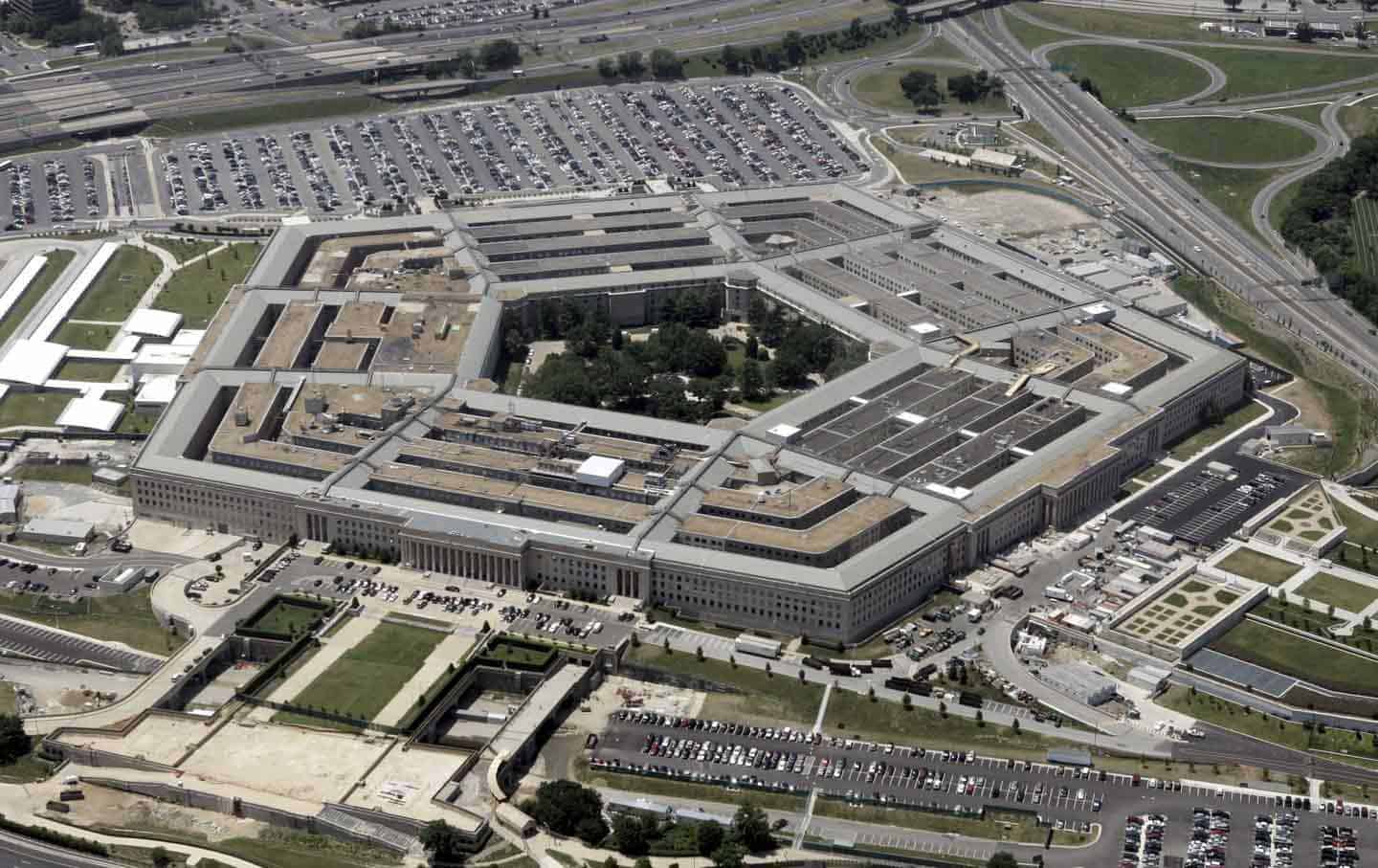
The Nuclear Posture Review released today is a strategy to keep America safe with a deterrent that is modern and credible, Deputy Defense Secretary Patrick M. Shanahan said today in rolling out the strategy.
The NPR reaffirms that the fundamental role of U.S. nuclear policy is deterrence and continues the clear commitment to non-proliferation and arms control, Shanahan said in a Pentagon press briefing.
Shanahan was joined at the event by Deputy Energy Secretary Dan Brouillette and Undersecretary of State for Political Affairs Thomas A. Shannon Jr.
The review took a whole-of-government approach that involved the Departments of Defense, State and Energy, he said. The effort began in January 2017, when President Donald J. Trump directed the review to ensure a safe, secure and effective nuclear deterrent.
The world has changed dramatically since the last review in 2010, Shanahan said.
The NPR takes the evolving threats into consideration in keeping America safe, he said. Both the National Defense Strategy and National Security Strategy call for a safe, secure, effective nuclear deterrent, he pointed out.
Mattis: ‘Current, Pragmatic Assessment’
The review comes at a critical moment in the nation’s history, Defense Secretary James N. Mattis wrote in the preface of the NPR, adding “America confronts an international security situation that is more complex and demanding than any since the end of the Cold War.”
He cited concerns with activities by Russia, China, North Korea and Iran. “We must look reality in the eye and see the world as it is, not as we wish it to be,” Mattis wrote. “This NPR reflects the current, pragmatic assessment of the threats we face and the uncertainties regarding the future security environment.”
There is no “one size fits all” in regards to deterrence, Shanahan said.
“The challenging and dynamic security environment requires steady action to strengthen deterrence,” Shanahan said. “This NPR responds to today’s security needs with a tailored nuclear deterrent strategy.”
Modernization Needed
The Nuclear Posture Review calls for modernizing the nuclear triad — land-based intercontinental ballistic missiles, submarine-launched ballistic missiles and nuclear-capable aircraft — and command-and-control system.
While the triad has kept the nation safe for more than 70 years, the United States “cannot afford to let it become obsolete,” the deputy said.
The NPR recommends lowering the yield of some existing submarine-launched ballistic missile warheads, and bringing back a nuclear sea-based launched cruise missile, he said.
Those recommendations, Shanahan noted, do not require developing new nuclear warheads and do not increase the size of the nation’s nuclear stockpile. The recommendations align with nonproliferation commitments and strengthen American deterrence, he said.
According to the review, “expanding flexible U.S. nuclear options now, to include low-yield options, is important for the preservation of credible deterrence against regional aggression.”
Use of Weapons in ‘Extreme Circumstances’
The U.S. does not want to use nuclear weapons, Shanahan said. He noted the NPR says the nation would only consider the use of nuclear weapons in “extreme circumstances to defend the vital interests of the United States, its allies and partners.”
The NPR clarifies longstanding policy that “extreme circumstances” could include “significant non-nuclear strategic attacks,” the deputy secretary said.
The United States now faces a more diverse and advanced nuclear-threat environment than ever before, “with considerable dynamism in potential adversaries’ development and deployment programs for nuclear weapons and delivery systems,” the NPR states.
The review says it candidly addresses the challenges posed by “Russian, Chinese and other states’ strategic policies, programs and capabilities, particularly nuclear.”
In addition, “flexible, adaptable and resilient U.S. nuclear capabilities [are] now required to protect the United States, [its] allies and partners, and promote strategic stability,” according to the review.
The United States currently operates 14 Ohio-class ballistic missile submarines and will continue to take the steps needed to ensure those submarines remain operationally effective and survivable until replaced by the Columbia-class ballistic missile submarines, the NPR explains.
The intercontinental ballistic missile force consists of 400 single-warhead Minuteman III missiles deployed in underground silos and dispersed across several states.
The United States has initiated the Ground-Based Strategic Deterrent program to begin the replacement of Minuteman III in 2029. The GBSD program will also modernize the 450 ICBM launch facilities that will support the fielding of 400 ICBMs.
The bomber leg of the triad consists of 46 nuclear-capable B-52H Stratofortress and 20 nuclear-capable B-2A Spirit “stealth” strategic bombers. The United States has initiated a program to develop and deploy the next-generation bomber, the B-21 Raider. It will first supplement, and eventually replace elements of the conventional and nuclear-capable bomber force beginning in the mid-2020s.
Nuclear Posture Review (214 downloads)