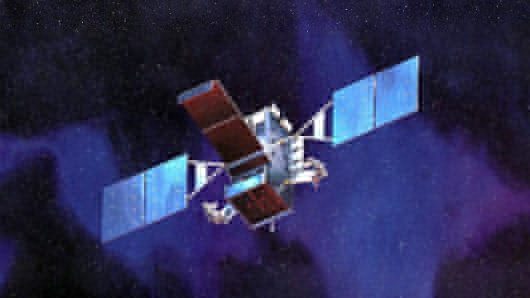
The U.S. Air Force and Lockheed Martin team has delivered the first geosynchronous (GEO-1) Space Based Infrared System (SBIRS) spacecraft to Cape Canaveral Air Force Station, Fla., where it will be prepared for an early May liftoff aboard a United Launch Alliance Atlas V launch vehicle.
SBIRS GEO-1, with its highly sophisticated scanning and staring sensors, will provide the nation with significantly improved missile warning capabilities and support other critical missions simultaneously including missile defense, technical intelligence and battlespace awareness.
“Shipment of SBIRS GEO-1 is a testament to the strong government and industry partnership, and the hard work and dedication of the entire SBIRS team. We remain focused on achieving mission success for this critical program,” said Col. Roger Teague, the U.S. Air Force’s Infrared Space Systems Directorate director. “GEO-1 will play a vital role in our national security space architecture, and we look forward to getting this satellite on-orbit.”
SBIRS GEO-1 will now be prepared for launch at Cape Canaveral Air Force Station’s former Defense Satellite Communications System (DSCS) Processing Facility, which was upgraded significantly in preparation for GEO-1. Facility upgrades were made to the electrical power supply, communication networks, environmental control systems, and cleanroom processing areas. A new access road was also built from the landing strip directly to the processing facility, which significantly reduces transport time and risk moving through traffic areas.
Prior to launch, the GEO-1 spacecraft will undergo post shipment testing, fueling and payload fairing encapsulation while in the DSCS Processing Facility. Upon completion of processing, the spacecraft will be mated on top of the Atlas V launch vehicle and perform final integrated testing and closeout preparations for launch. Approximately 24 hours before launch, the Atlas V/SBIRS GEO-1 spacecraft will roll to the launch pad and perform the final countdown preparations for launch.
“GEO-1 delivery to Cape Canaveral Air Force Station represents the program’s most significant milestone to-date and I am proud of the entire SBIRS team dedicated to delivering this cutting edge missile warning spacecraft,” said Jeff Smith, Lockheed Martin’s SBIRS vice president and program director. “When GEO-1 is launched , declared operational and its data is fused into the DSP and HEO constellation, SBIRS will deliver unprecedented, global, persistent, infrared surveillance capabilities to our nation for decades to come.”
The 22nd Airlift Squadron of Travis Air Force Base, Calif., and the 129th Rescue Wing of Mountain View, Calif., provided critical support of the delivery of SBIRS GEO-1. The U.S. Air Force C-5 crew, commanded by Major Brad Silver, ensured GEO-1 was transported safely and efficiently to the launch site, and worked with the SBIRS government and industry team throughout the mission to monitor the payload and ensure its safe delivery. The 129th Rescue Wing, Security Forces Squadron secured the entire operation at Moffet Air Field prior to departure.
The SBIRS team is led by the Infrared Space Systems Directorate at the U.S. Air Force Space and Missile Systems Center. Lockheed Martin is the SBIRS prime contractor, with Northrop Grumman, as the payload integrator. Air Force Space Command operates the SBIRS system.
Lockheed Martin’s original SBIRS contract includes HEO payloads, two geosynchronous orbit (GEO) satellites, as well as ground-based assets to receive and process the infrared data. The team is also under a follow-on production contract to deliver additional HEO payloads and the third and fourth GEO satellites, and associated ground modifications.
Headquartered in Bethesda, Md., Lockheed Martin is a global security company that employs about 132,000 people worldwide and is principally engaged in the research, design, development, manufacture, integration and sustainment of advanced technology systems, products and services. The Corporation’s 2010 sales from continuing operations were $45.8 billion.