US Department of Defense, WASHINGTON: The director of the Defense Intelligence Agency gave the Senate Intelligence Committee an assessment of military threats confronting the United States during testimony before the panel yesterday.
Army Lt. Gen. Michael D. Maples told the committee that several global military trends concern the U.S. armed forces. He then went on to delineate specific threats to the United States, its allies and its interests.
General threats include proliferation of weapons of mass destruction, more mobile and accurate ballistic missiles, improvised explosive devices and suicide weapons as weapons of choice for terrorists, and the continued development of counter-space and cyber-attack capabilities.
Maples told the senators that progress in Iraq has been encouraging. Coalition and Iraqi operations, tribal security initiatives, concerned local citizen groups and the Shiite cleric Muqtada al-Sadr’s order to his militia to refrain from attacking coalition and Iraqi forces have precipitously dropped the levels of violence in the country. But Maples said the positive trends don’t mean the struggle is over.
“While encouraging, the trends are not yet irreversible,” the general said. “Al Qaeda in Iraq has been damaged, but it still attempts to reignite sectarian violence and remains able to conduct high-profile attacks.”
The numbers of foreign terrorists moving into Iraq have declined, he said. Still, he added, the Iranian Quds Force continues to provide training and support to Iraqi insurgents, and it is unclear if Iran has stopped delivering weapons — such as the deadly, armor-piercing explosively formed projectiles — to Iraqi Shiia extremists.
In Afghanistan, the NATO-led International Security Assistance Force has inflicted losses on Taliban leadership and prevented the Taliban from conducting sustained conventional operations, Maples said.
“Despite their losses, the Taliban maintains access to local Pashtun and some foreign fighters and is using suicide bombings, improvised explosive devices and small arms to increase attack levels,” he told the senators.
While insurgent activity remains concentrated in Afghanistan’s southern and eastern provinces, there have been attacks in the western part of the country, the general noted. “We believe that al Qaeda has expanded its support to the Afghan insurgency and presents an increased threat to Pakistan, while it continues to plan, support and direct transnational attacks,” he explained.
Al Qaeda is using Pakistan’s federally administrated tribal areas as a safe haven, Maples said during his testimony. Pakistani military operations have had limited effect on al Qaeda, he said. “However, Pakistan recognizes the threat and realizes the need to develop more effective counterinsurgency capabilities to complement their conventional military,” he added.
Noting that Pakistan is a nuclear power, the general said the U.S. military has confidence that Pakistan can safeguard its nuclear arsenal.
Iran remains a problem, as it’s acquiring advanced weapons systems and is supporting terrorists in other parts of the world, Maples said. New military capabilities include missile patrol boats, anti-ship cruise missiles, surface-to-air missile systems and an extended-range ballistic missile, he said. Iran also is close to acquiring long-range surface-to-air missiles and a new medium-range ballistic missile, he told the committee. Iran continues to play a very disruptive role in Lebanon by training, arming and funding Hezbollah terrorists, he said.
North Korea maintains a 1.2 million-man army, with most of it stationed near the demilitarized zone at the South Korean border. While North Korean forces are lacking in training and equipment, the general said, they are still formidable.
North Korea maintains its military might on the backs of its people, and the military has artillery and mobile ballistic missiles that can reach South Korea’s capital of Seoul and beyond. The country’s work on the Taepodong-2 missile continues, “as does work on an intermediate-range ballistic missile, a variant of which has reportedly been sold to Iran,” Maples said.
China is not a U.S. adversary, but it is a competitor, the general said. “China is fielding sophisticated weapons systems and testing new doctrines that it believes will strengthen its ability to prevail in regional conflicts and counter traditional U.S. military advantages,” he said.
The Chinese are spending billions on military modernization programs that include anti-ship cruise and ballistic missiles, submarines, developing a cruise-missile-capable bomber, and modern surface-to-air missile systems.
China’s missile development also includes a road-mobile ICBM and ballistic-missile-carrying submarines. “China successfully tested an anti-satellite missile in January 2007 and is developing counter-space jammers and directed energy weapons,” Maples said.
Russia is trying to re-establish a degree of military power that it believes is commensurate with its renewed economic strength and political confidence, he said.
Recently, Russia has conducted widely publicized strategic missile launches, long-range aviation flights along the U.S. coasts, and carrier strike group deployments that are designed to demonstrate global reach and relevance, Maples said.
“Development, production and deployment of advanced strategic weapons continues, including the road-mobile SS-27 ICBM and the Bulava-30 submarine-launched ballistic missile,” he said.
The Russian army also is making improvements in conventional forces.
Maples concluded his assessment by discussing Colombia and Venezuela. Colombia’s counterinsurgency operations are achieving success against the Revolutionary Armed Forces of Colombia — essentially a narcoterrorist group masquerading as a legitimate rebel group. U.S. military training and aid have helped the Colombians in this fight.
Venezuelan President Hugo Chavez has announced his intention to buy submarines, transport aircraft and an air defense system. These are in addition to the advanced fighters, attack helicopters and assault rifles the country already has purchased. Venezuela’s neighbors have expressed concern over the plans, Maples said.
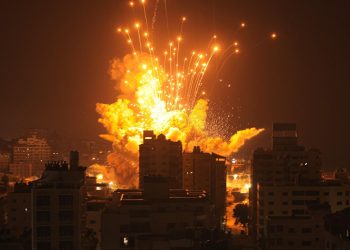
US says Iran campaign cost $11 billion in six days
The opening week of the war against Iran cost the United States more than $11.3 billion, lawmakers were told in...