Sunday, March 15, 2026
  • About us
    • Write for us
    • Disclaimer
    • Terms of use
    • Privacy Policy
  • RSS Feeds
  • Advertise with us
  • Contact us
DefenceTalk
  • Home
  • Defense News
    • Defense & Geopolitics News
    • War Conflicts News
    • Army News
    • Air Force News
    • Navy News
    • Missiles Systems News
    • Nuclear Weapons
    • Defense Technology
    • Cybersecurity News
  • Military Photos
  • Defense Forum
  • Military Videos
  • Military Weapon Systems
    • Weapon Systems
    • Reports
No Result
View All Result
  • Home
  • Defense News
    • Defense & Geopolitics News
    • War Conflicts News
    • Army News
    • Air Force News
    • Navy News
    • Missiles Systems News
    • Nuclear Weapons
    • Defense Technology
    • Cybersecurity News
  • Military Photos
  • Defense Forum
  • Military Videos
  • Military Weapon Systems
    • Weapon Systems
    • Reports
No Result
View All Result
DefenceTalk
No Result
View All Result
Home Defence & Military News Technology News

China launches first module for space station

by Agence France-Presse
September 30, 2011
in Technology News
2 min read
0
NASA extends contract with Russia for trips to space station
14
VIEWS

China took its first step towards building a space station on Thursday when it launched an experimental module ahead of National Day celebrations.

Tiangong-1, or “Heavenly Palace”, took off on schedule shortly after 9:15 pm (1315 GMT) from the Gobi desert in China’s northwest, propelled by a Long March 2F rocket, ahead of China’s National Day on October 1.

The unmanned 8.5-tonne module will test a number of space operations as a preliminary step towards building a space station by 2020.

Chinese Premier Wen Jiabao was at the launch centre for the take-off, while President Hu Jintao watched from a space flight control centre in Beijing, the state Xinhua news agency said.

Ten minutes after launching, the Tiangong-1 separated successfully from its carrier rocket at a height of around 200 kilometres (125 miles) before opening its two solar panels, Xinhua said.

China sees its ambitious space programme as a symbol of its global stature and state newspapers devoted several pages to the launch, hailing it as a “milestone” for the country.

US experts, quoted by Chinese state media, were more reserved in their reaction to the launch.

“Tiangong-1 is the next step in China’s slow-paced but steady effort to achieve human spaceflight capability,” John Logsdon, a space policy expert at George Washington University, told Xinhua.

“By itself it is not a major step forward, but is important to China’s demonstrating rendezvous and docking technologies,” he said.

Tiangong-1, which has a two-year lifespan in space, will receive the unmanned Shenzhou VIII spacecraft later this year in what would be the first Chinese docking in space.

If that succeeds, the module will then dock with two other spacecraft — Shenzhou IX and X — in 2012, both of which will have at least one astronaut on board.

The technology for docking in space is hard to master because the two vessels, placed in the same orbit and revolving around Earth at some 28,000 kilometres per hour, must come together progressively to avoid destroying each other.

French researcher Isabelle Sourbes-Verger said that a correctly functioning docking system would put China “in a potential position to one day access the International Space Station (ISS).”

But she cautioned that this was not likely to happen in the next five years.

China, which has only been open to the world for some 30 years, is playing catch-up in the space arena.

Just like its first manned spaceflight in 2003, the planned space docking later this year will emulate what the Americans and Russians achieved in the 1960s.

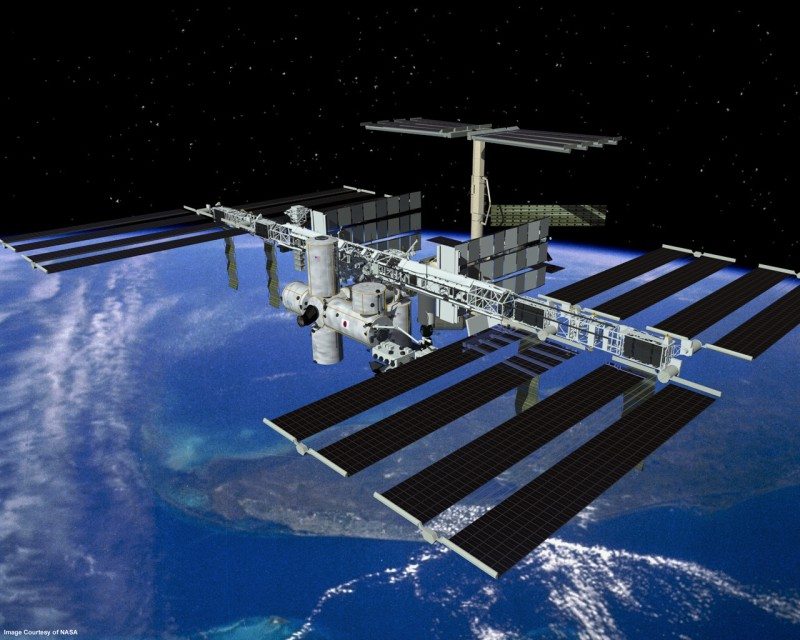
China aims to finish its space station, where astronauts can live autonomously for several months as they do on the ISS or the former Russian Mir, by 2020.

Beijing began its manned spaceflight programme in 1990, after it bought Russian technology that enabled it to become the third country to send humans into space, after the former Soviet Union and the United States.

On its national day last year, China launched its second lunar probe, Chang’e-2, and the first Chinese probe destined for Mars is due to be launched by a Russian rocket this autumn.

It is unclear whether China plans to send humans to the moon, particularly after the United States said it would not return there.

But the official China Daily newspaper quoted Wu Ping, a spokeswoman for China’s manned space programme, as saying that the Asian nation was doing “concept research and preliminary feasibility studies on manned moon landings.”

She added there was currently no set timetable for such a landing.

Tags: chinaspacespace station
Previous Post

Eurocopter EC135 Marks 10,000 Flight Hours

Next Post

Swiss Approve Army Budget and Jets

Related Posts

US needs top cyber coordinator, better hacker ‘deterrence’

‘Digital fog of war’ around Iranian cyberattacks

March 13, 2026

Hostilities on the digital front have intensified since the outbreak of war between the US, Israel and Iran, with many...

US moves closer to retaliation over hacking as cyber woes grow

Cyberattack Disrupts Operations at MedTech Giant Stryker

March 11, 2026

A cybersecurity incident affecting Stryker Corporation—one of the world’s largest manufacturers of medical devices—has drawn renewed attention to the growing...

Next Post
Swiss Government Stands by Fighter Jet Plans

Swiss Approve Army Budget and Jets

Latest Defense News

US needs top cyber coordinator, better hacker ‘deterrence’

‘Digital fog of war’ around Iranian cyberattacks

March 13, 2026
US military says aircraft crash in Iraq killed 4 crew members

US military says aircraft crash in Iraq killed 4 crew members

March 13, 2026
Northrop Grumman moves to boost B-21 Raider output

Northrop Grumman moves to boost B-21 Raider output

March 13, 2026
US Navy evacuates virus-struck aircraft carrier Roosevelt

US military ‘not ready’ to escort tankers through Hormuz Strait

March 12, 2026
Israel cancels leave for combat units after Iran consulate strike

US says Iran campaign cost $11 billion in six days

March 12, 2026
US moves closer to retaliation over hacking as cyber woes grow

Cyberattack Disrupts Operations at MedTech Giant Stryker

March 11, 2026

Defense Forum Discussions

  • General Information on missile/artillery developments
  • Australian Army Discussions and Updates
  • Middle East Defence & Security
  • Indian Air Force Development discussion
  • Royal New Zealand Navy Discussions and Updates
  • Turkey's future weapons
  • The Russian-Ukrainian War Thread
  • Indonesia: 'green water navy'
  • Japanese Maritime Self Defense Force Thread
  • RSN capabilities
DefenceTalk

© 2003-2020 DefenceTalk.com

Navigate Site

  • Defence Forum
  • Military Photos
  • RSS Feeds
  • About us
  • Advertise with us
  • Contact us

Follow Us

No Result
View All Result
  • Home
  • Defense News
    • Defense & Geopolitics News
    • War Conflicts News
    • Army News
    • Air Force News
    • Navy News
    • Missiles Systems News
    • Nuclear Weapons
    • Defense Technology
    • Cybersecurity News
  • Military Photos
  • Defense Forum
  • Military Videos
  • Military Weapon Systems
    • Weapon Systems
    • Reports

© 2003-2020 DefenceTalk.com