Wednesday, March 18, 2026
  • About us
    • Write for us
    • Disclaimer
    • Terms of use
    • Privacy Policy
  • RSS Feeds
  • Advertise with us
  • Contact us
DefenceTalk
  • Home
  • Defense News
    • Defense & Geopolitics News
    • War Conflicts News
    • Army News
    • Air Force News
    • Navy News
    • Missiles Systems News
    • Nuclear Weapons
    • Defense Technology
    • Cybersecurity News
  • Military Photos
  • Defense Forum
  • Military Videos
  • Military Weapon Systems
    • Weapon Systems
    • Reports
No Result
View All Result
  • Home
  • Defense News
    • Defense & Geopolitics News
    • War Conflicts News
    • Army News
    • Air Force News
    • Navy News
    • Missiles Systems News
    • Nuclear Weapons
    • Defense Technology
    • Cybersecurity News
  • Military Photos
  • Defense Forum
  • Military Videos
  • Military Weapon Systems
    • Weapon Systems
    • Reports
No Result
View All Result
DefenceTalk
No Result
View All Result
Home Defence & Military News Defense Geopolitics News

Smart Defense Initiative Is NATO’s Last Chance To Stay Relevant

by Lexington institute
January 17, 2012
in Defense Geopolitics News
3 min read
0
Smart Defense Initiative Is NATO’s Last Chance To Stay Relevant
14
VIEWS

Seventy years ago almost to the day the first American military personnel, liaison officers and strategic planners arrived in Europe. They were the vanguard of the millions that would eventually follow to liberate the continent, support Europe’s reconstruction, deter Soviet aggression and win the Cold War.

With the demise of the Soviet Union in 1992, the central rationale for the American military presence in Europe vanished. Since then the United States and Europe have been engaged in a “long goodbye.” Now the farewells are about over. As part of the new defense strategy, Secretary of Defense Leon Panetta announced yesterday that the United States will be removing two of its remaining four Army brigades from Europe. While Panetta promised that the Pentagon will rotate units into Europe, the underlying reality is that in the future the United States, faced with its own fiscal crisis, will not be able to provide for the security of Europe as it has done in the past.

Today, the future of the NATO alliance and the defense of Europe are very much in doubt. Absent the United States, NATO is very much a shell of a military alliance. Chronic under-investment by the majority of NATO nations has resulted in an alliance that, sans the United States, is unable to punch up to its weight. This was demonstrated during the recent Libyan campaign with the lack of aerial tankers, reconnaissance systems, smart weapons and even trained personnel. In a fit of despair, then outgoing Secretary of Defense Robert Gates fumed: “The mightiest military alliance in history is only 11 weeks into an operation against a poorly armed regime in a sparsely populated country, yet many allies are beginning to run short of munitions, requiring the U.S., once more, to make up the difference.”

No less a figure than Norway’s Minister of Defense, Espen Barth Eide warned in a recent speech at the Europhile think tank CSIS that “Article 5 is not in such a good shape. . . I’m not talking about political will, but the actual ability to deliver if something happens in the trans-Atlantic theater of a more classical type of aggression.” This is the reality even before the United States removes forces from Europe, further reduces military capabilities in order to save $480 billion and shifts its focus to the Asia-Pacific region.

In response to the capability deficits highlighted by the Libyan campaign and to the recognition that Europe’s parlous financial situation means there will be no additional resources for defense, NATO is pursuing a program of Smart Defense. As described by the alliance’s Secretary General, Anders Fogh Rasmussen, this is an approach that the United States might well wish to adopt. “I know that in an age of austerity, we cannot spend more. But neither should we spend less. So the answer is to spend better. And to get better value for money. To help nations to preserve capabilities and to deliver new ones. This means we must prioritize, we must specialize, and we must seek multinational solutions. Taken together, this is what I call Smart Defense.”

As the United States implements its new defense strategy and NATO works on its Smart Defense initiative, both should look for ways to harmonize their efforts. The rationalization of the two efforts should be a major theme of the NATO summit in Chicago this May. One way is to expand cooperative arms purchases. Norway’s defense minister specifically mentioned NATO members’ purchases of the F-35 Joint Strike Fighter as an example of Smart Defense. NATO should look for similar opportunities in areas such as theater missile defense, unmanned aerial systems and precision weapons.

NATO’s last chance to remain relevant is to implement Smart Defense smartly.

Tags: europeNATOSmart DefenseWorld Military
Previous Post

NATO Anti-Missile Radar in Turkey Put into Operation

Next Post

Egypt military ruler in Libya to boost ties

Related Posts

Israel cancels leave for combat units after Iran consulate strike

US says Iran campaign cost $11 billion in six days

March 12, 2026

The opening week of the war against Iran cost the United States more than $11.3 billion, lawmakers were told in...

Lebanon says Israeli strike kills 3 journalists

Israel strikes central Beirut as Lebanon death toll tops 630

March 11, 2026

Israel carried out a strike in the heart of Beirut on Wednesday for a second time since Lebanon was dragged...

Next Post
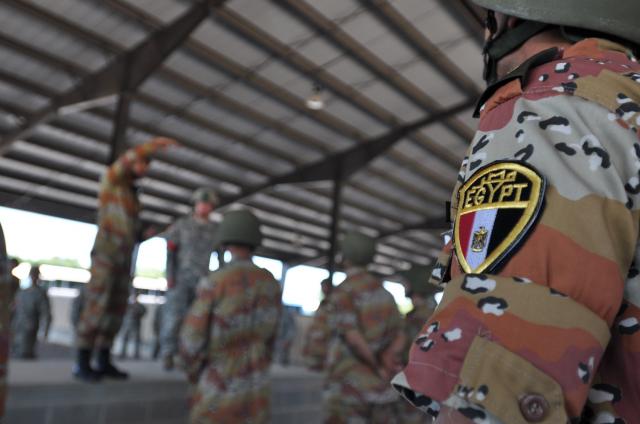
Egypt military ruler in Libya to boost ties

Egypt military ruler in Libya to boost ties

Latest Defense News

US needs top cyber coordinator, better hacker ‘deterrence’

‘Digital fog of war’ around Iranian cyberattacks

March 13, 2026
US military says aircraft crash in Iraq killed 4 crew members

US military says aircraft crash in Iraq killed 4 crew members

March 13, 2026
Northrop Grumman moves to boost B-21 Raider output

Northrop Grumman moves to boost B-21 Raider output

March 13, 2026
US Navy evacuates virus-struck aircraft carrier Roosevelt

US military ‘not ready’ to escort tankers through Hormuz Strait

March 12, 2026
Israel cancels leave for combat units after Iran consulate strike

US says Iran campaign cost $11 billion in six days

March 12, 2026
US moves closer to retaliation over hacking as cyber woes grow

Cyberattack Disrupts Operations at MedTech Giant Stryker

March 11, 2026

Defense Forum Discussions

  • Japan Air Self-Defence Force
  • The Russian-Ukrainian War Thread
  • Royal Australian Navy Discussions and Updates 2.0
  • Royal Australian Air Force [RAAF] News, Discussions and Updates
  • Australian Army Discussions and Updates
  • ADF General discussion thread
  • NZDF General discussion thread
  • Royal New Zealand Navy Discussions and Updates
  • Middle East Defence & Security
  • General Aviation Thread
DefenceTalk

© 2003-2020 DefenceTalk.com

Navigate Site

  • Defence Forum
  • Military Photos
  • RSS Feeds
  • About us
  • Advertise with us
  • Contact us

Follow Us

No Result
View All Result
  • Home
  • Defense News
    • Defense & Geopolitics News
    • War Conflicts News
    • Army News
    • Air Force News
    • Navy News
    • Missiles Systems News
    • Nuclear Weapons
    • Defense Technology
    • Cybersecurity News
  • Military Photos
  • Defense Forum
  • Military Videos
  • Military Weapon Systems
    • Weapon Systems
    • Reports

© 2003-2020 DefenceTalk.com