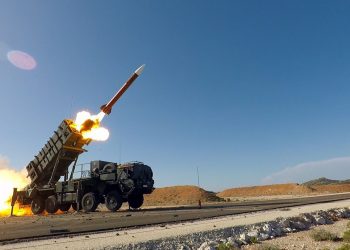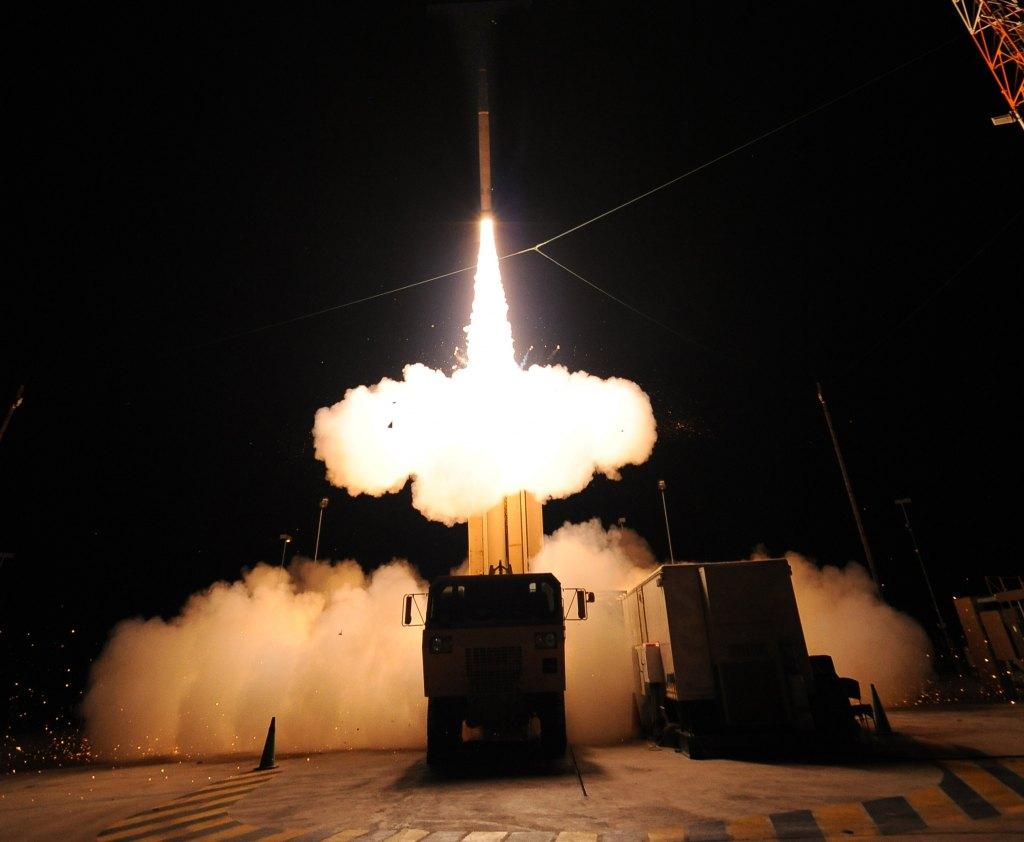
U.S. efforts to build effective missile defenses are more important than ever for defending the nation and its deployed forces and for cooperating with allies and partners, a senior defense policy official said today.
James N. Miller, principal deputy undersecretary of defense for policy, told attendees at a missile defense conference here that the nation’s missile defense efforts, while focused on a few emerging threats, also span the globe.
“We continue to focus on Iran and North Korea as particular threats to us and our allies,” Miller said.
Iran already has the largest inventory of ballistic missiles in the Middle East, he said, and is working to develop salvo-launch and intercontinental ballistic missile capabilities.
North Korea, despite the “urgent humanitarian needs of its destitute population,” is likewise modernizing its missile arsenal, Miller said. North Korea’s inventory already includes “a substantial number of mobile ballistic missiles that could strike targets in South Korea, Japan, and U.S. bases in the Pacific,” he added.
Both nations’ nuclear potential increases U.S. strategic concerns about missile defense, Miller said, and other nations and nonstate actors also pose a significant threat.
The United States adopted a phased, adaptive approach to European ballistic missile defense in 2009 to deter and defend against “the development, acquisition, deployment and use of ballistic missiles by regional adversaries,” he said. The strategy relies heavily on systems that can be relocated, allowing the United States and its allies to adjust to a complex and changing threat environment, he explained. The approach will bring together sea-, land- and space-based systems in four phases of deployment through 2020, Miller said.
“Technological advances or future changes in the threats could modify the … timing of the later phases,” he said. “That’s one reason the approach is called adaptive.”
NATO endorsed the phased, adaptive approach and agreed to make current and future missile defense systems interoperable across NATO, he said.
Looking beyond Europe, U.S. strategy is to apply the phased, adaptive missile defense approach in other regions, particularly in East Asia and the Middle East, he said.
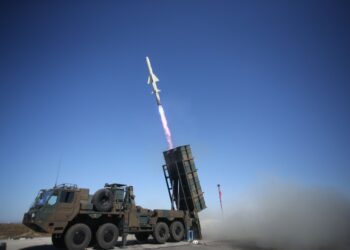
In Asia, the United States is partnered with key allies including Japan, Australia and South Korea to enhance missile defense, he said. Japan now has a layered ballistic missile defense capability that includes U.S. tracking systems, interceptors, early warning radars and a command-and-control structure that integrates those technologies, Miller said.
“We regularly train together, and have successfully executed simulated cooperative [ballistic missile defense] operations,” he said. “We’re also engaged in cooperative development of the next-generation … interceptor, which is projected to enter service in 2018.”
China obviously is a key component of security strategy in the Pacific, Miller said.
“The United States welcomes a strong, prosperous and successful China that plays a greater global role in supporting international rules, norms of responsible behavior and institutions,” he said. At the same time, he said, the United States and China’s neighbors remain concerned about its military buildup and objectives. Miller noted that China likely is nearing deployment of a medium-range anti-ship missile.
Greater transparency from China about its military strategy could reduce the chance of a misunderstanding or miscalculation, Miller said, and toward that end the United States continues to seek greater government-to-government communication with Chinese leaders.
When Defense Secretary Robert M. Gates visited China earlier this year, he proposed a strategic dialogue to cover space, cyberspace, nuclear missile defense and other topics, Miller said.
“We are quite optimistic about the prospects of beginning such a dialogue in the not-too-distant future,” Miller said.
Turning to the Middle East, Miller noted the region is experiencing tremendous change and uncertainty, adding to its strategic prominence.
The United States and Israel have a long-standing relationship on ballistic missile defense that includes regular military exercises and cooperation in a number of programs, he said.
“In the Persian Gulf, the United States maintains a robust mix of missile defenses,” Miller said. “To protect our troops and facilities in the region, we have developed a series of bilateral missile defense agreements with the nations of the Gulf Cooperation Council.”
Missile defense cooperation between the United States and Russia is also growing, Miller said, noting recent progress in defense cooperation between the two nations includes the entry into force of the New START treaty.
Ultimately, the United States’ objective is to cooperate with both Russia and NATO, but not take the lead for ballistic missile defense in those regions, he said.
“We would operate our respective systems independently but cooperatively,” with that cooperation including sharing sensor data, he said.
As missile defense is a key element of U.S. military strategy, Miller said, funding the technology behind the capability is a high priority.
“DOD is proposing to spend about $10 billion for missile defense in fiscal year 2012,” he said. “This critical investment in our military’s preparedness … contributes materially to the defense of the United States and to international security.”