With military budgets shrinking as threats grow in number and complexity, the Defense Department still must ensure the Army, Navy, Air Force and Marine Corps can defend national security in the coming decades.
“The Joint Operational Access Concept is an important first step,” a senior Pentagon officer told reporters here Jan. 20.
Marine Corps Lt. Gen. George Flynn, the Joint Staff’s director of joint force development, said the concept — which Joint Chiefs of Staff Chairman Army Gen. Martin E. Dempsey released last week — provides a framework for developing forces for future wars.
“This concept describes, in broad and general terms, how the joint force will operate in response to what we see as a growing challenge to our ability to achieve and maintain operational access … in the various domains [of sea, land, air, space and cyberspace],” Flynn said.
The 64-page concept focuses on defeating enemy “anti-access and area-denial” capabilities — getting U.S. forces into places and then moving them around within those places against enemy opposition.
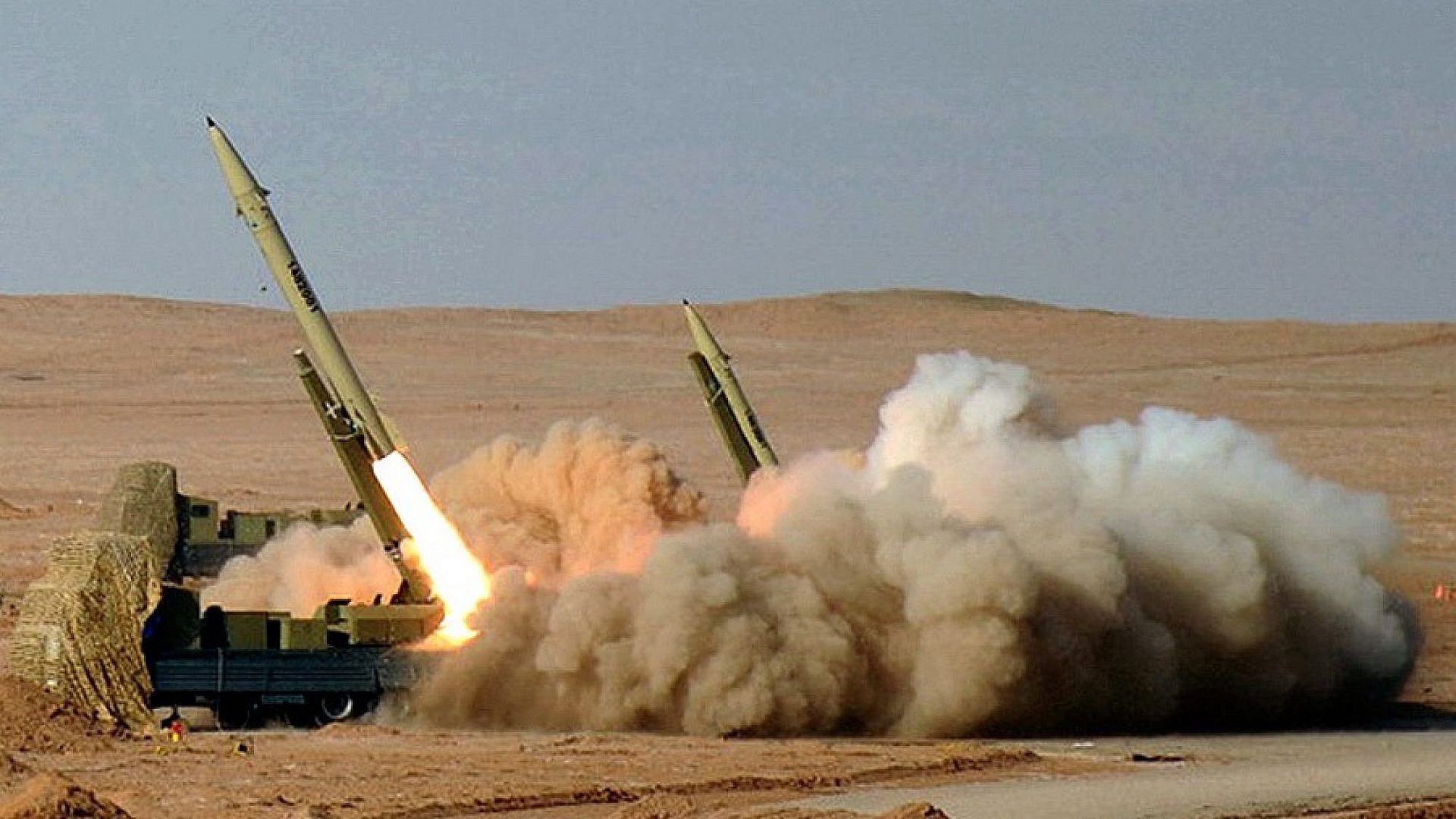
That opposition can include “mines, missiles, cyber threats — but complicated by the threat that a lot of those capabilities could be available to nontraditional [actors], just because of the proliferation of technology,” Flynn said.
The general offered as an example nonstate actors — groups that aren’t aligned with national governments — who can pose a disproportionate threat in the cyber domain.
“That’s why it’s important, as we do force development, that we don’t get myopic on a specific threat,” he added.
The concept’s authors say there are three reasons why gaining access against armed opposition is the “essential problem” for future joint forces: potential enemies are acquiring dramatically improved anti-access and area-denial capabilities; the number of U.S. troops permanently based overseas is declining, which will mean deploying troops for combat from the United States; and space and cyberspace are becoming increasingly important and contested domains.
The concept lists 30 critical capabilities, divided among command and control, intelligence, fires [which the document’s glossary defines as “the use of weapon systems to create a specific lethal or nonlethal effect on a target”], movement and maneuver, protection, sustainment, information and engagement.
It’s too soon to tie those capabilities to platforms or tactics, techniques and procedures, Flynn said, but the 30 objectives will serve as a guide to the military services in their spending plans.
“Those capabilities … can be provided by one service, or it could be the collective capability of the joint force,” he said. “The existing force development processes [will] bring those capabilities to reality.”
The concept emphasizes joint operations, synergy and cooperation starting at a much lower level than they do now, the general noted. DOD’s existing air-sea battle strategy and upcoming concepts detailing entry, littoral (seas, lakes and rivers close to shore), and sustained land-based operations will align under the joint access concept, Flynn said.
When Dempsey released the new concept document, initial response within the Pentagon to its emphasis on “cross-domain synergy” was that it’s nothing new, Flynn said.
“It is something we have to explore in greater detail,” he added. “Traditionally, we used to talk about combined arms … [in] the same domain. … What we’re saying in the Joint Operational Access Concept is we’re going to have multiple-domain operations going on that have to be sequenced in a way that they’ve never been sequenced before.”
The military understands the traditional domains of land, sea, air and space very well, Flynn said. “You have this new domain, cyber — man-made, that changes all the time — that now has to be thrown into the mix,” he added.
That’s one challenge, he said, and another challenge is the level at which future conflicts will need to “go joint.”
“We think that this is going to have to be operated … [and] coordinated at lower levels than we’ve ever had to do this before,” he explained. Lower-level operational synergy among services is core to the concept, and so is integrating cyber into the battle space, Flynn said. Both ideas need more exploration before they can be realized, he added.
The concept is in line with the guidance he got from Dempsey to “take jointness and push it deeper, sooner in our force development,” Flynn said.
Earlier emphasis on joint operations will allow the nation’s military to achieve its objectives more effectively, more efficiently and more affordably, he added.
Warfare will become more complex as threats in the cyber domain mature, Flynn said, and equipment, doctrine, tactics, training and organization will have to adapt to that reality.
The Capstone Concept for Joint Operations, last updated in 2009, details the main security challenges facing the joint force: winning the nation’s wars, deterring adversaries, developing cooperative security, defending the homeland and responding to civil crises.
“This month, we just completed the review of the Capstone Concept for Joint Operations,” Flynn noted. “[We’re now] undertaking a revision of that document, and we’re on a pretty aggressive timeline.”
In the hierarchy of documents, Flynn said, the revised capstone concept will bridge the Joint Operational Access Concept and further development of joint doctrine.
The current version of the capstone concept doesn’t address the speed at which future operations will have to happen, Flynn said, adding that the new concept serves as a guide to the services and the joint force in managing development changes already under way and still to come.
“It’s really easy to say, ‘I have a concept. I have to be able to operate fast. I have to be able to do this at levels lower than I ever have before,’” Flynn noted.
“Will we be able to field that tomorrow?” he asked. “No. What we’re doing is identifying the challenges, identifying in general terms the capabilities, so that we can get to where … [we can] operate at speed [and] integrate at lower levels, and … do that in a joint context.”