Sunday, March 22, 2026
  • About us
    • Write for us
    • Disclaimer
    • Terms of use
    • Privacy Policy
  • RSS Feeds
  • Advertise with us
  • Contact us
DefenceTalk
  • Home
  • Defense News
    • Defense & Geopolitics News
    • War Conflicts News
    • Army News
    • Air Force News
    • Navy News
    • Missiles Systems News
    • Nuclear Weapons
    • Defense Technology
    • Cybersecurity News
  • Military Photos
  • Defense Forum
  • Military Videos
  • Military Weapon Systems
    • Weapon Systems
    • Reports
No Result
View All Result
  • Home
  • Defense News
    • Defense & Geopolitics News
    • War Conflicts News
    • Army News
    • Air Force News
    • Navy News
    • Missiles Systems News
    • Nuclear Weapons
    • Defense Technology
    • Cybersecurity News
  • Military Photos
  • Defense Forum
  • Military Videos
  • Military Weapon Systems
    • Weapon Systems
    • Reports
No Result
View All Result
DefenceTalk
No Result
View All Result
Home Defence & Military News Navy News

Navy Turns to UAVs for Help with Radar, Communications

by US Navy
August 6, 2013
in Navy News
2 min read
0
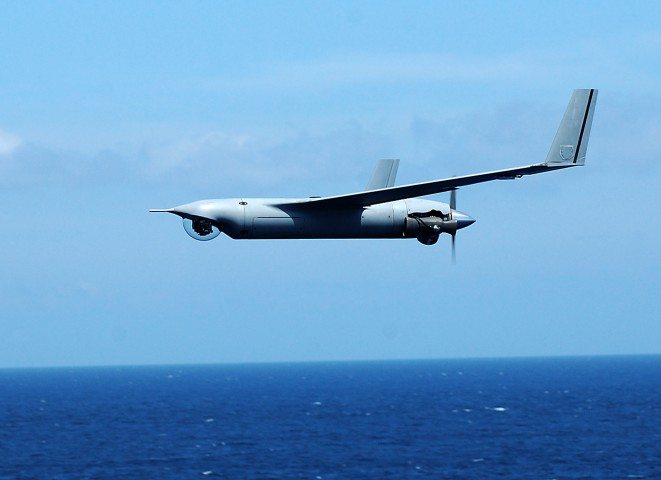
Enhanced Nighttime Imagery On Its NightEagle
14
VIEWS

Scientists recently launched unmanned aerial vehicles (UAVs) from a research vessel in a significant experiment that could help boost the Navy’s radar and communications performance at sea.

Sailing off Virginia Beach, Va., from July 13 to 18, the Office of Naval Research’s (ONR) Research Vessel (R/V) Knorr explored ocean and atmospheric weather variations that can change the angle that radar and radio waves bend, making it more difficult for ships to remain undetected and hindering their ability to communicate or locate adversaries.

Sponsored by ONR’s Ocean Battlespace Sensing Department and the Oceanographer of the Navy, the initiative was part of Trident Warrior-a large annual fleet experiment organized by Navy Warfare Development Command.

Researchers used ONR-owned ScanEagle UAVs-along with unmanned undersea and surface vehicles-to obtain accurate, real-time measurements of variations in atmospheric and ocean conditions. Fluxes and turbulence caused by the interaction between the air and sea can significantly alter the path of electromagnetic waves in radar and communications systems.

Atmospheric “ducts” can trap energy in the lowest layer of the atmosphere, allowing radar and communications to travel over much longer distances, increasing the chances that information could reach unintended audiences. Energy also could be trapped aloft, preventing Navy radars from seeing things even if they normally would be well within range.

“We need to understand where we are in relation to this ducting environment and understand the energy we’re emitting and the energy an adversary is emitting,” said Dr. Dan Eleuterio, program officer for ONR’s Ocean Battlespace Sensing Department. “If we don’t know these things, it’s like rolling the dice. If we do know them, it can give us a tactical advantage.”

Smaller, light unmanned aircraft are ideal for the task, because they can launch from a ship, get close to the ocean’s surface and fly for extended periods of time. During the experiment, the UAVs flew as close as 100 feet above the ocean’s surface, allowing for more precise measurements.

Developed by the Marine Physical Laboratory at Scripps Institution of Oceanography, the sensor packages used on the ScanEagles measured everything from surface waves, winds, humidity and temperature to fluxes in mass, momentum and energy. Once collected, the data was delivered to personnel aboard a destroyer and an amphibious assault ship participating in the experiment.

“In the old days, we launched weather balloons to give us the best data on the real environment, but that only happened in one place and at one time of day,” said Cmdr. Rob Witzleb, head of capabilities and requirements on the staff of the Oceanographer of the Navy.

“Many miles and hours later, we were often left looking for answers when weapon systems didn’t perform the way we thought they would. Using UAVs is giant leap forward in that they can give us near-continuous data, across multiple parameters where the atmosphere is the most unpredictable.”

The recent research aboard R/V Knorr is in keeping with Chief of Naval Operations Adm. Jonathan Greenert’s call for the Navy to expand the reach of its sensors and platforms with unmanned and autonomous systems. He has described these assets as critical for the Navy to dominate the new arenas of the electromagnetic spectrum and cyberspace.

Tags: communicationsNavy & Maritime Security NewsradarUnmanned Aerial Vehicle
Previous Post

End of era: Bradley fighting vehicles leave Germany

Next Post

US Navy, Boeing Sign $2 Billion Order for 13 P-8A Poseidon Aircraft

Related Posts

US Navy evacuates virus-struck aircraft carrier Roosevelt

US military ‘not ready’ to escort tankers through Hormuz Strait

March 12, 2026

The US military is currently "not ready" to escort tankers through the critical Strait of Hormuz because all its assets...

North Korea’s Kim oversees naval destroyer, cruise missile test

North Korea’s Kim oversees naval destroyer, cruise missile test

March 6, 2026

North Korean leader Kim Jong Un oversaw tests this week of his country's naval destroyer, claiming Pyongyang is in the...

Next Post
Australia to Acquire P-8A Poseidon Long Range Maritime Patrol Aircraft

US Navy, Boeing Sign $2 Billion Order for 13 P-8A Poseidon Aircraft

Latest Defense News

US needs top cyber coordinator, better hacker ‘deterrence’

‘Digital fog of war’ around Iranian cyberattacks

March 13, 2026
US military says aircraft crash in Iraq killed 4 crew members

US military says aircraft crash in Iraq killed 4 crew members

March 13, 2026
Northrop Grumman moves to boost B-21 Raider output

Northrop Grumman moves to boost B-21 Raider output

March 13, 2026
US Navy evacuates virus-struck aircraft carrier Roosevelt

US military ‘not ready’ to escort tankers through Hormuz Strait

March 12, 2026
Israel cancels leave for combat units after Iran consulate strike

US says Iran campaign cost $11 billion in six days

March 12, 2026
US moves closer to retaliation over hacking as cyber woes grow

Cyberattack Disrupts Operations at MedTech Giant Stryker

March 11, 2026

Defense Forum Discussions

Loading RSS Feed
DefenceTalk

© 2003-2020 DefenceTalk.com

Navigate Site

  • Defence Forum
  • Military Photos
  • RSS Feeds
  • About us
  • Advertise with us
  • Contact us

Follow Us

No Result
View All Result
  • Home
  • Defense News
    • Defense & Geopolitics News
    • War Conflicts News
    • Army News
    • Air Force News
    • Navy News
    • Missiles Systems News
    • Nuclear Weapons
    • Defense Technology
    • Cybersecurity News
  • Military Photos
  • Defense Forum
  • Military Videos
  • Military Weapon Systems
    • Weapon Systems
    • Reports

© 2003-2020 DefenceTalk.com