WASHINGTON: President Barack Obama’s decision to restructure a previous missile defense plan designed to protect Europe from a possible ballistic missile attack from Iran provides a more effective, flexible system that will take less time to implement, senior Pentagon officials said on Capitol Hill today.
“We are confident that our new approach represents a dramatic improvement over the program of old,” Undersecretary of Defense for Policy Michele Flournoy told Senate Armed Services Committee members.
Under the previous plan developed by the Bush administration in 2007, the United States would emplace missile-tracking radar units in the Czech Republic and 10 interceptor missiles in Poland. The purpose of the system, officials said, is to protect Europe from potential ballistic missile attacks from the Middle East, specifically Iran.
Obama announced a change in plans Sept. 17. Switching to existing ship- and ground-based radars and using the Standard Missile 3 as an interceptor that can be launched from U.S. Navy Aegis-equipped ships or from land, he said, provides “greater defenses against the threat of missile attack than the 2007 European missile defense program.”
By implementing the new plan, “we’ll be able to protect vulnerable parts of Europe and the tens of thousands of U.S. troops stationed there by the end of 2011,” Flournoy said. “And, we’ll be creating a far more flexible and adaptive missile defense system, one that can adapt to provide better protection against emerging threats.”
The previous European missile defense plan couldn’t be put into operation “until at least 2017,” Flournoy said. New intelligence data, she said, helped to drive the decision to change the program.
“The intelligence community now assesses that the threat from Iran’s short- and medium-range ballistic missiles is developing more rapidly than previously projected,” Flournoy said, “while the threat of potential Iranian intercontinental ballistic missiles, or ICBMs, has been somewhat slower to develop than previously estimated.”
Therefore, Flournoy said, in the near term “the greatest missile threats from Iran will be to our allies and our partners, and U.S. deployed personnel and their families, in the Middle East and in Europe.” That concern, she said, is all the more urgent because of Iran’s continued uranium-enrichment program.
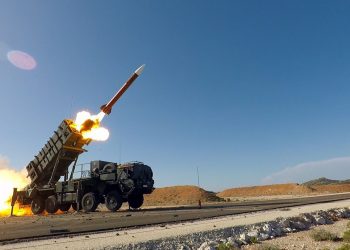
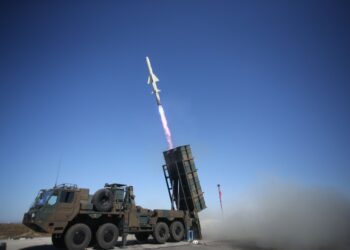
The new missile-defense system is based on proven Standard Missile 3 interceptors, Flournoy explained, which can be launched from both U.S. Navy Aegis ships and from land.
“This means greater geographic flexibility, greater survivability and greater scalability in response to an evolving threat,” she said. “That’s exactly what we mean by a phased, adaptive approach.”
Meanwhile, Flournoy said, the United States has “sufficient capability” to deter any Iranian long-range missile threat for many years to come.
Obama approved the new European missile-defense program, Flournoy said, upon the unanimous recommendations of Defense Secretary Robert M. Gates and Navy Adm. Mike Mullen, chairman of the Joint Chiefs of Staff.
In late 2006, Gates recommended to then-President George W. Bush that the United States place radar units in the Czech Republic and 10 ground-based missile interceptors in Poland. But, that was when intelligence officials had gauged Iran’s work on developing longer-range ballistic missiles as being the greater threat.
The new missile-defense plan, Flournoy said, also “greatly increases our ability to work with our European allies and our partners to strengthen extended deterrents and our mutual defenses.”
The United States, Flournoy said, is now consulting with allies Poland and the Czech Republic about their potential roles in the new missile-defense program.
The Russian government, which had been opposed to the previous European missile-defense plan, seems to like the new one better.
“While we certainly welcome Russian interest in the new approach, as well as potential Russian cooperation in sharing data from their radars, this is not about Russia,” Flournoy said of the rationale to change the structure of the European missile defense plan.
“Regardless of Russian reaction, we will continue to do whatever it takes to ensure the security and defense of our European allies,” she said.
Flournoy was accompanied at the Senate hearing by Marine Corps Gen. James E. Cartwright, vice chairman of the Joint Chiefs of Staff; and Army Lt. Gen. Patrick J. O’Reilly, director of the Defense Department’s Missile Defense Agency.
Providing an effective overseas-based anti-ballistic-missile deterrent is a necessary requirement, Cartwright said, that’s “emerging as the greatest need that we have today, that we face out there against these short- and medium-range ballistic missiles.”
O’Reilly attested to the capabilities of the SM-3 interceptor missile that plays such an important role in the new program.
The SM-3 interceptor “is a very capable weapon due to its high acceleration, burn velocity and its proven track record,” O’Reilly said. Using the SM-3, he said, also provides an “ability to rapidly increase to over 80 interceptors at any one launch site.”