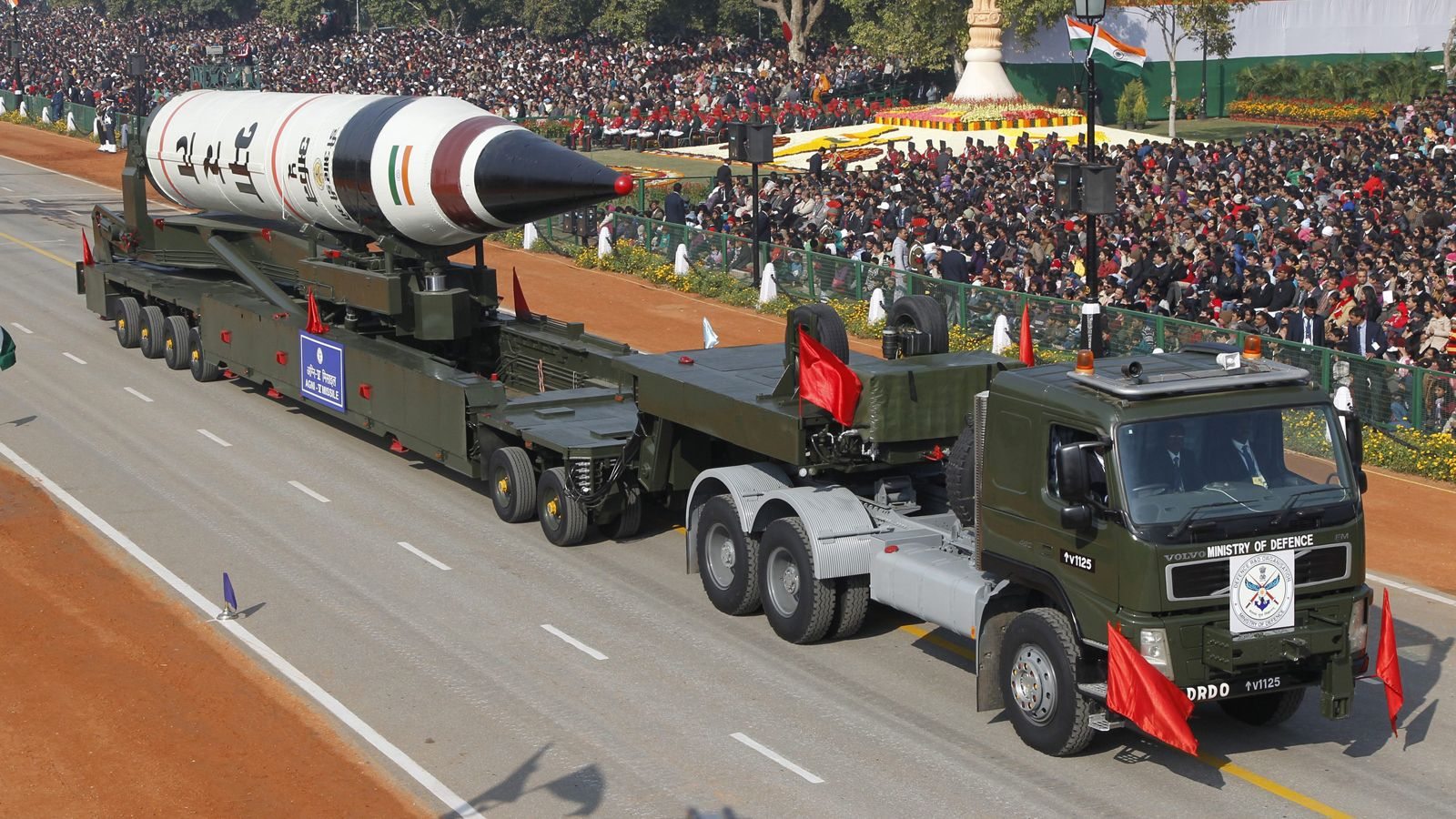
A report examining nuclear security worldwide suggests India’s “nuclear security measures may be weaker than those of Pakistan”, but says the risk “appears to be moderate”, while claiming risk of nuclear theft in Pakistan “appears to be high”.
The Harvard Kennedy School report, “Preventing Nuclear Terrorism: Continuous Improvement or Dangerous Decline?”, says it is difficult to judge whether India’s nuclear security is capable of protecting against the threats it faces, though it is likely adversary threats in India are “less extreme” than those in Pakistan.
Putting Pakistan “at risk for nuclear theft”, the report says: “Overall, the risk of nuclear theft in Pakistan appears to be high,” citing “some of the world’s most capable terrorist groups, an environment of widespread corruption and extremist sympathies” as risk factors.
The possibility of collapse of the government in Pakistan or an “extremist takeover cannot be entirely ruled out”.
While there is “no clear trend, either upward or downward” regarding the level of risk for Indian nuclear sites, it highlights a trend “toward increasing risk” in Pakistan as its nuclear arsenal expands and the strategic doctrine shifts toward tactical nuclear weapons.
Stronger nuclear security?
“Pakistan has substantially strengthened its nuclear security in the past two decades,” the report says, citing changes in organisations governing nuclear security, training, equipment and approaches to screening personnel, requirements for nuclear material accounting and control, approaches to strengthening security culture and “substantial changes in every other aspect of nuclear security covered in the survey” as reasons for the improved nuclear security.
Measures taken to secure Pakistan’s nuclear weapons highlighted in the report include: – Allotment of 25,000 troops to guard Pakistan’s nuclear stocks and facilities by the Strategic Plans Division (SPD) – Equipment of sites with extensive barriers and detection systems – Separate storage of nuclear weapons components ─ although this may change as Pakistan shifts towards tactical nuclear weapons intended for rapid deployment – Equipment of weapons with locks to prevent unauthorised use – Extensive cooperation with the United States to improve nuclear security
The report also highlights negative trends including: – Absence of recent US expressions of confidence – Shift towards rapid-deployment tactical nuclear weapons – A ‘probable’ increase in the number of locations as a result of an increase in the number of weapons
The report says Pakistan “must protect against almost overwhelming adversary threats” which include terrorist groups that have demonstrated “that they are willing and able to launch complex, well-coordinated attacks on heavily defended military targets within Pakistan”, as was the case in the 2014 attempted hijacking of a naval frigate by Al Qaeda’s South Asian affiliate “with the idea of using its anti-ship missiles to attack US naval vessels”.
The report quotes Defence Minister Khawaja Asif telling parliament ‘these people could not have breached security without assistance from inside’.
Corruption, it says, “can create additional opportunities for insider recruitment”.
However, despite a variety of negative US media reports on Pakistan’s nuclear security, “US officials from President Obama to the Chairman of the Joint Chiefs of Staff have repeatedly expressed confidence in Pakistani nuclear security arrangements”.
It also says the US Defense Intelligence Agency Director “testified in February 2015 that improvements were continuing”.
“It is notable, however, that these statements of confidence have not been repeated at recent high-level US-Pakistani meetings — suggesting that the United States has concerns about some elements of Pakistan’s nuclear security approach,” it said.
‘Why 2016 will be pivotal for nuclear security’
The report calls 2016 a pivotal year for nuclear security, saying “actions in Syria, Iraq, Afghanistan, Pakistan and elsewhere will affect the shape of the terrorist threat for years to come”.
The selection of a new US president may also impact nuclear security initiatives depending on whether or not he or she makes nuclear security a priority, it says.
US and Russia, the two countries with the largest nuclear stockpiles, may or may not find ways to “revitalise their cooperation” in this area after suspension of such measures following escalating tensions over Ukraine and other issues.
‘Ideal scenario by 2030’
Pakistan and India capping their nuclear arsenals and agreeing to confidence-building measures or “other steps that greatly reduce the probability of crises that would lead to the dispersal of nuclear weapons to front-line forces” are among the report’s ideal scenarios by the year 2030.
However, Pakistan and India have continued to expand their arsenals and continue relying on “doctrines likely to lead to early dispersal of those weapons in the event of a crisis”.
Processes for better nuclear security have atrophied over time, the report claims, saying, “No genuinely effective new mechanisms for bringing high-level policy makers together to advance the field have emerged.”