Friday, March 27, 2026
  • About us
    • Write for us
    • Disclaimer
    • Terms of use
    • Privacy Policy
  • RSS Feeds
  • Advertise with us
  • Contact us
DefenceTalk
  • Home
  • Defense News
    • Defense & Geopolitics News
    • War Conflicts News
    • Army News
    • Air Force News
    • Navy News
    • Missiles Systems News
    • Nuclear Weapons
    • Defense Technology
    • Cybersecurity News
  • Military Photos
  • Defense Forum
  • Military Videos
  • Military Weapon Systems
    • Weapon Systems
    • Reports
No Result
View All Result
  • Home
  • Defense News
    • Defense & Geopolitics News
    • War Conflicts News
    • Army News
    • Air Force News
    • Navy News
    • Missiles Systems News
    • Nuclear Weapons
    • Defense Technology
    • Cybersecurity News
  • Military Photos
  • Defense Forum
  • Military Videos
  • Military Weapon Systems
    • Weapon Systems
    • Reports
No Result
View All Result
DefenceTalk
No Result
View All Result
Home Defence & Military News Technology News

Directed energy atmospheric lens could revolutionise future battlefields

by BAE Systems
February 24, 2017
in Technology News
2 min read
0
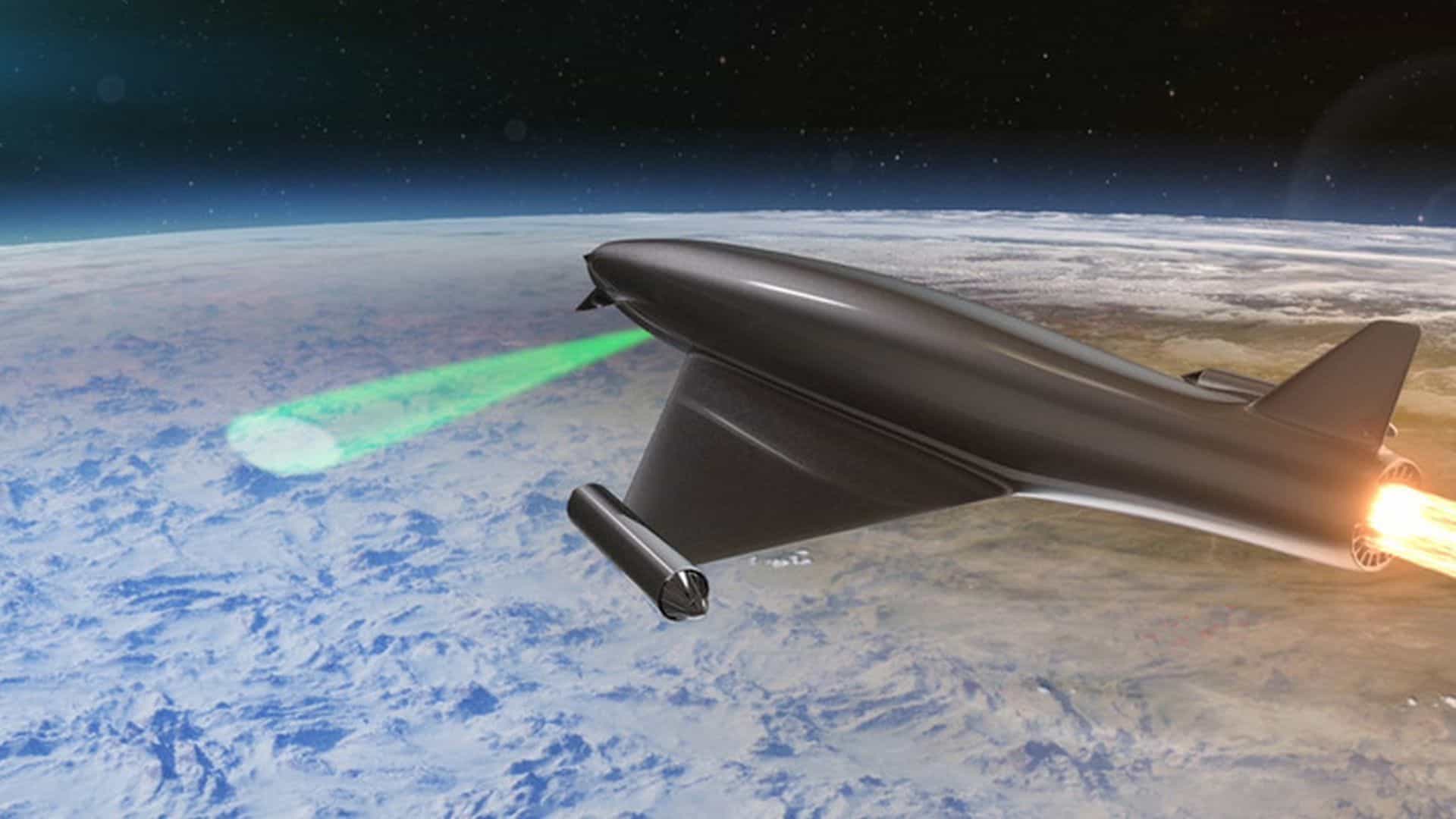
Directed energy atmospheric lens could revolutionise future battlefields
14
VIEWS

ithin the next fifty years, scientists at BAE Systems believe that battlefield commanders could deploy a new type of directed energy laser and lens system, called a Laser Developed Atmospheric Lens which is capable of enhancing commanders’ ability to observe adversaries’ activities over much greater distances than existing sensors.

At the same time, the lens could be used as a form of ‘deflector shield’ to protect friendly aircraft, ships, land vehicles and troops from incoming attacks by high power laser weapons that could also become a reality in the same time period.

The Laser Developed Atmospheric Lens (LDAL) concept, developed by technologists at the Company’s military aircraft facility in Warton, Lancashire, has been evaluated by the Science and Technology Facilities Council (STFC) Rutherford Appleton Laboratory and specialist optical sensors company LumOptica and is based on known science.

It works by simulating naturally occurring phenomena and temporarily – and reversibly – changes the Earth’s atmosphere into lens-like structures to magnify or change the path of electromagnetic waves such as light and radio signals.

LDAL is a complex and innovative concept that copies two existing effects in nature; the reflective properties of the ionosphere and desert mirages. The ionosphere occurs at a very high altitude and is a naturally occurring layer of the Earth’s atmosphere which can be reflective to radio waves – for example it results in listeners being able to tune in to radio stations that are many thousands of miles away.

The radio signals bounce off the ionosphere allowing them to travel very long distances through the air and over the Earth’s surface. The desert mirage provides the illusion of a distant lake in the hot desert. This is because the light from the blue sky is ‘bent’ or refracted by the hot air near the surface and into the vision of the person looking into the distance.

LDAL simulates both of these effects by using a high pulsed power laser system and exploiting a physics phenomena called the ‘Kerr Effect’ to temporarily ionise or heat a small region of atmosphere in a structured way. Mirrors, glass lenses, and structures like Fresnel zone plates could all be replicated using the atmosphere, allowing the physics of refraction, reflection, and diffraction to be exploited.

“Working with some of the best scientific minds in the UK, we’re able to incorporate emerging and disruptive technologies and evolve the landscape of potential military technologies in ways that, five or ten years ago, many would never have dreamed possible,” said Professor Nick Colosimo, BAE Systems’ Futurist and Technologist.

Professor Bryan Edwards, Leader of STFC’s Defence, Security and Resilience Futures Programme said of the work: “For this evaluation project, STFC’s Central Laser Facility team worked closely with colleagues at BAE Systems and by harnessing our collective expertise and capabilities we have been able to identify new ways in which cutting edge technology, and our understanding of fundamental physical processes and phenomena, has the potential to contribute to enhancing the safety and security of the UK.”

Craig Stacey, CEO at LumOptica added: “This is a tremendously exciting time in laser physics. Emerging technologies will allow us to enter new scientific territories and explore ever new applications. We are delighted to be working with BAE Systems on the application of such game-changing technologies, evaluating concepts which are approaching the limits of what is physically possible and what might be achieved in the future.”


Tags: atmospheric lensBAE systemsbattlefieldfuture
Previous Post

War games 360: Your first-hand combat drills experience

Next Post

China continues ‘steady pattern’ of South China Sea militarization: experts

Related Posts

US needs top cyber coordinator, better hacker ‘deterrence’

‘Digital fog of war’ around Iranian cyberattacks

March 13, 2026

Hostilities on the digital front have intensified since the outbreak of war between the US, Israel and Iran, with many...

US moves closer to retaliation over hacking as cyber woes grow

Cyberattack Disrupts Operations at MedTech Giant Stryker

March 11, 2026

A cybersecurity incident affecting Stryker Corporation—one of the world’s largest manufacturers of medical devices—has drawn renewed attention to the growing...

Next Post
US Navy Sends Reinforced Strike Group Into South China Sea

China continues 'steady pattern' of South China Sea militarization: experts

Latest Defense News

US needs top cyber coordinator, better hacker ‘deterrence’

‘Digital fog of war’ around Iranian cyberattacks

March 13, 2026
US military says aircraft crash in Iraq killed 4 crew members

US military says aircraft crash in Iraq killed 4 crew members

March 13, 2026
Northrop Grumman moves to boost B-21 Raider output

Northrop Grumman moves to boost B-21 Raider output

March 13, 2026
US Navy evacuates virus-struck aircraft carrier Roosevelt

US military ‘not ready’ to escort tankers through Hormuz Strait

March 12, 2026
Israel cancels leave for combat units after Iran consulate strike

US says Iran campaign cost $11 billion in six days

March 12, 2026
US moves closer to retaliation over hacking as cyber woes grow

Cyberattack Disrupts Operations at MedTech Giant Stryker

March 11, 2026

Defense Forum Discussions

  • The Russian-Ukrainian War Thread
  • NZDF General discussion thread
  • Royal Australian Navy Discussions and Updates 2.0
  • Royal Australian Air Force [RAAF] News, Discussions and Updates
  • AUKUS
  • ADF General discussion thread
  • General Naval News
  • Middle East Defence & Security
  • Australian Army Discussions and Updates
  • Russia - General Discussion.
DefenceTalk

© 2003-2020 DefenceTalk.com

Navigate Site

  • Defence Forum
  • Military Photos
  • RSS Feeds
  • About us
  • Advertise with us
  • Contact us

Follow Us

No Result
View All Result
  • Home
  • Defense News
    • Defense & Geopolitics News
    • War Conflicts News
    • Army News
    • Air Force News
    • Navy News
    • Missiles Systems News
    • Nuclear Weapons
    • Defense Technology
    • Cybersecurity News
  • Military Photos
  • Defense Forum
  • Military Videos
  • Military Weapon Systems
    • Weapon Systems
    • Reports

© 2003-2020 DefenceTalk.com