Friday, March 13, 2026
  • About us
    • Write for us
    • Disclaimer
    • Terms of use
    • Privacy Policy
  • RSS Feeds
  • Advertise with us
  • Contact us
DefenceTalk
  • Home
  • Defense News
    • Defense & Geopolitics News
    • War Conflicts News
    • Army News
    • Air Force News
    • Navy News
    • Missiles Systems News
    • Nuclear Weapons
    • Defense Technology
    • Cybersecurity News
  • Military Photos
  • Defense Forum
  • Military Videos
  • Military Weapon Systems
    • Weapon Systems
    • Reports
No Result
View All Result
  • Home
  • Defense News
    • Defense & Geopolitics News
    • War Conflicts News
    • Army News
    • Air Force News
    • Navy News
    • Missiles Systems News
    • Nuclear Weapons
    • Defense Technology
    • Cybersecurity News
  • Military Photos
  • Defense Forum
  • Military Videos
  • Military Weapon Systems
    • Weapon Systems
    • Reports
No Result
View All Result
DefenceTalk
No Result
View All Result
Home Defence & Military News Nuclear Weapons News

North Korea’s mini ‘H-bomb’: a bigger bang?

by Agence France-Presse
January 7, 2016
in Nuclear Weapons News
2 min read
0
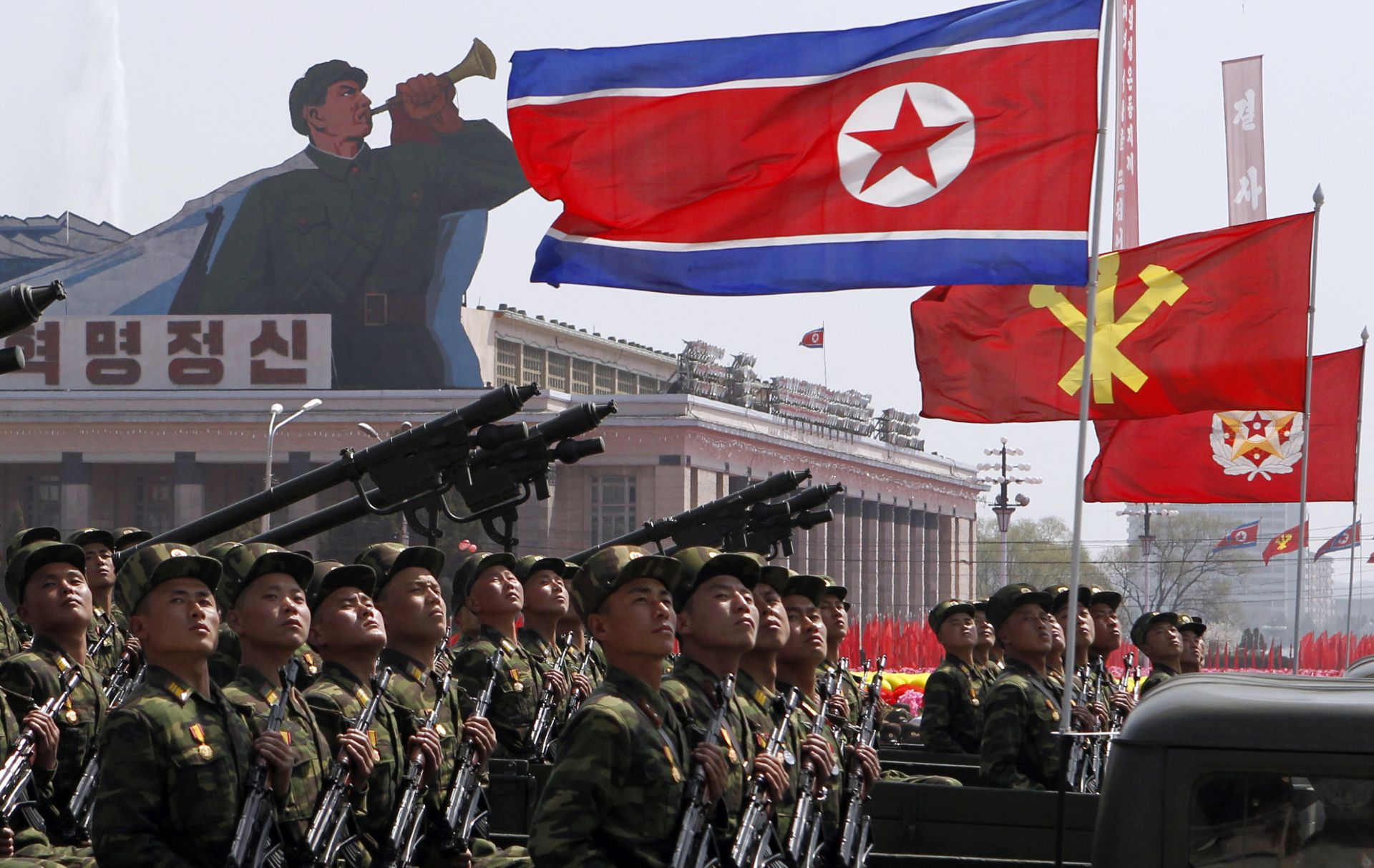
North Korea Says It Conducted Hydrogen Bomb Test
14
VIEWS

Hydrogen bombs, which North Korea said Wednesday it tested for the first time, have a destructive power to dwarf even the nuclear weapons dropped on Japan in 1945.

If confirmed that North Korea did indeed carry out a successful test of a miniature version of such a device, this would put the impoverished hermit state in a select club of countries.

The relatively small size of the explosion makes experts skeptical that Pyongyang has mastered the technology, however.

Fusion vs. fission
The first kind of nuclear devices used were atomic bombs, like those used by the United States to flatten the Japanese cities of Hiroshima and Nagasaki in World War II, killing tens of thousands of people.

They work when a neutron collides with an atom’s nucleus, a process called fission, releasing more neutrons and huge amounts of destructive energy.

A hydrogen (or thermonuclear) bomb starts off in the same way, but the extremely high temperatures — many tens of thousands of degrees — cause isotopes of hydrogen to “fusion” or join together, the same kind of reaction that powers the Sun.

The resulting blast creates a second fission stage that is many times the size of explosion created by the first. It must be measured in megatons — equivalent to a million tonnes of TNT — rather that the kiloton ranges seen in 1945.

The first US thermonuclear test was “Ivy Mike” in 1952 on the Enewetak atoll in the Marshall Islands. The Soviet Union responded with “Joe 19” in 1955.

Britain and France have both tested devices with yields exceeding two megatons, Britain in 1957 at Christmas Island and France in 1968 at Fangataufa Atoll, with China in 1967.

According to Hans Kristensen, a nuclear expert with the Federation of American Scientists, “the US, UK, and French only use thermonuclear. Russia mainly so but it might still have some lower-yield weapons that are single stage” or fission-only warheads.

He believes that India, Israel and Pakistan have also achieved single-stage fission capability, but Robert Kelley, an expert at the Stockholm International Peace Research Institute (SIPRI), told AFP: “Israel I think has gone beyond that.”

Russia’s 1961 “Tsar Bomba”, the largest ever tested, created a 50-megaton explosion, 3,800 times more powerful than the 13 kilotons at Hiroshima, according to the Comprehensive Test Ban Treaty Organization (CTBTO).

‘A thrilling sound’
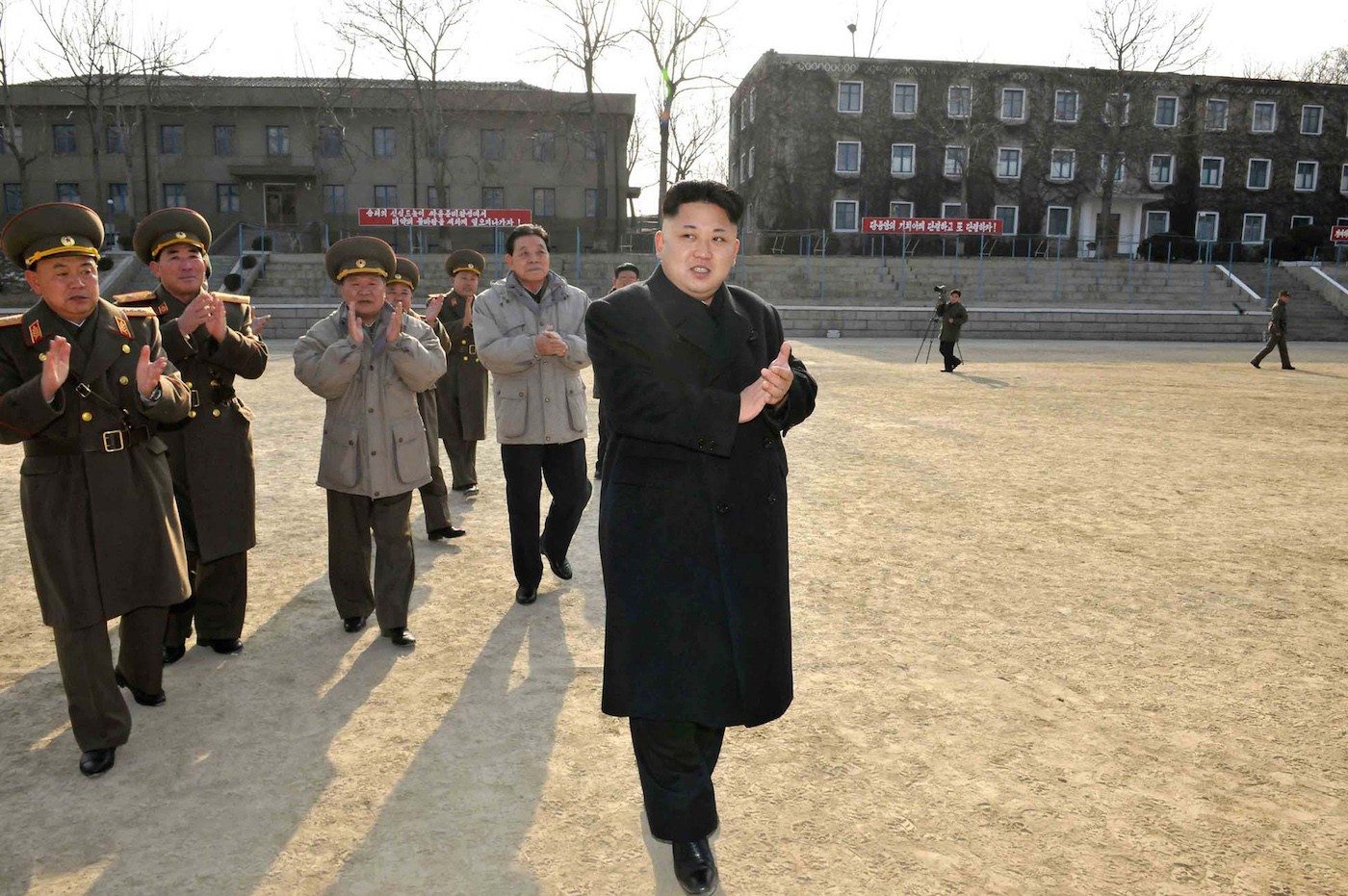
North Korean leader Kim Jong-Un personally signed the order three weeks ago authorizing the latest test, calling for 2016 to kick off with the “thrilling sound” of a hydrogen bomb explosion.

If North Korea has mastered the technology, it could conceivably develop weapons capable of reaching neighbors in Asia and possibly the United States.

It remains unclear whether it really did test a hydrogen bomb, experts say, not least due to the relatively small size of explosion detected.

Bruce Bennett, a senior defence analyst with the Rand Corporation, said if it was an H-bomb, then the detonation clearly failed — at least the fusion stage.

“If it were a real H-bomb, the Richter scale reading should have been about a hundred times more powerful,” Bennett told AFP.

Kelley, a former US nuclear weapons scientist, said that North Korea might have built a “boosted” bomb, basically “just a fission bomb with a little bit of a boost from a tiny amount of fusion” to create a bigger yield.

“This was almost certainly a boosted bomb but the premier of North Korea can get up and say it was a hydrogen bomb and who is going to correct him?” Kelley asked AFP.

But, he concluded: “It does not meet the criteria for a true thermonuclear or hydrogen bomb.”

Tags: Asiachinah bombhydrogen bombjapannorth koreanuclear weaponssouth korea
Previous Post

US Army soldiers test robots on simulated battlefield

Next Post

North Korean bomb test a setback for arms control

Related Posts

Finland gears up for historic NATO decision

Kremlin says nuclear weapons in Finland would threaten Russia

March 9, 2026

Russia said on Friday it saw Finland's move to lift restrictions on hosting nuclear weapons as a potential threat and...

Turkey says NATO summit ‘not the deadline’ for Finland, Sweden talks

Finland to allow nuclear weapons on its soil: government

March 6, 2026

Finland said Thursday it planned to lift restrictions prohibiting nuclear weapons on its soil, in order to bring the country...

Next Post
North Korea Declares ‘Quasi State of War’

North Korean bomb test a setback for arms control

Latest Defense News

US Navy evacuates virus-struck aircraft carrier Roosevelt

US military ‘not ready’ to escort tankers through Hormuz Strait

March 12, 2026
Israel cancels leave for combat units after Iran consulate strike

US says Iran campaign cost $11 billion in six days

March 12, 2026
US moves closer to retaliation over hacking as cyber woes grow

Cyberattack Disrupts Operations at MedTech Giant Stryker

March 11, 2026
Lebanon says Israeli strike kills 3 journalists

Israel strikes central Beirut as Lebanon death toll tops 630

March 11, 2026

Patriot missile defense system deployed in central Turkey

March 10, 2026
Iran unveils ballistic missile, ‘new generation’ engines

Iran says missile attacks to continue, US talks ‘not on agenda’

March 10, 2026

Defense Forum Discussions

  • Middle East Defence & Security
  • Military Aviation News and Discussion
  • Royal Australian Navy Discussions and Updates 2.0
  • Royal New Zealand Navy Discussions and Updates
  • Indonesia: 'green water navy'
  • German Bundeswehr
  • Royal Netherlands Navy
  • Indonesian Aero News
  • Australian Army Discussions and Updates
  • Royal Canadian Air Force (RCAF) News and Discussions
DefenceTalk

© 2003-2020 DefenceTalk.com

Navigate Site

  • Defence Forum
  • Military Photos
  • RSS Feeds
  • About us
  • Advertise with us
  • Contact us

Follow Us

No Result
View All Result
  • Home
  • Defense News
    • Defense & Geopolitics News
    • War Conflicts News
    • Army News
    • Air Force News
    • Navy News
    • Missiles Systems News
    • Nuclear Weapons
    • Defense Technology
    • Cybersecurity News
  • Military Photos
  • Defense Forum
  • Military Videos
  • Military Weapon Systems
    • Weapon Systems
    • Reports

© 2003-2020 DefenceTalk.com