Thursday, March 19, 2026
  • About us
    • Write for us
    • Disclaimer
    • Terms of use
    • Privacy Policy
  • RSS Feeds
  • Advertise with us
  • Contact us
DefenceTalk
  • Home
  • Defense News
    • Defense & Geopolitics News
    • War Conflicts News
    • Army News
    • Air Force News
    • Navy News
    • Missiles Systems News
    • Nuclear Weapons
    • Defense Technology
    • Cybersecurity News
  • Military Photos
  • Defense Forum
  • Military Videos
  • Military Weapon Systems
    • Weapon Systems
    • Reports
No Result
View All Result
  • Home
  • Defense News
    • Defense & Geopolitics News
    • War Conflicts News
    • Army News
    • Air Force News
    • Navy News
    • Missiles Systems News
    • Nuclear Weapons
    • Defense Technology
    • Cybersecurity News
  • Military Photos
  • Defense Forum
  • Military Videos
  • Military Weapon Systems
    • Weapon Systems
    • Reports
No Result
View All Result
DefenceTalk
No Result
View All Result
Home Defence & Military News Defense Geopolitics News

US Military Option In Iran ‘Intact’ Despite Russian Missiles

by Radio Free Europe/Radio Liberty
April 20, 2015
in Defense Geopolitics News
2 min read
0
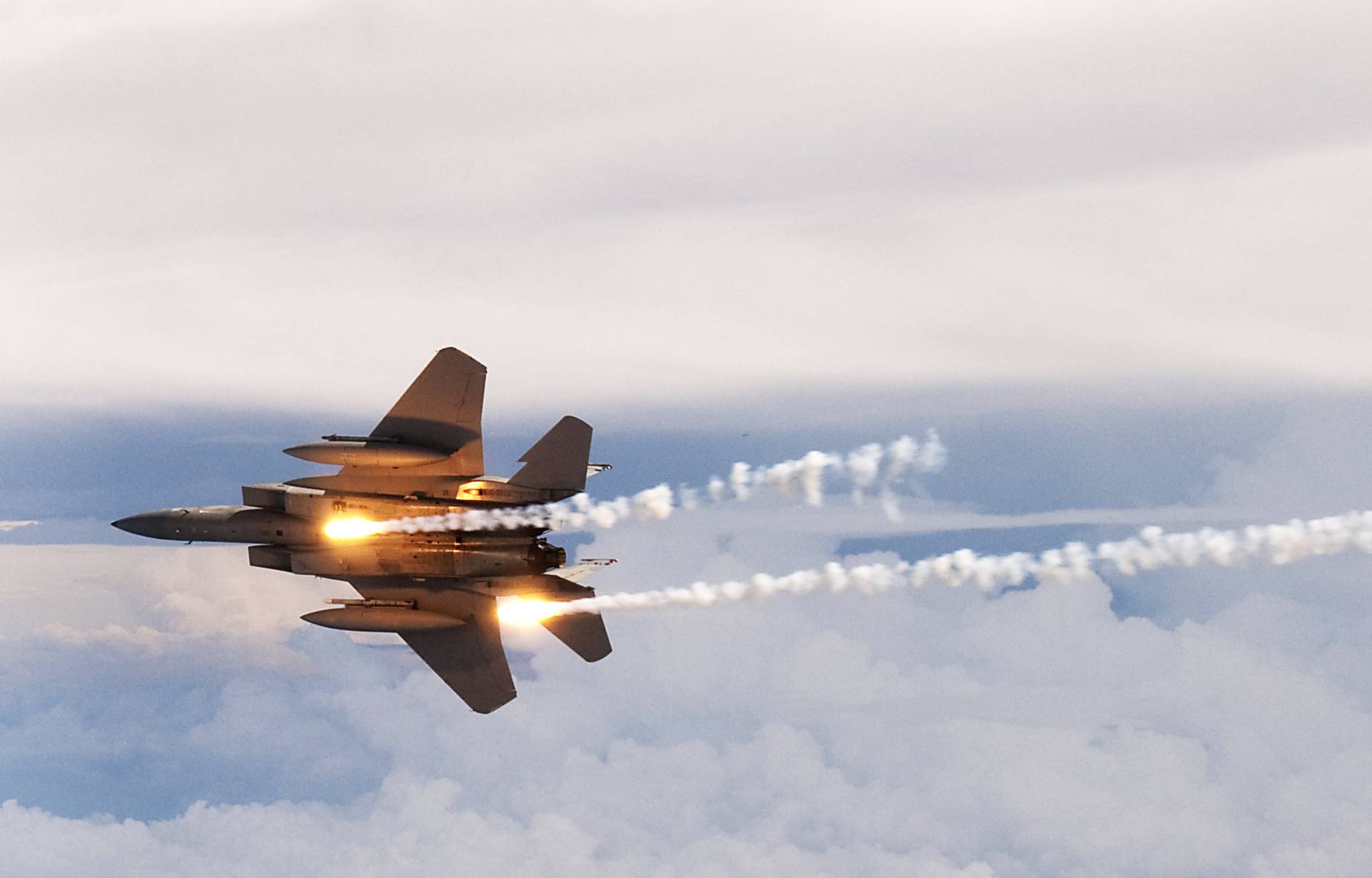
First Air National Guard Theater Security Package Deploys to Europe
14
VIEWS

The top U.S. general says the military option to prevent Iran from obtaining a nuclear weapon remains “intact” despite Russia’s decision to supply the Islamic Republic with surface-to-air S-300 missiles.

Speaking at a news conference on April 16, General Martin Dempsey, chairman of the U.S. Joint Chiefs of Staff, said, “The military option that I owe the president to both encourage a diplomatic solution and if the diplomacy fails to ensure that Iran does not achieve a nuclear weapon is intact.”

Dempsey suggested that the delivery of the Russian missile-defense system won’t affect the United States’ ability to strike at Iran’s nuclear facilities if necessary.

“We’ve known about the potential for that system to be sold to Iran for several years and have accounted for it in all of our planning,” he said.

For years, the United States has refused to rule out possible military action to stop Iran from acquiring nuclear weapons if diplomacy fails.

Six global powers and Iran agreed on April 2 on a framework for a deal that would limit Iran’s nuclear activities in exchange for relief from UN, EU, and U.S. sanctions. They have set a June 30 deadline for a final accord.

Western states fear Iran’s nuclear program is aimed at developing nuclear weapons, which Tehran denies.

In a televised question-and-answer session earlier on April 16, President Vladimir Putin linked his decision to lift the ban on supplying Iran with the S-300 missile-defense system with what he said was Tehran’s demonstrated desire to resolve a yearslong dispute over its nuclear program.

“And now with the progress of the Iranian nuclear track — and that is obviously positive — we do not see any reason to continue to keep the ban,” Putin said.

Israel and the United States have criticized Putin for lifting the ban, which Russia imposed in 2010 after supporting UN sanctions that restricted weapons trade with Tehran.

The Russian president said S-300 missiles were not prohibited by those sanctions, were purely defensive, and did not pose a threat to Israel.

Putin insisted that his country will continue to work “as one” with its partners at the UN over Iran and its nuclear program.

In Washington, White House spokesman Josh Earnest suggested on April 16 that Moscow’s move to lift the ban on supplying Iran with the S-300 missiles shows the weakness of Russia’s economy.

“It isn’t a particular surprise that Russia may be pretty desperate to generate some income,” Earnest told reporters. “It actually does indicate that Russia’s willingness to engage in a controversial transaction like this one is an indication of how weakened their economy has become.”

The Russian economy has been hard-hit by sanctions imposed by the West over Russia’s annexation of the Crimea Peninsula in March 2014 and its role in the Ukraine crisis.

Meanwhile, the European Union announced on April 16 that six world powers and Iran will hold a fresh round of nuclear talks in Vienna on April 22-23.

It said negotiators “will continue work towards a comprehensive solution to the Iranian nuclear issue based on the key understandings reached in Switzerland on April 2.”

The talks will take place at political director level, involving Helga Schmid of the EU’s external-affairs arm and Iranian Deputy Foreign Minister Abbas Araqchi.

They will then be joined by officials from the five UN Security Council members — Britain, China, France, Russia and the United States — plus Germany.

Tags: air defenseiranmissilesrussiaS-300
Previous Post

China’s YJ-18 Missiles a ‘Major Threat’ to US Navy

Next Post

US Missile alert facility life: 60 feet under

Related Posts

Israel cancels leave for combat units after Iran consulate strike

US says Iran campaign cost $11 billion in six days

March 12, 2026

The opening week of the war against Iran cost the United States more than $11.3 billion, lawmakers were told in...

Lebanon says Israeli strike kills 3 journalists

Israel strikes central Beirut as Lebanon death toll tops 630

March 11, 2026

Israel carried out a strike in the heart of Beirut on Wednesday for a second time since Lebanon was dragged...

Next Post
US Missile alert facility life: 60 feet under

US Missile alert facility life: 60 feet under

Latest Defense News

US needs top cyber coordinator, better hacker ‘deterrence’

‘Digital fog of war’ around Iranian cyberattacks

March 13, 2026
US military says aircraft crash in Iraq killed 4 crew members

US military says aircraft crash in Iraq killed 4 crew members

March 13, 2026
Northrop Grumman moves to boost B-21 Raider output

Northrop Grumman moves to boost B-21 Raider output

March 13, 2026
US Navy evacuates virus-struck aircraft carrier Roosevelt

US military ‘not ready’ to escort tankers through Hormuz Strait

March 12, 2026
Israel cancels leave for combat units after Iran consulate strike

US says Iran campaign cost $11 billion in six days

March 12, 2026
US moves closer to retaliation over hacking as cyber woes grow

Cyberattack Disrupts Operations at MedTech Giant Stryker

March 11, 2026

Defense Forum Discussions

  • French Armée de l'Air et de l'Espace News & Discussion
  • Royal Australian Navy Discussions and Updates 2.0
  • NZDF General discussion thread
  • Indonesia: 'green water navy'
  • Royal Australian Air Force [RAAF] News, Discussions and Updates
  • Middle East Defence & Security
  • ADF General discussion thread
  • Indonesian Aero News
  • New Zealand Army
  • F-35 Program - General Discussion
DefenceTalk

© 2003-2020 DefenceTalk.com

Navigate Site

  • Defence Forum
  • Military Photos
  • RSS Feeds
  • About us
  • Advertise with us
  • Contact us

Follow Us

No Result
View All Result
  • Home
  • Defense News
    • Defense & Geopolitics News
    • War Conflicts News
    • Army News
    • Air Force News
    • Navy News
    • Missiles Systems News
    • Nuclear Weapons
    • Defense Technology
    • Cybersecurity News
  • Military Photos
  • Defense Forum
  • Military Videos
  • Military Weapon Systems
    • Weapon Systems
    • Reports

© 2003-2020 DefenceTalk.com