Sunday, April 5, 2026
  • About us
    • Write for us
    • Disclaimer
    • Terms of use
    • Privacy Policy
  • RSS Feeds
  • Advertise with us
  • Contact us
DefenceTalk
  • Home
  • Defense News
    • Defense & Geopolitics News
    • War Conflicts News
    • Army News
    • Air Force News
    • Navy News
    • Missiles Systems News
    • Nuclear Weapons
    • Defense Technology
    • Cybersecurity News
  • Military Photos
  • Defense Forum
  • Military Videos
  • Military Weapon Systems
    • Weapon Systems
    • Reports
No Result
View All Result
  • Home
  • Defense News
    • Defense & Geopolitics News
    • War Conflicts News
    • Army News
    • Air Force News
    • Navy News
    • Missiles Systems News
    • Nuclear Weapons
    • Defense Technology
    • Cybersecurity News
  • Military Photos
  • Defense Forum
  • Military Videos
  • Military Weapon Systems
    • Weapon Systems
    • Reports
No Result
View All Result
DefenceTalk
No Result
View All Result
Home Defence & Military News Technology News

Some Military Implications of 3D Printing

by Lexington institute
August 23, 2013
in Technology News
2 min read
0
Some Military Implications of 3D Printing
14
VIEWS

Not all military revolutions come with the noisiness and visibility associated with the invention of the tank, jet aircraft or the ballistic missile. In fact, some are not about weapons systems at all, or at least not directly. One of the most important revolutions in military affairs of the last century was the application of assembly line processes to the manufacture and assembly of complex combat systems, especially aircraft.

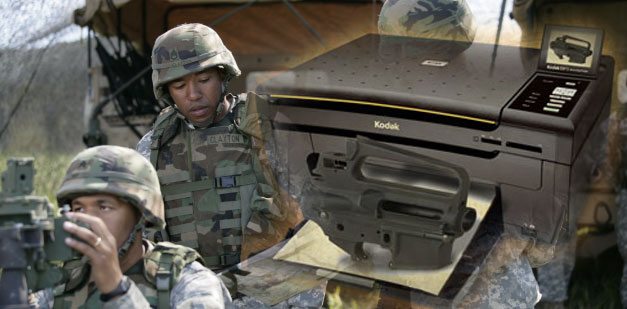
There is such a revolution underway, one that is likely to have far-reaching implications for military affairs. I am referring to 3D manufacturing. This is a process for creating a solid object of virtually any shape from a digital model. Just scan the object you want to make and feed the digital picture into the 3D printer. 3D printing is achieved using one of a variety of additive processes that lays down successive layers of material to form different shapes.

3D printing differs from traditional machining techniques insofar as the latter generally relies on the removal of material by methods such as cutting or drilling. The finished object can be made of metal, plastics, some types of composites and even, or so it is reported, biological materials. Because it is additive, rather than subtractive, 3D printing can be used to make items out of material and in shapes that could not be done by traditional manufacturing methods.

The cost of 3D printers has decreased dramatically since about 2010, with machines that used to cost $20,000 costing less than $1,000. Last year, Forbes published an article that reported on a group seeking to design and publish online the plans for a plastic gun, bullets not included.

The U.S. military is just beginning to experiment with 3D printing. The Army’s Rapid Equipping Force (REF), charged with responding speedily to urgent operational needs coming out of the war zones in Southwest Asia, rightly concluded that the timeline for addressing some of these needs could be shortened by taking the manufacturing of some parts to the end user. So, the REF built what it called an Expeditionary Laboratory Mobile (ELM), essentially a digital fabrication workshop in a box.

The ELM consists of a 20-foot container equipped with 3D printers, computer-assisted milling machines, and laser, plasma, and water cutters. The ELM also comes with a generator, heating and cooling systems, and satellite communications. The cost of the ELM is about $2.8 million, not including the salaries of engineers and technicians to design the new part and run the machines.

To date, the ELM has been employed to manufacture small parts, assemblies and items that go on or complement existing systems or platforms. This is due, in part, to the limited size of today’s 3D printers. Also, the 3D technique cannot manufacture a complex item composed of different materials such as a bullet. But this is only the beginning. Future generations of 3D printers could be made large enough to make parts for weapons systems, military vehicles or even aircraft.

This would go a long way to addressing current concerns about the national security implications of the eroding U.S. manufacturing base. It also would allow rapid prototyping and redesign of parts and systems. In theory, it should be possible to send a few 3D printers to a war zone where they would use local materials to replicate themselves and then, based on digital images stored in their computers, spew out an endless stream of military hardware. Some assembly would still be required but that could be accomplished by robots like on a modern automobile assembly line.


Tags: 3D3D military3D Printing3D weaponsWorld Military
Previous Post

Royal Navy and RAF Join Forces In the Gulf

Next Post

UN Council seeks ‘clarity’ on Syria chem weapons claim

Related Posts

US needs top cyber coordinator, better hacker ‘deterrence’

‘Digital fog of war’ around Iranian cyberattacks

March 13, 2026

Hostilities on the digital front have intensified since the outbreak of war between the US, Israel and Iran, with many...

US moves closer to retaliation over hacking as cyber woes grow

Cyberattack Disrupts Operations at MedTech Giant Stryker

March 11, 2026

A cybersecurity incident affecting Stryker Corporation—one of the world’s largest manufacturers of medical devices—has drawn renewed attention to the growing...

Next Post
Hackers hit UN atomic agency server, post expert details

UN Council seeks 'clarity' on Syria chem weapons claim

Latest Defense News

US needs top cyber coordinator, better hacker ‘deterrence’

‘Digital fog of war’ around Iranian cyberattacks

March 13, 2026
US military says aircraft crash in Iraq killed 4 crew members

US military says aircraft crash in Iraq killed 4 crew members

March 13, 2026
Northrop Grumman moves to boost B-21 Raider output

Northrop Grumman moves to boost B-21 Raider output

March 13, 2026
US Navy evacuates virus-struck aircraft carrier Roosevelt

US military ‘not ready’ to escort tankers through Hormuz Strait

March 12, 2026
Israel cancels leave for combat units after Iran consulate strike

US says Iran campaign cost $11 billion in six days

March 12, 2026
US moves closer to retaliation over hacking as cyber woes grow

Cyberattack Disrupts Operations at MedTech Giant Stryker

March 11, 2026

Defense Forum Discussions

  • Royal Australian Navy Discussions and Updates 2.0
  • The Russian-Ukrainian War Thread
  • Australian Army Discussions and Updates
  • Royal Australian Air Force [RAAF] News, Discussions and Updates
  • Royal Canadian Navy Discussions and updates
  • Russian Navy Discussions and Updates
  • Middle East Defence & Security
  • General Space News.
  • ADF General discussion thread
  • General Naval News
DefenceTalk

© 2003-2020 DefenceTalk.com

Navigate Site

  • Defence Forum
  • Military Photos
  • RSS Feeds
  • About us
  • Advertise with us
  • Contact us

Follow Us

No Result
View All Result
  • Home
  • Defense News
    • Defense & Geopolitics News
    • War Conflicts News
    • Army News
    • Air Force News
    • Navy News
    • Missiles Systems News
    • Nuclear Weapons
    • Defense Technology
    • Cybersecurity News
  • Military Photos
  • Defense Forum
  • Military Videos
  • Military Weapon Systems
    • Weapon Systems
    • Reports

© 2003-2020 DefenceTalk.com