Aardvark144
Active Member
Deleted

Funding a seventh KC30? We already have a fleet of seven. The Albanese Express performs standard ops when not VIP tasked.[/QUOTE]As it stands, the KC-30A can refuel Hornets (actually doing two at once, which added to the better flow rate, more than doubles the throughput of a KC-130), so we'd be better off funding a seventh KC-30A than an additional 6x KC-130J.
Excellent points Takao, but this one in particular jumped out.it'll probably go to $6b-ish

Sorry, some poor phrasing there.Funding a seventh KC30? We already have a fleet of seven. The Albanese Express performs standard ops when not VIP tasked.
Absolutely. The mobilisation maths demand that.We're a maritime nation. An island continent. The RAN needs to be the senior service, and the RAAF needs to focus on maritime patrol and strike, which it is actually quite well capitalised to do.
I certainly think it is a complete furphy to suggest that the RAAF is the poor cousin of the other services. The Army has gotten by far the shortest end of the stick, but that also is quite appropriate. We don't have any land borders with anyone. That's not to say we don't need a well funded top tier Army - we absolutely do - but it should also clearly get less funding than firstly the RAN, and secondly the RAAF.
Don’t we like the F111.Turns out there is a 10000 character limit. Huh....
The advantage of a CH-47 is that it can avoid the huts. The C-27 - well, it's stuck with a handful of runways. And a STOL aircraft is cheap. Don't disagree there. However. That STOL aircraft has to lift more than a CH-47 and get into runways much smaller than a C-130J. It also needs good range, especially at MTOW. That's a much more expensive combination of needs (note that the C-27J achieves one of 3). I'm sure you'll find an aircraft that does that for cheap. But, you've forgotten the rest.
A STOL capability needs more than an aircraft. The crews need to come from somewhere (remember you are simultaneously increasing C-130J crews), in an era of tight recruiting. Note those aircrew specs are the same as SSN crew, DDG/FFG crew, IAMD crew and long-range strike crew. There is significant pressure on technical types. Now add maintainers (also the same). You need new facilities (Amberley and Richmond are full). You need to add the military kit to the STOL aircraft (comms and EWSP at a minimum - both are much more $$ than you think). Sustainment and supplies? Remember, that can hurt with big world-wide fleets like C-130. Small world-wide fleets (like C-27) get even more scarce/expensive.
Noting all of that, I'd expect that you'd need about $4-5b for a STOL capability. If it's a niche aircraft (like the C-27) it'll head towards and past $5b. If it's European, it'll probably go to $6b-ish. All to get a Sqn of something that we do not need, in an era of minimum viable capability.
Remember also, more than one DSTG and AFHQ study has shown the optimal fleet for airlift in the ADF is C-17/C-130/CH-47.
A F-111 could conduct a precision strike of ~4x 2000 lb at ~2000 km in optimal conditions. It could also take 4x AGM-84 in a very potent anti-shipping role. To do so required two crew to operate in range of enemy weapons and ~18 kL of aviation fuel. Not too shabby.
A HiMARs with PrSM increment 4 can conduct a precision strike of 2x ~500lb bomb (although significantly varied types of warheads and loads) at over 2000 km. It can also do anti-shipping with an increment 2 seeker. To do so requires no crew at risk and about 250 L of diesel.
Remember that most of our aviation fuel comes from China; and we have significant diesel reserves.
Where I said arguable the HiMARs replaces the F-111 capability, I meant arguably. A troop of HiMARs with PrSM 4 can deliver the same amount of effect at the same or greater range than 2x F-111 but can shrink the tempo from doing that one a day to once every half hour. Yes, PrSM 4 doesn't exist yet. Yes, targeting may be an issue. There are a bunch of quibbles. But I draw your attention to arguably.
Sigh. No, there wasn't It was for additional capability, with 'capability' never defined. Stingray and Steve have pretty good summaries, and the FSP and NDS teams have delved into the history significantly in order to scope this exact issue. There has never been a serious attempt by AFHQ to get the fourth Sqn of F-35 (beyond the original 'up to 100' phrase) because they just cannot crew it. And it costs too much money, especially compared to the F-18 platform. I'm sure there is a FLTLT or SQNLDR fighter pilot out there that will advocate - but the SLG didn't. And that's from 2019, before an SSN poked anywhere.

PRSM 4 …. 2000km range? Thought it was going to be approx 1000km? Future Anti-Ship PrSM Prioritizes Indo-Pacific Ops and 1,000 km Range - Naval NewsTurns out there is a 10000 character limit. Huh....
The advantage of a CH-47 is that it can avoid the huts. The C-27 - well, it's stuck with a handful of runways. And a STOL aircraft is cheap. Don't disagree there. However. That STOL aircraft has to lift more than a CH-47 and get into runways much smaller than a C-130J. It also needs good range, especially at MTOW. That's a much more expensive combination of needs (note that the C-27J achieves one of 3). I'm sure you'll find an aircraft that does that for cheap. But, you've forgotten the rest.
A STOL capability needs more than an aircraft. The crews need to come from somewhere (remember you are simultaneously increasing C-130J crews), in an era of tight recruiting. Note those aircrew specs are the same as SSN crew, DDG/FFG crew, IAMD crew and long-range strike crew. There is significant pressure on technical types. Now add maintainers (also the same). You need new facilities (Amberley and Richmond are full). You need to add the military kit to the STOL aircraft (comms and EWSP at a minimum - both are much more $$ than you think). Sustainment and supplies? Remember, that can hurt with big world-wide fleets like C-130. Small world-wide fleets (like C-27) get even more scarce/expensive.
Noting all of that, I'd expect that you'd need about $4-5b for a STOL capability. If it's a niche aircraft (like the C-27) it'll head towards and past $5b. If it's European, it'll probably go to $6b-ish. All to get a Sqn of something that we do not need, in an era of minimum viable capability.
Remember also, more than one DSTG and AFHQ study has shown the optimal fleet for airlift in the ADF is C-17/C-130/CH-47.
A F-111 could conduct a precision strike of ~4x 2000 lb at ~2000 km in optimal conditions. It could also take 4x AGM-84 in a very potent anti-shipping role. To do so required two crew to operate in range of enemy weapons and ~18 kL of aviation fuel. Not too shabby.
A HiMARs with PrSM increment 4 can conduct a precision strike of 2x ~500lb bomb (although significantly varied types of warheads and loads) at over 2000 km. It can also do anti-shipping with an increment 2 seeker. To do so requires no crew at risk and about 250 L of diesel.
Remember that most of our aviation fuel comes from China; and we have significant diesel reserves.
Where I said arguable the HiMARs replaces the F-111 capability, I meant arguably. A troop of HiMARs with PrSM 4 can deliver the same amount of effect at the same or greater range than 2x F-111 but can shrink the tempo from doing that one a day to once every half hour. Yes, PrSM 4 doesn't exist yet. Yes, targeting may be an issue. There are a bunch of quibbles. But I draw your attention to arguably.
Sigh. No, there wasn't It was for additional capability, with 'capability' never defined. Stingray and Steve have pretty good summaries, and the FSP and NDS teams have delved into the history significantly in order to scope this exact issue. There has never been a serious attempt by AFHQ to get the fourth Sqn of F-35 (beyond the original 'up to 100' phrase) because they just cannot crew it. And it costs too much money, especially compared to the F-18 platform. I'm sure there is a FLTLT or SQNLDR fighter pilot out there that will advocate - but the SLG didn't. And that's from 2019, before an SSN poked anywhere.
US Army’s requirement is 1000k + for Increment 4. 1000k is the “minimum” viable capability required…PRSM 4 …. 2000km range? Thought it was going to be approx 1000km? Future Anti-Ship PrSM Prioritizes Indo-Pacific Ops and 1,000 km Range - Naval News
 www.defenceconnect.com.au


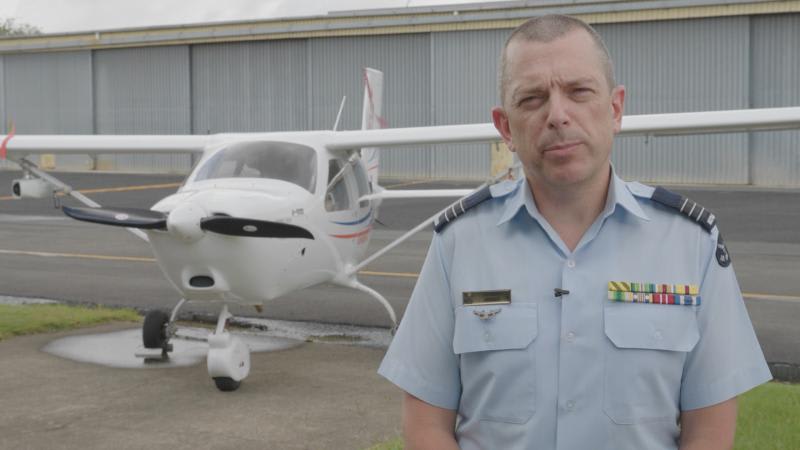
This is good to see! 208 Caravan floatplane UAV, optimised for AME. That's my vision for littoral work (as a medic)I know its a completely different class to the C-27J but the recent announcement of trials of an optionally crewed fleet of Jabiru JabX light aircraft is very interesting.
Once proven, larger types could also be developed and employed.RAAF converts Jabiru 400 to autonomous aircraft for Project Camel Train
The RAAF is experimenting with autonomous aircraft to bolster its logistics capabilities, including conversions of existing light planes.
It strikes me that as they are optionally crewed, the could also be used to grow a force of flight qualified personnel.
I too think it would be a strong, cost effective contender. But there is no getting around the fact it would be highly controversial in current times, due to it’s undeniable Israeli origins, whatever the level of Raytheon involvement…After digging through Defence documents, AIR6500/AIR6502 wording, IIP funding lines, think-tank analysis and industry positioning, I increasingly think David's Sling / SkyCeptor is the strongest overall fit for Australia’s future MRGBAD requirement.
The biggest clue is that Defence has shifted from talking about simple “air defence” to “integrated air and missile defence” against advanced missile threats, which points toward a system capable of cruise missile and limited ballistic missile interception rather than just aircraft defence. Australia already has NASAMS for the lower layer, so the new system likely needs to sit above NASAMS in range and capability. David’s Sling fits that middle layer unusually well while also integrating relatively cleanly into AIR6500/JABMS and wider US-compatible architecture through the Raytheon connection.
The other major factor is scale and cost. Australia’s geography and dispersed basing strategy mean Defence likely needs coverage for Darwin, Tindal, HMAS Stirling, Amberley and potentially Williamtown/Edinburgh as well. A MIM-104 Patriot-heavy solution may only allow 2–4 batteries once missile stockpiles and sustainment are included, whereas David’s Sling/SkyCeptor could realistically allow 6–8 batteries for similar funding. That gives Australia broader national coverage and deeper interceptor inventories, which matters massively in any prolonged conflict. Aviation Week also reported Raytheon and Rafael preparing SkyCeptor specifically for Australia’s MRGBAD requirement, which is one of the clearest open-source indicators that industry itself sees it as a serious contender. Patriot still has strong advantages in alliance politics and interoperability, but from a pure capability-to-cost-to-scale perspective, David’s Sling currently looks like the best fit.
I expect a modest expansion of nasams to compliment the DS system with priority given towards local manufacturing.
I think the Skyceptor technically fits the bill. I would however suggest it only works if:I too think it would be a strong, cost effective contender. But there is no getting around the fact it would be highly controversial in current times, due to it’s undeniable Israeli origins, whatever the level of Raytheon involvement…
I would bet my house on this Government not touching it with a 10 foot barge pole…
Different capabilities and different projects though “hopefully” they are highly integrated. LAND 19 for NASAMS, LAND 156 for counter-UAS (lasers, drones, guns etc) AIR-6500 for MRAD and C2 systems and either a new phase of LAND 19 for the VSHORAD system or some new project altogether we haven’t yet been told about (or maybe hasn’t even been stood up yet).I think the Skyceptor technically fits the bill. I would however suggest it only works if:
I can't see a problem with the first point given, Raytheon's involvement in our NASAMS capability. The second point may be a concern.
- it can be fully integrated with the existing NASAMS ecosystem, meaning control via the NASAMS fire distribution centre and CEA radars (I can't see us apopting the full David's Sling packge, we would just be interested in the missile); and
- A factory outside Israel is established for missile production, under Raytheon rather than Rafael.
There is a factory being built in Romania, but I can't see us being supplied from that (just too far away and it will focus on Europe). I can't see the US building a factory in the near term (they seem focussed on patriot). There are no likely S E Asian countries that are looking at the Skyceptor (S Korea and Japan have their own system).
Does that mean we would need to establish our own production line if we wanted Skyceptor?
I can't see that being easy, but it might be an option if Raytheon set up a joint missile factory for multiple missile types, such as perhaps AMRAAM, ESSM and Skyceptor.
Last point is that the final integrated system has to have some form of short range utra cheap mass interception capability (drones, lasers and/or guns). It can't be an all multi million dollar missile system. Even the Skyceptor is supposedly in the million dollar range.
Different capabilities and different projects though “hopefully” they are highly integrated. LAND 19 for NASAMS, LAND 156 for counter-UAS (lasers, drones, guns etc) AIR-6500 for MRAD and C2 systems and either a new phase of LAND 19 for the VSHORAD system or some new project altogether we haven’t yet been told about (or maybe hasn’t even been stood up yet).