AGENCE FRANCE-PRESSE,
US Secretary of State Condoleezza Rice has left on a tour of the Middle East with the looming nuclear crisis with Iran likely to overshadow timid efforts to rekindle the Israeli-Palestinian peace process, analysts say.
Rice arrives today in Saudi Arabia for talks with King Abdullah, then flies to Egypt for a day of meetings before heading to Israel and the Palestinian territories.
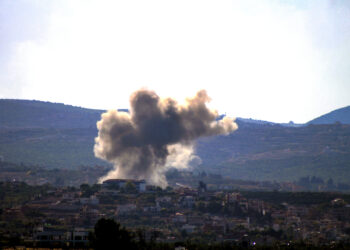
The US came under strong pressure to take a more active role in trying to revive Israeli-Palestinian peace talks after being seen to favor Israel too heavily in its devastating response to attacks by the Lebanese militia Hezbollah in July.
European and moderate Arab allies, whose support is key to US plans for Iraq, Lebanon and Iran, see the festering Israeli-Palestinian stalemate as feeding instability and radicalism across the region.
But Washington's main allies in relaunching the process, Palestinian president Mahmud Abbas and Israeli Prime Minister Ehud Olmert, are seen as too politically weak at home to guarantee the concessions both sides need to make to reach their goal of creating a stable Palestinian state.
Abbas, a soft-spoken businessman who has never achieved the authority of the late Palestinian leader Yasser Arafat, has been undermined by the victory in Palestinian elections early this year of the radical Islamic movement Hamas.
The group, which still officially seeks Israel's destruction, took control of the Palestinian legislature in March, prompting Israel, the US and Europeans to cut essential financial aid to the West Bank and Gaza Strip.
Abbas has been trying to draw Hamas into a unity government that would meet international conditions of recognizing Israel's right to exist, rejecting violence and accepting past peace agreements.
But so far the Islamic group has balked.
Olmert has also been unable to fill the shoes left empty when his predecessor, Ariel Sharon, was felled by a massive stroke in January.
His political standing plummeted following the war in Lebanon, in which Israel's once all-powerful military was unable to inflict a clear defeat on Hezbollah guerrillas despite a destructive month-long air and ground offensive.
Under attack for his conduct of the war, Olmert has shelved a plan to move ahead with the Palestinians by withdrawing from parts of the West Bank following a similar pullout from Gaza last year.
“There's pressure on the US administration to at least go through the motions of trying to revive the peace proccess,” said Haim Malka, a Middle East analyst at the Center for Strategic and International Studies.
“But fundamentally the gaps between the Israelis and Palestinians are so far apart at this point that there's really very little chance of any meaningful process,” he said.
Washington is well aware of the obstacles, and State Department spokesman Sean McCormack stressed that the Israeli-Palestinian issue “is not the sole focus of (Rice's) trip”.
“She's going into this trip with the idea that she's going to talk about the full agenda of issues that are before leaders in the region” including Lebanon, Syria's destabilizing role, Iraq and Iran, he said.
President George W. Bush's focus on the war in Iraq and on confronting Iran's suspected nuclear weapons program is likely to keep the Israeli-Palestinian track on a diplomatic back burner, said Shibley Telhami, a Middle East expert at the Brookings Institution.
“I don't think the administration can have Iran and Iraq as priorities and at the same time be effective on the Arab-Israeli peace process,” Telhami said.
“The view at the White House is that that Arab-Israeli effort is needed in part to solidify an anti-Iran coalition,” he said.
The US plan to impose sanctions on Iran for ignoring an August 31 UN deadline to halt its uranium enrichment activities has stalled due to strong opposition from Russia and China and unease among key European allies.
As European-led negotiations with Iran drag on with little sign of concessions from Tehran, Washington needs the backing of its few Arab allies to step up the pressure.
“What they will try to do is strengthen the Israeli front with moderate Arab states — Saudi Arabia, Egypt and Jordan — in terms of Iran, which is of grave concern to the Gulf states,” Malka said.
For this, the highlight of Rice's trip will be a meeting with foreign ministers from the six-state Gulf Cooperation Council plus Egypt and Jordan, reportedly planned during her stop in Cairo.