Space capability is critical to national security, and the Defense Department is working to make its launch program more competitive and end its longtime use of a Russian rocket engine on the Atlas launch system, the assistant secretary of defense for acquisition said this week.
Katrina G. McFarland testified before the House Armed Services Committee’s strategic forces subcommittee March 17 on options for assuring domestic space access.
Joining her were Gen. John E. Hyten, commander of Air Force Space Command, and William A. LaPlante, assistant secretary of the Air Force for acquisition.
“Our defense space capabilities are central to our national security,” McFarland said in written testimony.
According to law, she added, the Defense Department must sustain at least two launch vehicles that can deliver any national security payload into space, and it must maintain a robust space-launch infrastructure and industrial base.
Following Critical Standards
In the late 1990s, a string of Titan IV launch failures cost the nation more than $5 billion in hardware and three national security payloads, McFarland said. In his written testimony, Hyten said he remembers the failures.
“I remember how we took our eyes off the ball, off the critical standards we must follow to ensure every single launch has the highest probability for success,” he said.
Such standards and a certification process were incorporated into the follow-on launch effort, called the Evolved Expendable Launch Vehicle program, the general added, and national security launches have had no major failures since 1999.
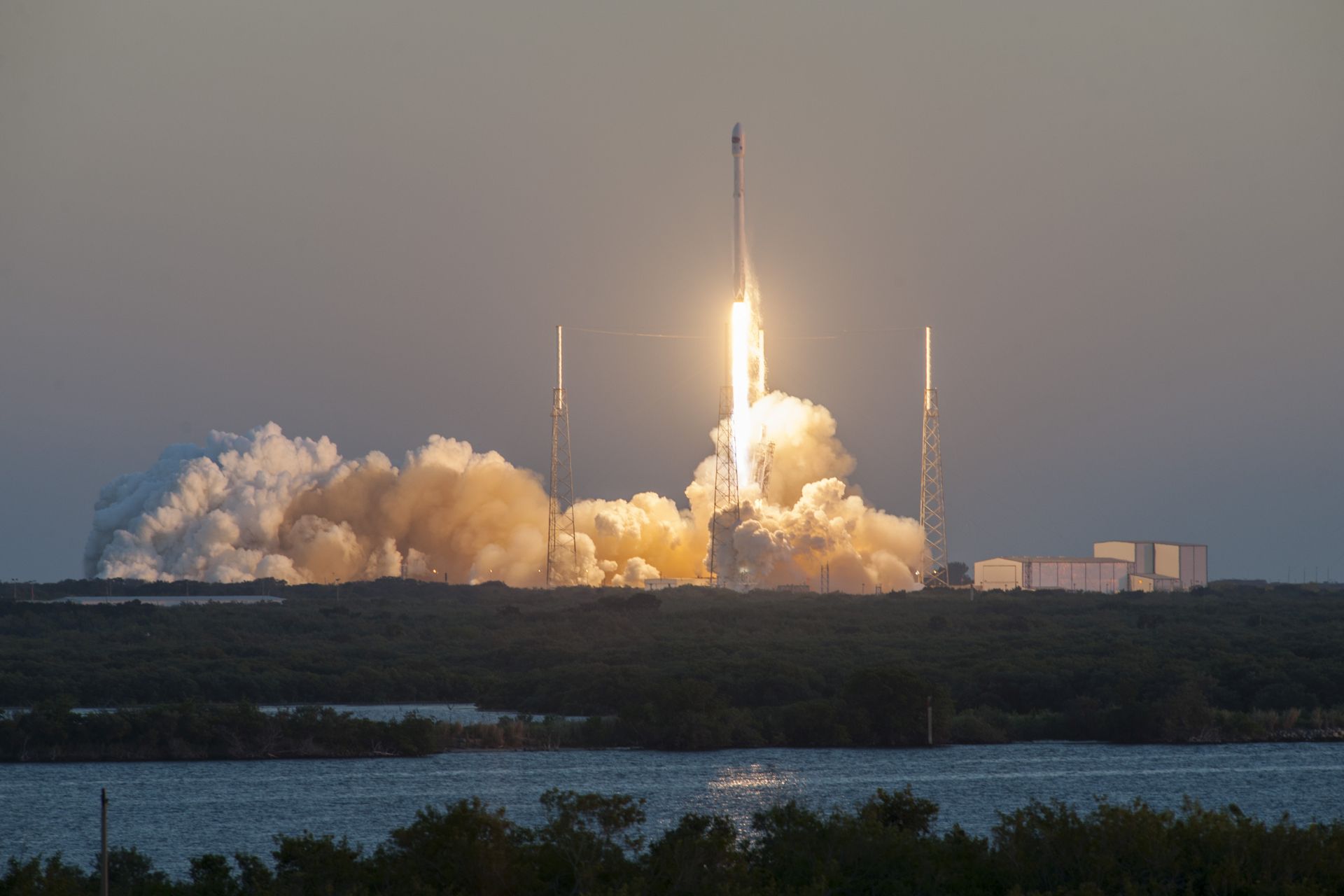
The EELV program gives the Air Force and the National Reconnaissance Office the capability and launch vehicles to get national security and defense satellites into orbit. The satellites often cost more than $1 billion, take years to build and have life cycles of a decade or more. They give critical support for weather, mapping, military communications, intelligence and surveillance, according to the United Launch Alliance, or ULA.
EELV Launch Successes
In 2014, Hyten said, the Atlas V and Delta IV launch vehicles executed 13 launches, nine of which supported national security missions, extending the record of EELV total launch successes to 78 as of this month. Since 2006, the general added, the department has relied on a single industrial partner, ULA, to safely launch its national security payloads.
ULA is a 50-50 joint venture between Lockheed Martin and Boeing formed in 2006 to provide reliable access to space for U.S. government missions, using Atlas and Delta launch vehicles. In 2012, McFarland said, the Air Force and the Office of the Secretary of Defense restructured the EELV program because of concerns about the rising cost of domestic space launch.
A Transition to Competition
The new strategy allowed for competition between ULA and new entrants to the EELV program as soon as the commercial launch companies can be certified for national security launches, the assistant secretary said. The restructure also allowed the Air Force to negotiate with and award ULA a contract for launch services using 36 EELV launch vehicles, called cores, over five years, she added.
“This contract award had two significant impacts,” McFarland said. “It effectively stabilized significant portions of the U.S. launch industrial base, and [it] saved the DoD and taxpayers more than $4.4 billion when compared to the fiscal year 2012 … budget baseline.”
The government requires commercial companies that want to use their vehicles for national security space launches to become certified launch providers, using systems that have undergone rigorous and repeated testing and mission assurance procedures with government oversight.
A Growing Market
Hyten said the commercial space-launch market is growing and that U.S. commercial companies want to invest in and compete for government national security launch contracts.
“The U.S. government now has an opportunity to leverage the commercial launch market more than we have in the past,” the general added, “to drive price points on the [national security] launch solution that would be more competitive for commercial launch.”
Another priority for DoD and the Air Force, he said, is to end the longtime use of the Russian RD-180 engine on the Atlas V expendable launch system.
“I fundamentally believe that every American rocket should be powered by an American engine,” Hyten told the panel. “It’s really that simple.”
Assured Access to Space
About 18 years ago, McFarland said, DoD selected the Atlas V with the Russian RD-180 engine as a cost-effective way to meet the national space transportation policy of assured access to space. In 1995, there were sound policy and cost-saving reasons for that decision, she added, but today the department is committed to efficiently and affordably eliminating its use of Russian propulsion systems.
In compliance with the fiscal year 2015 National Defense Authorization Act, which restricts the use of Russian RD-180 engines for ULA’s Atlas V rocket, McFarland said, “We have reevaluated our use of the Russian manufactured RD-180 rocket engine.”
McFarland said that as an initial step, the department reprogrammed $40 million to start engine risk-reduction activities, and that these funds, along with $220 million added by Congress in fiscal 2015 legislation, will finance critical work on rocket propulsion systems.
U.S. Rocket Propulsion Systems
LaPlante said the defense authorization act also directs the defense secretary to develop a U.S.-made rocket propulsion system no later than 2019. The Air Force agrees that it needs to transition off the RD-180 as quickly as possible, he said, but “the objective of 2019 is very aggressive and does not result in what is ultimately required — a launch vehicle and the supporting infrastructure so the Air Force can order launch services from industry.”
The act also prohibits the defense secretary from awarding or renewing an EELV contract if it is performed using Russian-made engines, with certain exceptions.
“This prohibition … delays meaningful competition until we reach our ultimate goal of two domestic, commercially competitive launch service providers able to support the entire national security space manifest,” LaPlante said.
DoD, Industry Partnership
LaPlante described a four-step approach to accomplish the goal, developed with input from industry.
It involves shared investment with industry in innovative public-private partnerships, he noted, selected through competition and able to support the entire national security launch manifest.
“We will continue to refine this approach as we gain further insight from expertise across government, academia and industry,” he said.