Saturday, April 25, 2026
  • About us
    • Write for us
    • Disclaimer
    • Terms of use
    • Privacy Policy
  • RSS Feeds
  • Advertise with us
  • Contact us
DefenceTalk
  • Home
  • Defense News
    • Defense & Geopolitics News
    • War Conflicts News
    • Army News
    • Air Force News
    • Navy News
    • Missiles Systems News
    • Nuclear Weapons
    • Defense Technology
    • Cybersecurity News
  • Military Photos
  • Defense Forum
  • Military Videos
  • Military Weapon Systems
    • Weapon Systems
    • Reports
No Result
View All Result
  • Home
  • Defense News
    • Defense & Geopolitics News
    • War Conflicts News
    • Army News
    • Air Force News
    • Navy News
    • Missiles Systems News
    • Nuclear Weapons
    • Defense Technology
    • Cybersecurity News
  • Military Photos
  • Defense Forum
  • Military Videos
  • Military Weapon Systems
    • Weapon Systems
    • Reports
No Result
View All Result
DefenceTalk
No Result
View All Result
Home Defence & Military News Technology News

Breakthrough technology to improve cyber security

by Editor
March 23, 2016
in Technology News
2 min read
0
Breakthrough technology to improve cyber security
14
VIEWS

With enough computing effort most contemporary security systems will be broken. But a research team at the University of Sydney has made a major breakthrough in generating single photons (light particles), as carriers of quantum information in security systems.

The collaboration involving physicists at the Centre for Ultrahigh bandwidth Devices for Optical Systems (CUDOS), an ARC Centre of Excellence headquartered in the School of Physics, and electrical engineers from the School of Electrical and Information Engineering, has been published in Nature Communications.

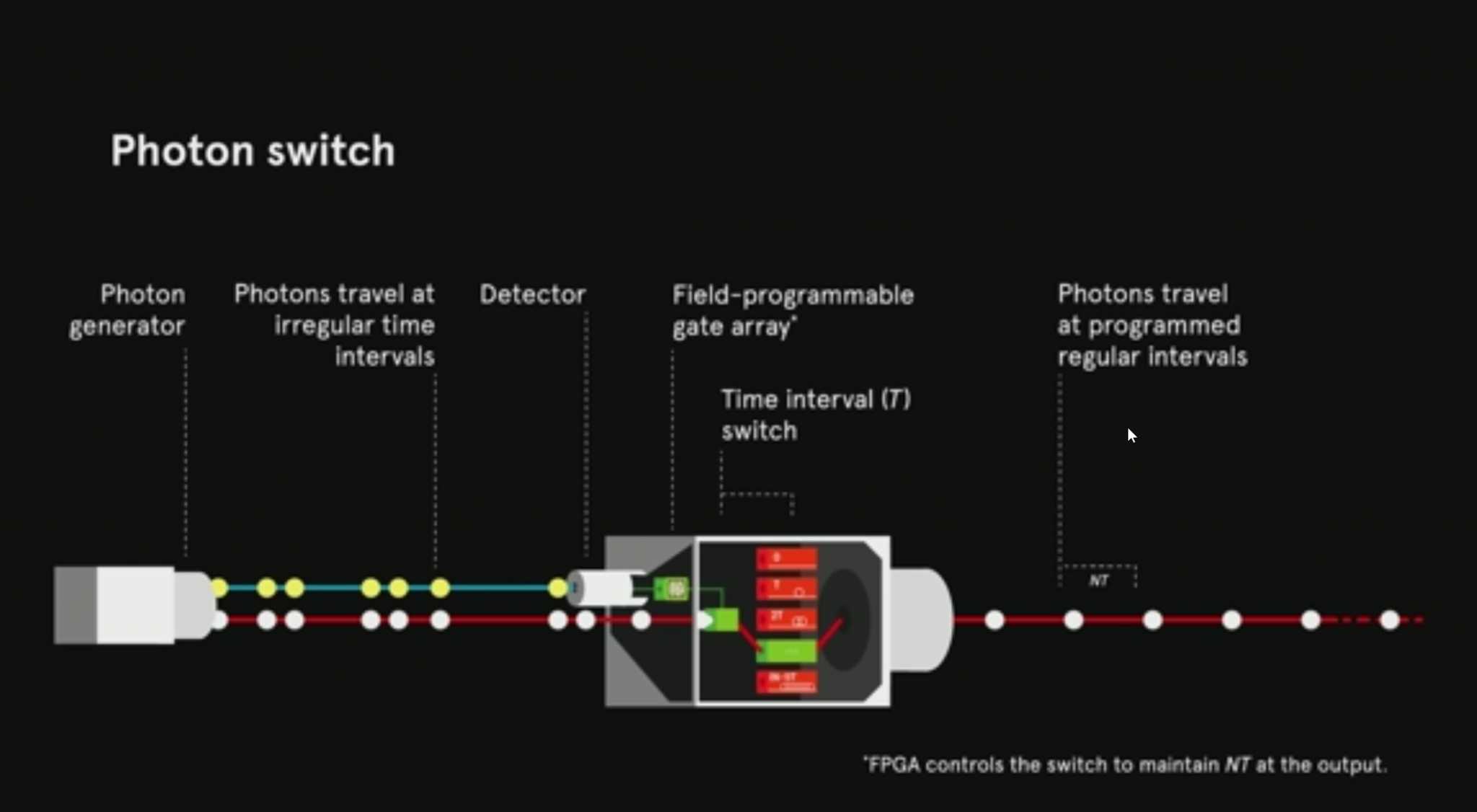
The team’s work resolved a key issue holding back the development of password exchange which can only be broken by violating the laws of physics. Photons are generated in a pair, and detecting one indicates the existence of the other. This allows scientists to manage the timing of photon events so that they always arrive at the time they are expected.

Lead author Dr Chunle Xiong, from the School of Physics, said: “Quantum communication and computing are the next generation technologies poised to change the world.”

Among a number of quantum systems, optical systems offer particularly easy access to quantum effects. Over the past few decades, many building blocks for optical quantum information processing have developed quickly,” Dr Xiong said.

“Implementing optical quantum technologies has now come down to one fundamental challenge: having indistinguishable single photons on-demand,” he said.

“This research has demonstrated that the odds of being able to generate a single photon can be doubled by using a relatively simple technique – and this technique can be scaled up to ultimately generate single photons with 100% probability.”

CUDOS director and co-author of the paper, Professor Ben Eggleton, said the interdisciplinary research was set to revolutionise our ability to exchange data securely – along with advancing quantum computing, which can search large databases exponentially faster.

“The ability to generate single photons, which form the backbone of technology used in laptops and the internet, will drive the development of local secure communications systems – for safeguarding defence and intelligence networks, the financial security of corporations and governments and bolstering personal electronic privacy, like shopping online,” Professor Eggleton said.

“Our demonstration leverages the CUDOS Photonic chip that we have been developing over the last decade, which means this new technology is also compact and can be manufactured with existing infrastructure.”

Co-author and Professor of Computer Systems, Philip Leong, who developed the high-speed electronics crucial for the advance, said he was particularly excited by the prospect of further exploring the marriage of photonics and electronics to develop new architectures for quantum problems.

“This advance addresses the fundamental problem of single photon generation – promises to revolutionise research in the area,” Professor Leong said.

The group – which is now exploring advanced designs and expects real-world applications within three to five years – has involved research with University of Melbourne, CUDOS nodes at Macquarie University and Australian National University and an international collaboration with Guangdong University of Technology, China.

Source: University of Sydney

Tags: cyber securityphoton switchphotonssecuritysecurity systems
Previous Post

New 40mm Cannon System Handed Over to British Army

Next Post

China’s Y-20 Aircraft to Finish Test Flights In 2016

Related Posts

US needs top cyber coordinator, better hacker ‘deterrence’

‘Digital fog of war’ around Iranian cyberattacks

March 13, 2026

Hostilities on the digital front have intensified since the outbreak of war between the US, Israel and Iran, with many...

US moves closer to retaliation over hacking as cyber woes grow

Cyberattack Disrupts Operations at MedTech Giant Stryker

March 11, 2026

A cybersecurity incident affecting Stryker Corporation—one of the world’s largest manufacturers of medical devices—has drawn renewed attention to the growing...

Next Post
China's Y-20 Transport Aircraft

China's Y-20 Aircraft to Finish Test Flights In 2016

Latest Defense News

US needs top cyber coordinator, better hacker ‘deterrence’

‘Digital fog of war’ around Iranian cyberattacks

March 13, 2026
US military says aircraft crash in Iraq killed 4 crew members

US military says aircraft crash in Iraq killed 4 crew members

March 13, 2026
Northrop Grumman moves to boost B-21 Raider output

Northrop Grumman moves to boost B-21 Raider output

March 13, 2026
US Navy evacuates virus-struck aircraft carrier Roosevelt

US military ‘not ready’ to escort tankers through Hormuz Strait

March 12, 2026
Israel cancels leave for combat units after Iran consulate strike

US says Iran campaign cost $11 billion in six days

March 12, 2026
US moves closer to retaliation over hacking as cyber woes grow

Cyberattack Disrupts Operations at MedTech Giant Stryker

March 11, 2026

Defense Forum Discussions

  • ADF General discussion thread
  • Germany
  • Middle East Defence & Security
  • Indonesia: 'green water navy'
  • US Navy News and updates
  • Russian Navy Discussions and Updates
  • NZDF General discussion thread
  • Royal New Zealand Navy Discussions and Updates
  • Royal Australian Air Force [RAAF] News, Discussions and Updates
  • Australian Army Discussions and Updates
DefenceTalk

© 2003-2020 DefenceTalk.com

Navigate Site

  • Defence Forum
  • Military Photos
  • RSS Feeds
  • About us
  • Advertise with us
  • Contact us

Follow Us

No Result
View All Result
  • Home
  • Defense News
    • Defense & Geopolitics News
    • War Conflicts News
    • Army News
    • Air Force News
    • Navy News
    • Missiles Systems News
    • Nuclear Weapons
    • Defense Technology
    • Cybersecurity News
  • Military Photos
  • Defense Forum
  • Military Videos
  • Military Weapon Systems
    • Weapon Systems
    • Reports

© 2003-2020 DefenceTalk.com