Sunday, March 15, 2026
  • About us
    • Write for us
    • Disclaimer
    • Terms of use
    • Privacy Policy
  • RSS Feeds
  • Advertise with us
  • Contact us
DefenceTalk
  • Home
  • Defense News
    • Defense & Geopolitics News
    • War Conflicts News
    • Army News
    • Air Force News
    • Navy News
    • Missiles Systems News
    • Nuclear Weapons
    • Defense Technology
    • Cybersecurity News
  • Military Photos
  • Defense Forum
  • Military Videos
  • Military Weapon Systems
    • Weapon Systems
    • Reports
No Result
View All Result
  • Home
  • Defense News
    • Defense & Geopolitics News
    • War Conflicts News
    • Army News
    • Air Force News
    • Navy News
    • Missiles Systems News
    • Nuclear Weapons
    • Defense Technology
    • Cybersecurity News
  • Military Photos
  • Defense Forum
  • Military Videos
  • Military Weapon Systems
    • Weapon Systems
    • Reports
No Result
View All Result
DefenceTalk
No Result
View All Result
Home Defence & Military News Technology News

New Material’s Capability to Increase Weapons’ Explosive Force Demonstrated

by US Navy
December 7, 2011
in Technology News
2 min read
0
Revolutionary Material Dramatically Increases Explosive Force of Weapons
14
VIEWS

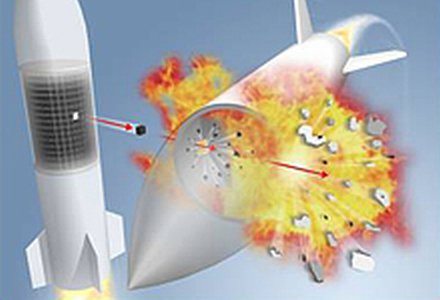
Military, government and industry officials watched the demonstration of a revolutionary material that increases the explosive force and lethality on enemy targets during a test at Naval Surface Warfare Center (NSWC). The test material, called High-Density Reactive Material (HDRM), is designed to replace steel in warhead casings with little or no compromise in strength or design.

“Today’s test demonstrates this new material’s potential and the ability of NAVSEA Warfare Center engineers and scientists to move it from the laboratory to full scale working prototype in under a year to meet technology development goals,” said NSWC Dahlgren Division Commander Capt. Michael Smith.

“It’s a remarkable achievement that could not have been accomplished without close technical collaboration and effort between the Office of Naval Research (ONR), NSWC Dahlgren, NSWC Indian Head Division and industry.”

Navy scientists and engineers from NSWC Indian Head Division (IHD) developed HDRM by combining several metals and using standard manufacturing processes.

“It’s rewarding to see the validation of much of the theory and experimentation that led to the final material selection,” said Dr. Clifford Bedford, ONR Advanced Energy Materials program manager. “In the applied research phase of the program, we’ve seen 100 percent reproducibility with this experimental system.”

Unlike conventional munitions, the innovative materials approach integrates the casing with warhead explosives for increased lethality.

“HDRM has demonstrated enhanced blast, multiphase blast, and reactive fragments effects,” said Dr. Jason Jouet, NSWC Indian Head Reactive Materials team lead. “With the strength of aluminum, density of steel, and more than one and a half times the energy of TNT, HDRM is truly a revolutionary enabling technology.”

HDRM can readily replace steel in existing systems and is compatible with current warhead designs, thereby maintaining the same probability of a successful target strike.

“This approach may translate to less ordnance and ultimately fewer sorties to get the same result,” said Jouet.

NSWC IHD’s Reactive Materials Team has gradually scaled up its HDRM tests to gather measurable data on the materials destructive characteristics.

“Initially, small cylinder casings were tested to help us refine the design,” said Bedford. “We used that data to fine-tune the parameters which were used to scale the charge in the later test demonstrations like the test.”

NSWC Dahlgren engineers worked carefully with device characteristics provided by their NSWC Indian Head counterparts and with target characteristics to design a complex test arena at NSWC Dahlgren’s Explosive Experimental Area.

“Rather than dynamically flying the HDRM ordnance device at a single target, we set up several tactically relevant targets,” said Jeb Brough, NSWC Dahlgren technical and programmatic lead for Reactive Materials.

“We inspected damage to the targets and collected performance data that will be applied to effectiveness models for specific weapons.”

Test instrumentation captured critical data and NSWC Dahlgren lethality engineers are currently assessing the target damage to judge the effects of the unique HDRM device.

“Although the arena is extremely complex, it is a cost effective method of evaluating the new material’s capability and potential,” said Brough.

“With this data, the Office of Naval Research can evaluate the best potential for further development related to a specific weapon system.”


Tags: explosivesWeapons
Previous Post

Russian Air Force, Sukhoi SU-27 and MiG 35 Flight, in 3D + HD

Next Post

Raytheon Acquires Cybersecurity Firm Pikewerks

Related Posts

US needs top cyber coordinator, better hacker ‘deterrence’

‘Digital fog of war’ around Iranian cyberattacks

March 13, 2026

Hostilities on the digital front have intensified since the outbreak of war between the US, Israel and Iran, with many...

US moves closer to retaliation over hacking as cyber woes grow

Cyberattack Disrupts Operations at MedTech Giant Stryker

March 11, 2026

A cybersecurity incident affecting Stryker Corporation—one of the world’s largest manufacturers of medical devices—has drawn renewed attention to the growing...

Next Post
EU & US Conduct Readiness Tests for Cyber Attacks

Raytheon Acquires Cybersecurity Firm Pikewerks

Latest Defense News

US needs top cyber coordinator, better hacker ‘deterrence’

‘Digital fog of war’ around Iranian cyberattacks

March 13, 2026
US military says aircraft crash in Iraq killed 4 crew members

US military says aircraft crash in Iraq killed 4 crew members

March 13, 2026
Northrop Grumman moves to boost B-21 Raider output

Northrop Grumman moves to boost B-21 Raider output

March 13, 2026
US Navy evacuates virus-struck aircraft carrier Roosevelt

US military ‘not ready’ to escort tankers through Hormuz Strait

March 12, 2026
Israel cancels leave for combat units after Iran consulate strike

US says Iran campaign cost $11 billion in six days

March 12, 2026
US moves closer to retaliation over hacking as cyber woes grow

Cyberattack Disrupts Operations at MedTech Giant Stryker

March 11, 2026

Defense Forum Discussions

Loading RSS Feed
DefenceTalk

© 2003-2020 DefenceTalk.com

Navigate Site

  • Defence Forum
  • Military Photos
  • RSS Feeds
  • About us
  • Advertise with us
  • Contact us

Follow Us

No Result
View All Result
  • Home
  • Defense News
    • Defense & Geopolitics News
    • War Conflicts News
    • Army News
    • Air Force News
    • Navy News
    • Missiles Systems News
    • Nuclear Weapons
    • Defense Technology
    • Cybersecurity News
  • Military Photos
  • Defense Forum
  • Military Videos
  • Military Weapon Systems
    • Weapon Systems
    • Reports

© 2003-2020 DefenceTalk.com