Royal Canadian Navy Discussions and updates

John Fedup

The Bunker Group
That might well be what the ROKN CNO believes, but I tend to suspect it would take quite a bit longer as well as requiring more outside help.

One needs to remember that S. Korea first built a sub in the early 90's, and the KSS-III which has subs under construction is the first domestic S. Korean conventional sub design. As we have seen with Spain's S-80 design, it is easy to screw up a design even for experienced yards.

When one then factors in the need to design an adequate SSN reactor and then fit that into a sub design... Unless S. Korea has been quietly working on a SSN reactor & design for years, then there is most likely years of work before a domestic S. Korean SSN would launch.

Now the US and UK naval construction might not be the fastest, both nations have decades of experience designing and building SSN's, including the reactors. If one looks at when development work began on RN or USN SSN's, it normally takes several years to a decade between design work being initiated and the start of construction. I would expect that S. Korea will also require similar times or even greater due to a lack of prior experience with fitting and integrating a reactor.
I suspect SKorea has been working on a SSN design for years given the threat in the North. Japan may be doing the same, another incentive for SKorea.
 

Todjaeger

Potstirrer
I suspect SKorea has been working on a SSN design for years given the threat in the North. Japan may be doing the same, another incentive for SKorea.
Quite possibly though I think Japan's greater experience designing and building subs would make a near-term appearance of Japanese SSN's more likely.

Also given the location of perceived threats to S. Korea, there might not have been as much drive towards SSN's when compared to the US or UK.

In that regards it would also go some way to explaining why Japan has not developed one yet, despite having the industrial elements needed to do so for decades.
 
The reporting on the seemingly left field decision by the IOTUS to allow korean access to US nuclear power technology has suggested a viable course for the RCN (and perhaps RAN) wrt acquiring and operating SSNs.
At first glance it highlights that potentially, this could be through an adaption of the KSS-III design. While the KSS-III displaces 4,000t submerged it could be able to be redesigned for nuclear propulsion (using the existing US S9G PWR). It is a possibility as France’s Rubis-class SSNs displaced just 2,600t submerged, and were far shorter at 74m in length compared to the Batch 2 KSS’ 89m form.
While these potential SSNs would not be available for the next 15+ years or more it would be an advantage to the RCN to select and use the KSS-III batch 2 SSKs to maintain the silent service until they can procure the new KSS-III batch 3 SSNs. That would allow the time for the training of the operators and maintainers of nuclear powered submarines.
The issue for the RCN regarding SSN's has not particularly been access of the technology, but more so the inherent costs and requirements upon the budget, fleet, personnel and infrastructure which SSN's require. I would be very surprised if the RCN moves to an SSN fleet at anytime in the future, especially after a potential 12 boat investment into a conventional fleet which will last for many decades.
 

John Fedup

The Bunker Group
The issue for the RCN regarding SSN's has not particularly been access of the technology, but more so the inherent costs and requirements upon the budget, fleet, personnel and infrastructure which SSN's require. I would be very surprised if the RCN moves to an SSN fleet at anytime in the future, especially after a potential 12 boat investment into a conventional fleet which will last for many decades.
Disagree about access, the US was not keen on Mulroney's plan for SSNs back in the 1980s. With Trump, zero chance for any USN SSN technology. As for a future KSS-III (N), perhaps in the distant future with Canadian involvement from our local nuclear industry. Not sure what a ice free Arctic ocean does for submarine operation. Although the need for under ice endurance melts away, having a SSN for fast transit from distant southern bases to a much more accessible Arctic ocean would be desirable.
 
Disagree about access, the US was not keen on Mulroney's plan for SSNs back in the 1980s. With Trump, zero chance for any USN SSN technology. As for a future KSS-III (N), perhaps in the distant future with Canadian involvement from our local nuclear industry. Not sure what a ice free Arctic ocean does for submarine operation. Although the need for under ice endurance melts away, having a SSN for fast transit from distant southern bases to a much more accessible Arctic ocean would be desirable.
Yet the US was eventually brought onboard with the project, which fell through due to budgetary and political reason at the end of the day. That was a different era, an era before agreements like AUKUS and this apparent Korean deal. At the end of the day though, I don't see the financial reality changing from back then to now.
 
Canada defence spending: New CEO starts

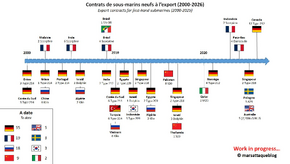
CTV News broke the story today regarding an apparent RFP sent out for the CPSP to TKMS and Hanwha, with a due date of March 2, 2026. Seems to be moving very fast, a good sign. Details of the RFP are currently unknown as it was not released to the public.

The DIA has sent the request for proposals for building and manufacturing the submarines to the two finalists: South Korea company, Hanwha Ocean and German defence company TKMS .

The deadline for RFP submission is March 2, 2026.
 

Sender

Active Member

Sender

Active Member
Germany opts for Canadian CMS330 for their new Type 127:


swerve

Super Moderator
Germany opts for Canadian CMS330 for their new Type 127:


4th CMS330 user, AFAIK: Canada, NZ, Chile & now Germany.
 

BostonMartin

New Member
Norwegian defence company pitches Ottawa as Arctic partner in sub procurement


"A source familiar with the instructions said the government's scoring of the bids will place most of the emphasis on the boats' long-term maintenance.

The source said sustainment makes up half of the weight of the bid, with 15 per cent going to the cost of the subs, 15 per cent to the economic benefits and 20 per cent to sub capabilities."


"The message that we're also carrying here to Canada is, make sure that you build long-term relationships that build sustainable jobs for Canada and not just something that comes in for a particular program, and when the program ends, the jobs goes away," Myhra said.

The government of Norway itself is also offering up its maintenance yard blueprints to Canada as part of the lobbying push."


- Competition is fierce but it seems the "we can deliver 4 subs by 2035" won't carry a lot of weight in the bid evaluation grid.
- Also, I know both sides have excellent subs but.. sub capability seems a bit low at 20% ?
- 50% for long-term maintenance + 15% for economic benefits. I feel there's overlap there? That's 65%.
 

John Fedup

The Bunker Group
The "source" says.....usually a red flag. Sub requirements for the RCN and classified vendor specifications are secret. As for the weighting wrt awarding a bid, life time support would be important of course but retiring 4 Victoria subs asap is a big savings via fast delivery of 4 KSS-III by 2035. As for everything else, we will have to await the award...hopefully before the end of 2026.
 
Top