
Royal Australian Air Force [RAAF] News, Discussions and Updates

The Wedgetail concept is over 25 years old , certainly it has been of a size for upgrades to be cutting edge ,but when it was designed there were not potential adverarial opposition in the Pacific arena with credible threat ,it might be some combination of increased satellites and drones will be able to do some of the Wedgetail role , Somewhere people will be cruching options could be interesting

TBH I remain skeptical that satellite-based systems could take the place of AEW aircraft for a number of technical reasons. I can certainly see how such a system could complement AEW, assuming it can be made to function properly.

Until a workable space-based system has started to be demonstrated, continued development of AEW aircraft needs to happen, or else Australia (and the US for that matter) need to give up the capability.

As for the age of the concept, I ask, "so what?" After all, the Vickers Wellington bomber R1629 was used as a testbed for the precursor to AEW systems back in ~1942 and here we are more than 80 years later and a number of air services operate some sort of AEW capability.

The standout capability for Wedgetail over previous systems (or at least what I am aware of) is that the Wedgetail's AEW radar is electronically steered rather than mechanically, and in place of essentially a large rotating emitter and receiver, it has numerous T/R modules that scan electronically and the individual T/R modules can focus on a target together directing more RF energy at something.
I am not sure satellites would ever be practical for Australia. These things aren't geostationary. You can't just park them where you need them. You might need to put dozens up just to guarantee 24 hour coverage. Not only that but they can be tracked. They will follow the same predictable orbit around the planet. I imagine a potential adversary such as China would have a massive data base containing the exact location of just about every satellite passing over their territory. They would likely be blinded, destroyed perhaps even highjacked as soon as any conflict broke out.

Australia doesn't need to be a trail blazer as far as next gen AEW is concerned. We needed to do that for the Wedgetail because there wasn't anything else available at the time. Now you will probably have an upgraded version of the Wedgetail entering service with the USAF. You also have other options such as Global Eye.

Perhaps the simplest solution will be to simply buy a few more Wedgetails, share the wear with the existing airframes and extend their service lives out to around 2050.
 
Or - nothing.

The most recent air lift study found that the optimal mix is C-17 / C-130 / CH-47. Anything smaller than C-130 doesn't really value add from a warfighting point of view, they simply cost too much compared to the value that they provide. Note that the replacement for the C-27 is an additional 8x C-130 - so we will end up with a more capable fleet after AIR 7404 delivers and the C-27s are fully out of service.

For peacetime efforts like resupply runs to the region, or air drops for floods, it's cheaper just to hire something. I mean, ultimately you'd cut it to a different Department (DFAT and/or NEMA) and allow the ADF to focus on warfighting. Just like the NDS has been telling us what our priority should be.


Exactly. Not only does the USAF not have a surplus, but they don't have enough airframes and they are themselves facing a crunch with the looming end of life of the C-5 fleet.


How often? Quite - but not necessarily on rough field. Take most of the PNG fields - the rough capabilities of the C-130 and C-17 allow them to (a) get in and (b) still carry a useful load.

A civil based airlifter like the KC-30 is fine for small cargo and pax. It's actually better for pax than the other two. But - it struggles with over-size and/or over-mass, and it's slow to unload compared to a C-130 or C-17 as it doesn't have a ramp and easily accessible hold. the KC-30A is a vital part of the airlift mix, but it can only answer a small part. And they have another, more important job - refuelling the DCA or strike assets.


Yeah, in addition to @Todjaeger's comments about time, it wasn't really a direct growth path. If Congress wasn't looking to cancel projects, that platform would have been the F/A-21 or F/A-22. It's a new aircraft, not like an F-15EX where you can trace the majority of the design to the F-15A. Any C-17 replacement is going to look like a C-17 - big empty fuselage, high wing, four engines. Like the C-5, C-141, C-130 and so on. The air lift and airport requirements will drive the design.

Plus you can't take advantage of the 40 years of improvement in aerodynamics, engine or materiel design if you just start with a C-17 design.


Noting the majority of the expense of a E-7 is in the surfboard, the better question is not what replaces it, but what if we cannot afford to.

I'd rather see that question being tackled. If the money is there, the next gen radar and airframe can be mated reasonably easily. If the money isn't (looks at AUKUS), then the RAAF has to fundamentally change how it fights. That's where the value of debate is; not in platform A or B debates.
One of the early raison d’être of the C27J was to perform the functions that the Cariboiu had undertaken for PTS - not the full initial para qual course, but the courses with much smaller numbers. It was always deemed uneconomic to use C139s for that; and when the Caribou was stillin service we had one semi permanently at Albatross for that purpose. What was wanted, I believe, was an aircraft with a ramp. What, if anything, is replacing the C27J in that role?
 
One of the early raison d’être of the C27J was to perform the functions that the Cariboiu had undertaken for PTS - not the full initial para qual course, but the courses with much smaller numbers. It was always deemed uneconomic to use C139s for that; and when the Caribou was stillin service we had one semi permanently at Albatross for that purpose. What was wanted, I believe, was an aircraft with a ramp. What, if anything, is replacing the C27J in that role?
When I did my BPC, (1st course at Albatross in 86, yes the ones that stole the ships bell) the 1st 2 or 3 of 9 jumps were from the C7, later the CC08 (same aircraft) caribou.
The 'bous could jump a platoon of 32. SASR used them a lot at places like Exmouth as well for free fall continuation. They could land (and takeoff) on a paddock, literately, not just rough runway, totally unprepared runways. The pilots were awesome, and did some crazy stuff in them, like negative G flights, and would allow us, plebs to be a co pilot for a bit and actually fly for 10 or 15 minutes.
They will never be replaced, simply because nothing exists that can replace them.
 
The standout capability for Wedgetail over previous systems (or at least what I am aware of) is that the Wedgetail's AEW radar is electronically steered rather than mechanically, and in place of essentially a large rotating emitter and receiver, it has numerous T/R modules that scan electronically and the individual T/R modules can focus on a target together directing more RF energy at something.
Erieye was doing that several years earlier. Flight trials began in 1987 on a Fairchild Metro. Production radars were delivered in 1996. The Israeli EL/W-2075 AESA radar was fitted to a Boeing 707 in 1993 & delivered to Chile in 1994, so even earlier.

Wedgetail first flew in 2004. First delivered to RAAF in 2009. By then Sweden, Greece, Brazil & Mexico were all operating Erieye, Israel & Chile were operating EL/W-2075 & I think Israel may have had the better EL/W-2085 operational on Gulfstream G550. China had the KJ-2000 operational with three AESA arrays in a triangular configuration inside a circular radome, & the KJ-200 with a YJ-06 AESA radar in a similar configuration to Erieye.

The radar on Wedgetail was the first American AEW AESA radar operational, I think.
 
I am not sure satellites would ever be practical for Australia. These things aren't geostationary. You can't just park them where you need them. You might need to put dozens up just to guarantee 24 hour coverage. Not only that but they can be tracked. They will follow the same predictable orbit around the planet. I imagine a potential adversary such as China would have a massive data base containing the exact location of just about every satellite passing over their territory. They would likely be blinded, destroyed perhaps even highjacked as soon as any conflict broke out.

Australia doesn't need to be a trail blazer as far as next gen AEW is concerned. We needed to do that for the Wedgetail because there wasn't anything else available at the time. Now you will probably have an upgraded version of the Wedgetail entering service with the USAF. You also have other options such as Global Eye.

Perhaps the simplest solution will be to simply buy a few more Wedgetails, share the wear with the existing airframes and extend their service lives out to around 2050.
I can’t speak for the future of next gen AEW, but if there is a conflict, everyone appreciates having a Wedgetail in support today and I’d suggest that will be the same for the next decade plus.
We know it works and I’d strongly support the acquisition of a couple more.

Cheers S
 
Erieye was doing that several years earlier. Flight trials began in 1987 on a Fairchild Metro. Production radars were delivered in 1996. The Israeli EL/W-2075 AESA radar was fitted to a Boeing 707 in 1993 & delivered to Chile in 1994, so even earlier.

Wedgetail first flew in 2004. First delivered to RAAF in 2009. By then Sweden, Greece, Brazil & Mexico were all operating Erieye, Israel & Chile were operating EL/W-2075 & I think Israel may have had the better EL/W-2085 operational on Gulfstream G550. China had the KJ-2000 operational with three AESA arrays in a triangular configuration inside a circular radome, & the KJ-200 with a YJ-06 AESA radar in a similar configuration to Erieye.

The radar on Wedgetail was the first American AEW AESA radar operational, I think.
I believe that Boeing Australia at D.S.T.O Fishermans Bend was able to get this with U.S congressional approval of the transfer of that technology
 
I believe that Boeing Australia at D.S.T.O Fishermans Bend was able to get this with U.S congressional approval of the transfer of that technology

I believe that there is a bit more to it than that. IIRC Australia funded a good portion of the R&D Northrop Grumman had to to to successfully integrate and deploy the MESA aboard an aircraft, to the point where Australia has some of the IP ownership and again, IIRC Australia received some royalty payments for the E-7 aircraft purchased by Turkey and S. Korea.
 
I am not sure satellites would ever be practical for Australia. These things aren't geostationary. You can't just park them where you need them. You might need to put dozens up just to guarantee 24 hour coverage. Not only that but they can be tracked. They will follow the same predictable orbit around the planet. I imagine a potential adversary such as China would have a massive data base containing the exact location of just about every satellite passing over their territory. They would likely be blinded, destroyed perhaps even highjacked as soon as any conflict broke out.

Australia doesn't need to be a trail blazer as far as next gen AEW is concerned. We needed to do that for the Wedgetail because there wasn't anything else available at the time. Now you will probably have an upgraded version of the Wedgetail entering service with the USAF. You also have other options such as Global Eye.

Perhaps the simplest solution will be to simply buy a few more Wedgetails, share the wear with the existing airframes and extend their service lives out to around 2050.
 
With regard to Wedgetails should the same model of the E-7 be used or assess others?,is there an argument to use the same as the Poseidons for ease of maintenance , Is there an Airbus aircraft that provides any advantage , The Global Eye has a look down radar for submarines could this be an option to add ?
 
There's no Airbus AEW aircraft, so whatever system was selected would need to be integrated with an Airbus aircraft. SAAB has a long track record of being able to fit Erieye to new types successfully. It's not yet been done with the NG MESA radar of Wedgetail.

GlobalEye has points both for & against it, but it would complicate logistics to operate a mixed fleet. Might be best just to get more of the same, even though a current production E-7 might be a bit different from a 15 year old RAAF Wedgetail.
 
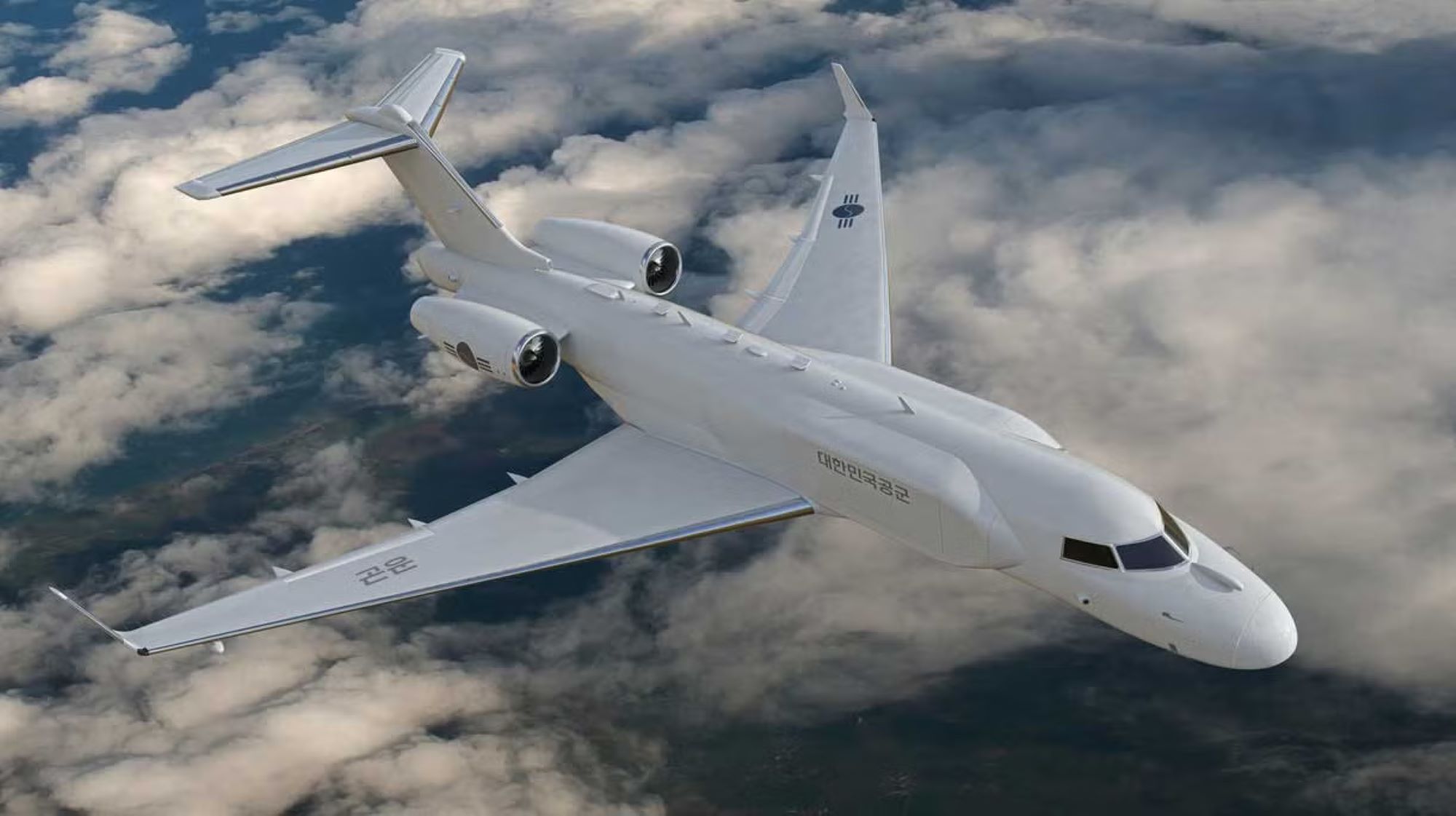
There are two contenders based on the same Bombardier aircraft. The GlobalEye uses the Erieye Extended Range (ER) radar and the other uses the Israeli ELTA EL/W-2085. Perhaps significantly, South Korea chose the later aircraft to expand their AEW fleet rather than purchase additional E-7s.
 
There are two contenders based on the same Bombardier aircraft. The GlobalEye uses the Erieye Extended Range (ER) radar and the other uses the Israeli ELTA EL/W-2085. Perhaps significantly, South Korea chose the later aircraft to expand their AEW fleet rather than purchase additional E-7s.

What I would be most interested in finding out, is what is the nature or cause of the ROKAF E-737's availability issues. Are there issues with the radar arrays and avionics, or are the issues with the platform aircraft, or perhaps even issues with both?

Sort of one of the issues with a service going with an entirely different combination of systems and platform, as it introduces potential variables.
 
It would be interesting to compare the capabilities of the platform, but it would probably be pointless with publicly available information.

Saying that, I’m assuming that the 737 platform has both increased power generation capacity and more space for onboard operators which could presumably be beneficial in high ECM environments?
 
What I would be most interested in finding out, is what is the nature or cause of the ROKAF E-737's availability issues. Are there issues with the radar arrays and avionics, or are the issues with the platform aircraft, or perhaps even issues with both?

Sort of one of the issues with a service going with an entirely different combination of systems and platform, as it introduces potential variables.
Not sure about the availability issues that SK has experienced with the E7 but the Global L3 package selection probably was enhanced by the US government’s questionable commitment to the E7.
 
The Poseidon though is situated on a different 737 model though with a much shorter range ,Global Eye has a service ceiling 10,000 feet higher than the E-7,s and 250 kph faster whether it it could be an advantage to have next generation Wedgetail based on a aircrft body that come closer to matching this to increase range of the radar by increasing service ceiling might be worth asking
 
The Poseidon though is situated on a different 737 model though with a much shorter range ,Global Eye has a service ceiling 10,000 feet higher than the E-7,s and 250 kph faster whether it it could be an advantage to have next generation Wedgetail based on a aircrft body that come closer to matching this to increase range of the radar by increasing service ceiling might be worth asking

An important consideration though is just how much information we do not know, or the information we do not have access to to really successfully infer anything.

The aeronautic performance of the underlying aircraft platform is certainly different, but we do not know how much of an impact mounting the various systems have upon that aeronautic performance. We also do now know how much space and weight those systems require, or what the power and cooling requirements are, or the capacity of the two different airframes for meeting those requirements.

Now if the radar arrays and associated systems of the Wedgetail could be fitted onto a Global Express 6500 and have a comparable or even greater mission duration then there could be some value. OTOH the needed systems might not fit, or there might be a power/cooling budget deficit, or a number of other potential variables.

Alternately, if/when Australia wants to expand it's AEW fleet (if that ever happens) it might be worth approaching S. Korea to learn what experiences it has with their Global Express-based AEW.

I would suggest that generally, for a service the size of the RAAF, having multiple different types of AEW&C aircraft is not desirable unless there are specific benefits derived from the different platform and system combinations.
 
What I would be most interested in finding out, is what is the nature or cause of the ROKAF E-737's availability issues. Are there issues with the radar arrays and avionics, or are the issues with the platform aircraft, or perhaps even issues with both?

Sort of one of the issues with a service going with an entirely different combination of systems and platform, as it introduces potential variables.
Australia upgraded its fleet while the Koreans didn't. The Wedgetail wasn't an instant success for Australia. We spent an extra $582 million fixing those problems. The Koreans didn't spend that money so they basically have the same troubled aircraft we used to have. We also have a whopping $1.5 billion sustainment package with Boeing. Really it is the old adage. You get what you pay for.

That sustainment deal we have with Boeing runs out around 2035.
 
Last edited:
Not sure about the availability issues that SK has experienced with the E7 but the Global L3 package selection probably was enhanced by the US government’s questionable commitment to the E7.
Korea has explicitly said they are keeping the E7 in service and this is about a lower cost platform to augment its capabilities. They need more capabilities and airframes. E7 are expensive. Australia operates G550 base aircraft as well, so it isn't crazy to seek a smaller cheaper platform for operations that don't require full E7 capabilities. Also How do you upgrade them when you only have a few airframes, its very difficult, so having another type allows Korea to then upgrade its E7s.
What about the Turks? How are their E-7s doing?
They are doing fine, they are upgrading them, mostly with more indigenous systems. They have proven very valuable. Türkiye can use that intel a variety of ways. They were playing hardball with NATO, and using it as leverage.

THe fact that the largest globalEye operator, UAE, specifically requested Australian E7 deployments, tells you all you need know about how capable a E7 is compared to Globaleye.
 
Back
Top