Royal Australian Air Force [RAAF] News, Discussions and Updates

hauritz

Well-Known Member
Imagine Ghostbats escorting E-7s and P-8s?

You could arm them with air to air or other munitions to support the missions of these platforms. You could even rig the P-8/E-7 with buddy stores and the Ghostbats with IFR.
One of the first things I thought was that Australia will no longer have to put up with Chinese fighters dropping flares and playing chicken with their Poseidons. Even unarmed the Ghost Bat would give Chinese fighter pilots something to think about.

Of course it would also be a test for the AI Ghost Bat. It has to obviously protect the Poseidon without escalating or perhaps even initiating the engagement.

If Australia does fly them along side patrol aircraft I have no doubt the Chinese would want to test their capabilities. Interesting times.
 

ADMk2

Just a bloke
Staff member
Verified Defense Pro
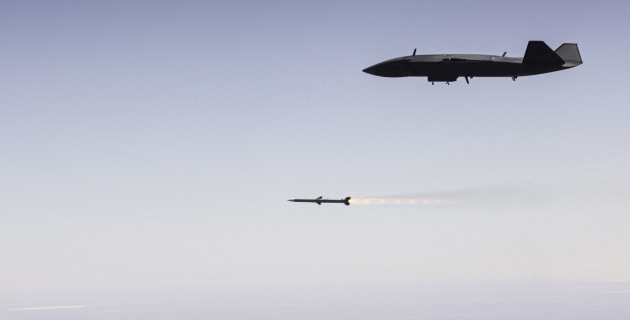
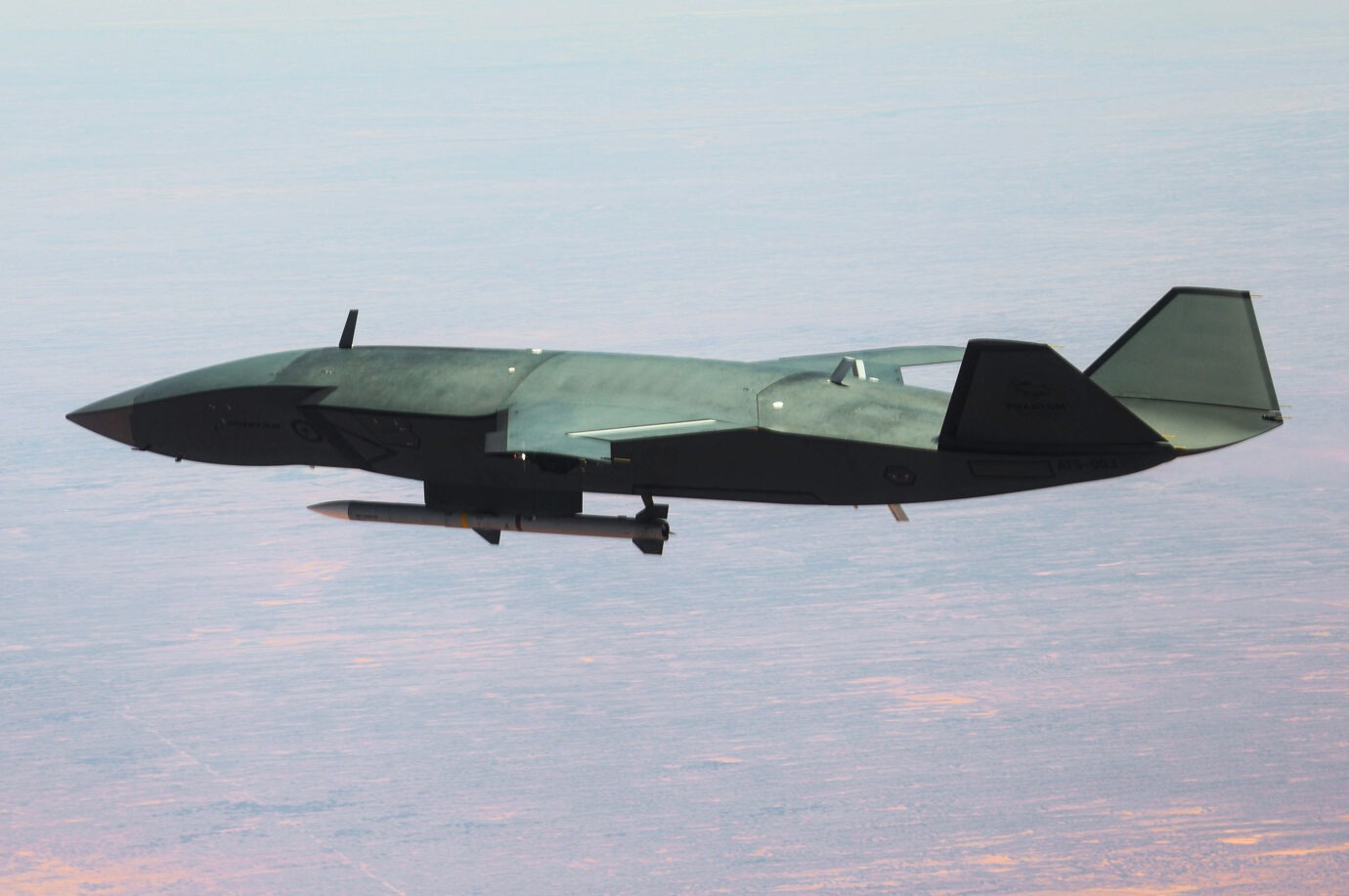
Ghost Bat fires a live missile. ADM-


Funding Boost - (6 operational Block 2s and development for a new Block 3.)

Defence video of the successful firing. Very impressive, they showed quite alot.
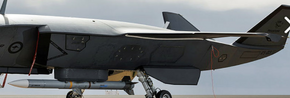
So much for the internal weapons bays, debate…
 

Wombat000

Well-Known Member
Obviously I’m no aero-engineer, and obviously I can only speculate.
It has always seemed to me that Ghost Bat airframe was a flying prototype.
With goals of proving capability in control, airframe flight characteristics, data exchange etc.

The issue with its size and ‘lack of weapons bay’ I think IMHO is notable but not significant.
Fixing external hard points on the operational variant perhaps may be plausible, or perhaps more likely is up scaling its air-form to a more practical size which may include allowance for a weapons bay?

Regardless it does seem to be a successful proof of concept.
 

Takao

The Bunker Group
Obviously I’m no aero-engineer, and obviously I can only speculate.
It has always seemed to me that Ghost Bat airframe was a flying prototype.
With goals of proving capability in control, airframe flight characteristics, data exchange etc.

The issue with its size and ‘lack of weapons bay’ I think IMHO is notable but not significant.
Fixing external hard points on the operational variant perhaps may be plausible, or perhaps more likely is up scaling its air-form to a more practical size which may include allowance for a weapons bay?

Regardless it does seem to be a successful proof of concept.
It, and the project, were always intended as a science experiment. Get a proof of concept that did exactly this stuff but didn't deliver a capability. That was under a different project, allowing flexibility in what was bought and time for the Loyal Wingman to do it's testing without the extra pressure to deliver a capability now. The biggest issue being that as an R&D platform, it's still quite expensive.

The decision to call Loyal Wingman an MQ-28A Ghost Bat was made outside the ADF. It's disrupted most of those plans and brings us no closer to a genuine CCA capability than we would have been.
 

ThunderChunder

New Member
Here's the Boeing Australia Press Release which goes into significantly more detail on how the test was conducted - once you get past the public relations talk of course. It answers the question on who/what was controlling it and what it was shooting on

WOOMERA, Australia, Dec. 9, 2025 -- In a historic achievement, Boeing [NYSE: BA] and the Royal Australian Air Force (RAAF) have successfully executed a force integrated air-to-air autonomous weapon engagement from an MQ-28 Collaborative Combat Aircraft.

The landmark mission involved an MQ-28 Ghost Bat teaming with a RAAF E-7A Wedgetail and F/A-18F Super Hornet to destroy a fighter-class target drone.

"This is the first time an autonomous aircraft has completed an air-to-air weapon engagement with an AIM-120 missile, establishing the MQ-28 as a mature combat capable CCA," said Amy List, managing director, Boeing Defence Australia.

"This latest achievement proves the advantage specialized CCA platforms bring to defense forces' mission effectiveness, delivering increased operational mass and data exchange for informed decision-making while reducing cost and crewed pilot risk."

Key mission highlights:

  • The MQ-28, E-7A and F/A-18F launched from separate locations.

  • Once airborne, an E-7A operator took custodianship of the MQ-28 ensuring safety and engagement oversight.

  • The F/A-18F teamed with the MQ-28 in combat formation to provide sensor coverage, and once the Super Hornet identified and tracked the target, targeting data was shared across all three platforms.

  • The MQ-28 adjusted its position and received authorization from the E-7A to engage and successfully destroy the target using a Raytheon AIM-120 AMRAAM missile.
"This exercise demonstrates the maturity and sophistication of Boeing's mission autonomy solution which is built on open standards and government architectures and is capable of integrating with fourth, fifth and sixth generation aircraft," said Colin Miller, vice president and general manager for Phantom Works, Boeing Defense, Space & Security's advanced research, development and rapid prototyping division.

"It is a true example of speed-to-capability. The team implemented open architectures and an advanced digital ecosystem to develop the necessary hardware, software, and mission systems required to successfully integrate, test and employ the weapon in a live, operationally relevant scenario in under eight months."

The exercise was a collaborative effort between Boeing, the RAAF, U.S. Air Force and industry partners.

 
Top