Australian Army Discussions and Updates

ADMk2

Just a bloke
Staff member
Verified Defense Pro
The Australian Government has awarded a $5.7 million contract to Electro Optic Systems Defence Systems to develop the R400 SLINGER counter uncrewed aerial systems capability, under the Advanced Strategic Capabilities Accelerator’s Mission Syracuse.
Govt Announcement
It seems the slinger comes in a variety of configurations and it is interesting that the Defence Dept seems to have selected the one with a 4 pod 70mm guided missile system, backed up by a machine gun, rather than the one with a 30 mm gun. Only 4 missiles but increased range and perhaps accuracy.
YouTube (at 1.44 min mark)
Where does it say that the 30mm gun is not being used? Also where does it say the 4x APKWS launcher is being used?
This is a $5.7m contract to develop Slinger, not an acquisition contract as some defence media have put out, perhaps in haste without actually reading the release properly…

Mission Syracuse’s role is to develop Counter-UAS systems for ADF use.

Project LAND 156’s job, is to procure and sustain Counter-UAS systems for ADF use.

There is a difference there…

This latest contract has been awarded to Electro Optic Systems (EOS) Defence Systems to develop the R400 SLINGER Counter Uncrewed Aerial Systems (CUAS) capability.
 
Where does it say that the 30mm gun is not being used? Also where does it say the 4x APKWS launcher is being used?
This is a $5.7m contract to develop Slinger, not an acquisition contract as some defence media have put out, perhaps in haste without actually reading the release properly…

Mission Syracuse’s role is to develop Counter-UAS systems for ADF use.

Project LAND 156’s job, is to procure and sustain Counter-UAS systems for ADF use.

There is a difference there…
Yep, ok, fair point but the govt statement release specifically states - "Integrating an advanced laser-guided rocket and a machine gun" . You would think that if a 30mm gun was being considered it would mention it. I take your point that it is a contract to develop a system and this could perhaps evolve into something different. Lets hope with the new re-structuring of the defence dept that this development will happen efficiently so a purchase decision on an effective C-UAS can be made quickly.
 

OldTex

Well-Known Member
Yep, ok, fair point but the govt statement release specifically states - "Integrating an advanced laser-guided rocket and a machine gun" . You would think that if a 30mm gun was being considered it would mention it. I take your point that it is a contract to develop a system and this could perhaps evolve into something different. Lets hope with the new re-structuring of the defence dept that this development will happen efficiently so a purchase decision on an effective C-UAS can be made quickly.
Well looking at the EOS datasheet for the R400 Slinger it only mentions the M230LF 30x113mm cannon. There is no mention of a machine gun (M2 or MAG58 these are more the R400 version RWS) nor of any laser guided rockets. Admittedly the datasheet is 3 years old and needs to be updated appropriately. But PR might not see any difference between a machine gun and a belt-fed cannon like the M230LF so used the machine gun description in the press statement.
 

ADMk2

Just a bloke
Staff member
Verified Defense Pro
Yep, ok, fair point but the govt statement release specifically states - "Integrating an advanced laser-guided rocket and a machine gun" . You would think that if a 30mm gun was being considered it would mention it. I take your point that it is a contract to develop a system and this could perhaps evolve into something different. Lets hope with the new re-structuring of the defence dept that this development will happen efficiently so a purchase decision on an effective C-UAS can be made quickly.
People are assuming there is only to be one variant. No chance Army might want to mix and match effectors to the threat?

Perhaps operate the vehicles in pairs? One with the M230LF and one with APKWS and a “machine gun”?

There are lots of options and this press release doesn’t prove or disprove any of them.

It is a development contract afterall to develop a certain capability. Doesn’t even mean Army will even acquire this…
 

Richo99

Active Member
I read on apdr that 100 Boxers have now been delivered to the UK army... makes me wonder about the seemingly very slow deliveries to the adf. How many have actually been delivered?
 

Backstab2007

New Member
Good question
Very little to show for an order of 211 vehicles.

Is there a problem with this project?

Cheers S
The German Army Heavy Weapons Carrier is being built in the same facility as the Australian CRV .. so you can guess who has priority on workers, parts and tooling
 

Stampede

Well-Known Member
The German Army Heavy Weapons Carrier is being built in the same facility as the Australian CRV .. so you can guess who has priority on workers, parts and tooling
For what it’s worth, Wiki lists two of 2nd / 14th’s three Sqns having Boxers , the other still with ASLAV.
I’m assuming this Cavalry Regt will eventually have three complete Sqns of Boxer variants.

Assuming about two thirds of any vehicle compliment are for active units, that would be around 140 vehicles.
Too many for 2nd / 14th.
So who else gets Boxers.

Cheers S
 

Backstab2007

New Member
For what it’s worth, Wiki lists two of 2nd / 14th’s three Sqns having Boxers , the other still with ASLAV.
I’m assuming this Cavalry Regt will eventually have three complete Sqns of Boxer variants.

Assuming about two thirds of any vehicle compliment are for active units, that would be around 140 vehicles.
Too many for 2nd / 14th.
So who else gets Boxers.

Cheers S
2 CAV will get a Sqn .. also , don’t forget the School of Armour
 

Stampede

Well-Known Member
2 CAV will get a Sqn .. also , don’t forget the School of Armour
2 CAV is a mystery
In fact the whole Brigades specialisation is a mystery.
Specialisation without depth = lack of true capability
I’m hoping this is just a transition phase and our three main Brigades round out and grow in time.

I think it’s more a budget driven thought bubble to pay for new capabilities for Army and those boat things Navy wants.

Finances I get and Army will pay tax for the greater ADF.

Back to 2 CAV
Is the cav / tank thing a long term structure or temporary as they grown the Brigade?

The heavy Brigade does not actually look that Heavy


Cheers S
 

Backstab2007

New Member
2 CAV is a mystery
In fact the whole Brigades specialisation is a mystery.
Specialisation without depth = lack of true capability
I’m hoping this is just a transition phase and our three main Brigades round out and grow in time.

I think it’s more a budget driven thought bubble to pay for new capabilities for Army and those boat things Navy wants.

Finances I get and Army will pay tax for the greater ADF.

Back to 2 CAV
Is the cav / tank thing a long term structure or temporary as they grown the Brigade?

The heavy Brigade does not actually look that Heavy


Cheers S
I think the original BOP was for 2 squadrons in 3 Armoured Cavalry Regiments.. been a while since I was in that space
 

ADMk2

Just a bloke
Staff member
Verified Defense Pro
2 CAV is a mystery
In fact the whole Brigades specialisation is a mystery.
Specialisation without depth = lack of true capability
I’m hoping this is just a transition phase and our three main Brigades round out and grow in time.

I think it’s more a budget driven thought bubble to pay for new capabilities for Army and those boat things Navy wants.

Finances I get and Army will pay tax for the greater ADF.

Back to 2 CAV
Is the cav / tank thing a long term structure or temporary as they grown the Brigade?

The heavy Brigade does not actually look that Heavy


Cheers S
Last I checked, 2/14LHR is getting 3 squadrons of Boxer CRV and 2 CAV is gaining 2x squadrons of Boxer CRV to add to it’s 2x squadrons of M1A2 SEPv3.

As for not looking very heavy, 3 brigade is miles away in “heaviness” from any other formation we have, or indeed that exists in the Southern hemisphere for that matter.

On current plans the brigade will mount:

3x infantry battalions (one of which focussed as a pre-landing littoral force).
1x Cav Regiment mounting 40x odd M1A2 SEPv3 MBT’s and 40x odd Boxer CRV’s.
1x mechanised infantry battalion mounted in 70-80x odd Redback IFV’s.
1x motorised battalion mounted in Bushmaster PMV-M.
1x artillery regiment with 3x batteries each equipped with 6x AS-9 Huntsman self-propelled guns and 3x AS-10 ammunition re-supply vehicles.
1x combat engineer regiment equipped with M1A2 based Breacher armoured engineering vehicles and M1A2 based armoured bridge-laying vehicles, among other protected engineering assets.

We’ve literally never had a formation as “heavy” as 3rd brigade is planned to be.

It’s short another 150x or so Redback IFV’s in various configurations, but even so it’s every bit as “heavy” as a US Army - Armoured Brigade Combat Team.

The extra Redback’s aside, I’m not sure how much “heavier” a formation could get in our Army…
 
Last edited:

Stampede

Well-Known Member
Last I checked, 2/14LHR is getting 3 squadrons of Boxer CRV and 2 CAV is gaining 2x squadrons of Boxer CRV to add to it’s 2x squadrons of M1A2 SEPv3.

As for not looking very heavy, 3 brigade is miles away in “heaviness” from any other formation we have, or indeed that exists in the Southern hemisphere for that matter.

On current plans the brigade will mount:

3x infantry battalions (one of which focussed as a pre-landing littoral force).
1x Cav Regiment mounting 40x odd M1A2 SEPv3 MBT’s and 40x odd Boxer CRV’s.
1x mechanised infantry battalion mounted in 70-80x odd Redback IFV’s.
1x motorised battalion mounted in Bushmaster PMV-M.
1x artillery regiment with 3x batteries each equipped with 6x AS-9 Huntsman self-propelled guns and 3x AS-10 ammunition re-supply vehicles.
1x combat engineer regiment equipped with M1A2 based Breacher armoured engineering vehicles and M1A2 based armoured bridge-laying vehicles, among other protected engineering assets.

We’ve literally never had a formation as “heavy” as 3rd brigade is planned to be.

It’s short another 150x or so Redback IFV’s in various configurations, but even so it’s every bit as “heavy” as a US Army - Armoured Brigade Combat Team.

The extra Redback’s aside, I’m not sure how much “heavier” a formation could get in our Army…
Thanks for the structure break down
It is what I envisaged and with a new range of capabilities it looks impressive on some levels.

This heavy brigade however is going to be some time in the making.

Once complete it is not bad for its size

But its size is not a 1990 era boast when we could claim to have the only heavy ( smiling at that claim ) heavy mechanised brigade in the region

Singapore / Malaysia , Indonesia all have this sort of kit now days .
Go further a field and look at the region big guys and our numbers are small time.

Now is that a good or bad thing

Well the ADF is airforce and Navy centric which is understandable as we are a whopping big island miles from most places.

That said, our Army has for 125 years deployed overseas for for good and bad reasons.

Deployabity even in small numbers requires a critical mass.

Be it lite / motorised or heavy what’s our realistic capacity.

So do we have an Army of ones’s , two’s, three’s or fours.

Is our intent the ability to deploy/ sustain a company / squadron sized force?

We could do those numbers!

Battalion sized force?

Hmmmmmm, maybe but questionable for heavy stuff!

Brigade sized force

Not without a big lead time

Just my take on the numbers

Add to this equation the rapid growth in cyber , AI and the unmanned realm which all require large numbers of personnel.

So yes with about 500 vehicles over the 30 plus tonne size we have quite a potent fleet

Let’s please make sure we utilise what we have.
Let’s be open that some platform numbers still need some modest growth.
MBT, IFV and SPG

Cheers S
 

StevoJH

The Bunker Group
An Army of ones, trying to do a little bit of everything, some of the time.

But not having enough of any one single capability to be able to sustain a deployment for any length of time. And not having enough equipment to be able to rapidly expand any capability except for light infantry.
 

ADMk2

Just a bloke
Staff member
Verified Defense Pro
Thanks for the structure break down
It is what I envisaged and with a new range of capabilities it looks impressive on some levels.

This heavy brigade however is going to be some time in the making.

Once complete it is not bad for its size

But its size is not a 1990 era boast when we could claim to have the only heavy ( smiling at that claim ) heavy mechanised brigade in the region

Singapore / Malaysia , Indonesia all have this sort of kit now days .
Go further a field and look at the region big guys and our numbers are small time.

Now is that a good or bad thing

Well the ADF is airforce and Navy centric which is understandable as we are a whopping big island miles from most places.

That said, our Army has for 125 years deployed overseas for for good and bad reasons.

Deployabity even in small numbers requires a critical mass.

Be it lite / motorised or heavy what’s our realistic capacity.

So do we have an Army of ones’s , two’s, three’s or fours.

Is our intent the ability to deploy/ sustain a company / squadron sized force?

We could do those numbers!

Battalion sized force?

Hmmmmmm, maybe but questionable for heavy stuff!

Brigade sized force

Not without a big lead time

Just my take on the numbers

Add to this equation the rapid growth in cyber , AI and the unmanned realm which all require large numbers of personnel.

So yes with about 500 vehicles over the 30 plus tonne size we have quite a potent fleet

Let’s please make sure we utilise what we have.
Let’s be open that some platform numbers still need some modest growth.
MBT, IFV and SPG

Cheers S
Read our strategic documents. It’s quite clear what our force is intended for. It is most definitely an Army of ones in almost everything except light infantry.

The one constant that never changes in our Army for “some” reason ( light infantry mafia throughout Army and cost…)

Not one of those countries will possess a comparable brigade to 3 Brigade once all the kit arrives, except in numbers only.
 

Stampede

Well-Known Member
Read our strategic documents. It’s quite clear what our force is intended for. It is most definitely an Army of ones in almost everything except light infantry.

The one constant that never changes in our Army for “some” reason ( light infantry mafia throughout Army and cost…)

Not one of those countries will possess a comparable brigade to 3 Brigade once all the kit arrives, except in numbers only.
Agree 3 Brigade will be impressive compared to what we had in the past once up to full strength.
What full strength looks like I’m still unsure.
The intended composition outlined still looks shy on numbers.
Anyway we’ll see what evolves in the years ahead.

Re strategic documents.
I often wonder if it’s the documents that dictate the equipment required and their numbers ;
or is it the other way around.
Id suggest it’s the later.

Army until recently has pretty much had the same kit for decades, yet many a word written about intended structures and intent.

I’m not too big on words.
You can change words very quickly

This may sound simplistic but just give me the equipment inventory and personnel numbers.
That’s a good guide as to the physical indicator of a nations capability.

Numbers matter.

What we know about Army is that when it deploys its inevitably for a significant period of time
Be it HADR, special forces of any other combination from heavy to lite.

Forces need rotation

Going forward Army MUST have good multiples of every capability.

Now we are truly getting a heavy capability that should be no different.

Why
Because if we don’t do it we are just playing let’s pretend

Army of fours

Surely we can afford four MBT and IFV Sqns.

Cheers S
 

ADMk2

Just a bloke
Staff member
Verified Defense Pro
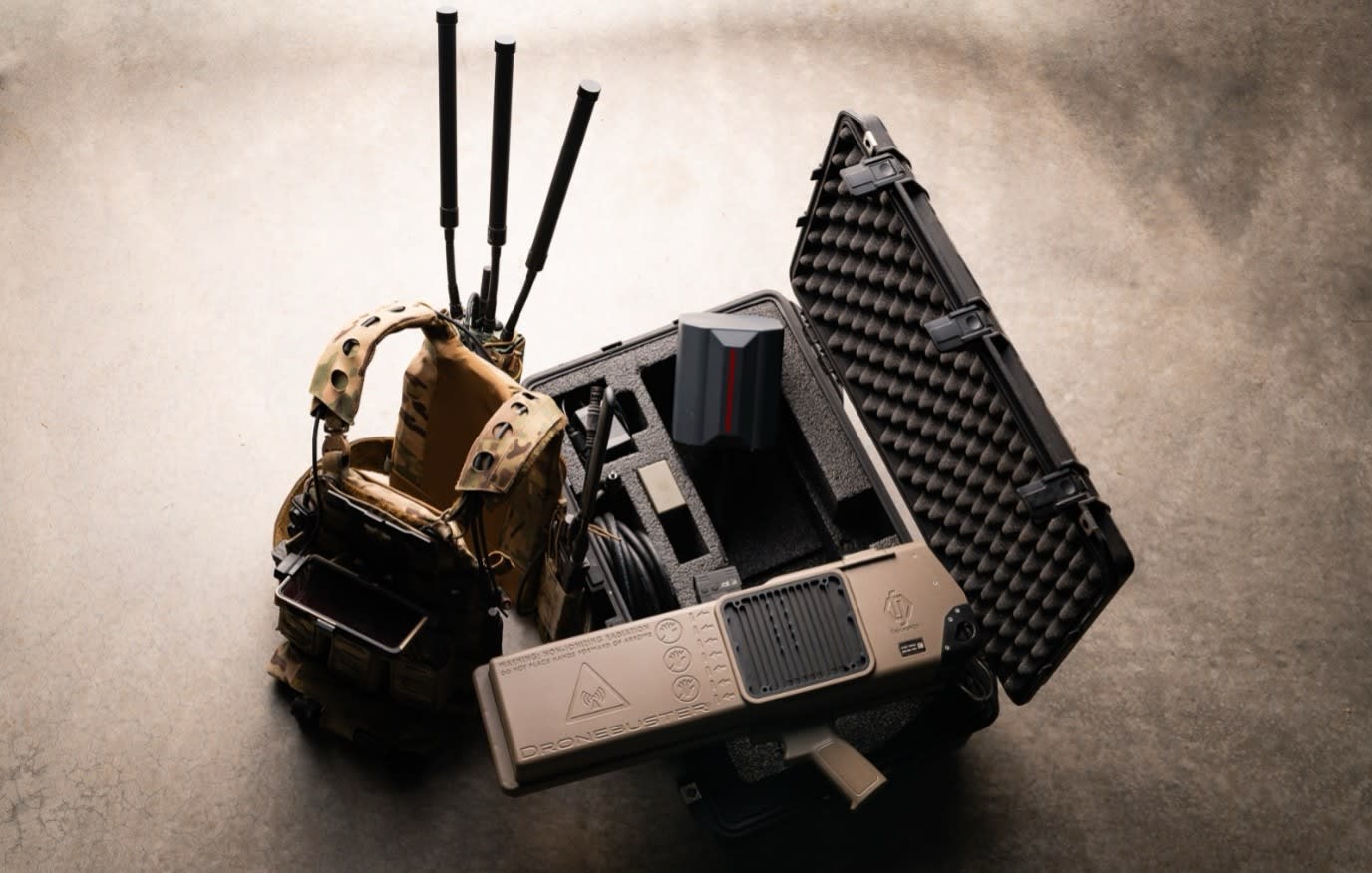
Dronebuster 4 Counter-UAS and DTIM drone detection manpack kits, contracted for under LAND 156…

Somewhere between 50-100x systems for the cash we have spent on them so far.


IMG_0235.jpeg
 

rsemmes

Active Member
(and 2)
They are not simply misconceptions, but artefacts of fragmented experience, uneven learning, and cognitive bias.
-Not only about drones...

12 Lessons from Ukraine cannot be translated into the Australian context because of geography, terrain, and contexts are too different
Ukraine is not a template for the Indo-Pacific, but it remains a critical source of insight provided that lessons are translated rather than replicated. For Australia, the task how to degrade enemy ISR, sustain high-attrition drone ecosystems, integrate UxS into joint kill webs, and institutionalise rapid learning – then tailor solutions to Indo-Pacific conditions of extended lines of communication, maritime logistics, and regional escalation dynamics; what it reveals about the evolving conduct of high-intensity warfare.
- The "translated rather than replicated" still applies, even if we haven't had a war like this in a very long time... Prolonged, high-intensity, land warfare.

1 Drones will completely replace people on the battlefield
Drones are displacing the role of some soldiers on the battlefield, not replacing them. It remains the soldier who is ultimately responsible for taking and holding the ground.
2 Learning to fly – even complex drones – is very difficult
The initial learning curve for drone piloting is comparatively easy, but employing a drone effectively in combat conditions is a different matter. This includes whether the platform should be physically modified, the communications links changed, the employment concepts adjusted, or the procedures revised. These roles must be professionalised through military training systems, rather than improvised using the expertise of civilian hobbyists. Up to 60 per cent of (Ukrainian) drone losses early in the war were due to poor pilot training.
-Just to remain us than better crews can defeat better tanks...
3 You can just bolt drones on small, roaming ‘drone groups’ or volunteer teams without changing the core military structure
The sustainment overhead of using drones further undermines the notion that they are a low-cost. Ukraine has shown that mass drone employment entails industrial-scale sustainment pipelines comparable in complexity —if not in unit cost— to conventional munitions supply. Volunteer teams operating outside formal logistics systems cannot support this scale.
If you don’t structurally integrate drones into your force design and C2, you haven’t actually learned the drone lessons from Ukraine at all. The decisive shift in drone warfare is not evidenced only in the proliferation of platforms. It is also reflected in efforts to restructure military forces to accommodate them. Drones must be treated as integral elements of the combined arms system, resourced, commanded, and sustained as such.
-Basically, just another kind of munition... That we are still learning how to use.
Electronic Warfare (EW) produces localised, temporary, and system-specific effects, rather than comprehensive denial. The contest between drones and countermeasures is dynamic.
-Tanks, anti-tanks...
4 EW ‘dome bubble’/ C-UAS stops all drones everywhere
Fibre-optic, autonomous or pre-programmed drones, their small radar cross-sections, low acoustic signatures, and terrain-masking flight profiles shift the contest from signal denial to physical interception.
What changed was not the invention of the technology, but its operationalisation under battlefield conditions. EW remains essential but insufficient to achieve battlefield supremacy. Effective C-UAS must be treated as a layered and adaptive system-of-systems, integrating EW, kinetic interception, physical barriers, camouflage and deception, and procedural controls.
-Lessons already "learned" about air warfare...
5 Drones are simple, plug-and-play tools – just show the target and the quadcopter will do the rest
Drone operations depend on a layered technical architecture: reliable communications links, frequency management, navigation aids (often under Global Navigation Satellite System (GNSS) denial), power supply, software modification, and payload integration. Ukrainian and Russian forces alike have had to constantly re-engineer control systems, antennas, and guidance methods to overcome jamming and interception.
-Like the Kometa-12, now aiming at Kometa-16...
Finally, the need for sustainment reveals the hidden complexity of drone warfare. High sortie rates and short platform lifespans generate continuous demand for batteries, motors, frames, optics, explosives, and replacement parts.
It requires careful planning (terrain, radio horizon, weather, EW threat); engineering (firmware, frequencies, payload integration, batteries); multi-person teams for ground robots and more complex missions; continuous adaptation to enemy EW and tactics. To make one strike, you have to ‘fill in a whole bunch of boxes’ so everything works – link, reception, horizon, planning. Flying skills might be 20 per cent of the result. The other 80 per cent is technical work: planning, communications, radio horizon, setting up the links, the payload. You have to do a huge amount of invisible work for one strike.
6 Advanced military drone systems must be slow, highly bureaucratic, fully codified, and built only through traditional defence-industry cycles, otherwise they cannot be reliable or effective
Platforms with exquisite design but long development timelines have proven less relevant than systems that can be modified, replaced, and tactically reconfigured in weeks rather than years. Modern warfare rewards rapid adaptation, short design loops, and decentralised problem-solving. On the other, sustained combat effectiveness requires standardisation, training pipelines, and doctrinal integration. In this Western (peacetime) paradigm, achieving quality is a slow process and standardisation is essential before fielding a platform, a situation which makes rapid adaptation almost impossible.
-Like in WW2, long series without improvements or short series with the latest updates...

 

rsemmes

Active Member
...
7 Drones have killed manoeuvre warfare; tanks and large formations are obsolete
The proliferation of drones – especially intelligence, surveillance and reconnaissance (ISR) drones and first-person view (FPV) kamikaze systems – has ended manoeuvre warfare. Some insist that tanks can no longer operate, large movements are impossible, and that the battlefield has become permanently static. Drones have made manoeuvre more difficult, but not impossible. The battlefield is in an evolutionary – not revolutionary – phase, and smart people are finding ways to negate drone effects. In reality, manoeuvre warfare will evolve and return.
-And, "everyone" will be surprised again...
Drone warfare has strengthened the find-and-fix functions of the kill chain. Armoured and mechanised forces remain essential for breaching, exploitation, and control of terrain. What has changed is the requirement for dispersion, deception, and integration of armoured capabilities with counter-UAS and electronic warfare (EW). Ukrainian and Russian forces have both adapted by reducing formation density, improving camouflage and concealment, and synchronising manoeuvre with EW and fires to disrupt enemy drone reconnaissance.
Battlefield dominance fluctuates with the balance between sensors and countermeasures. Periods in which drones have appeared decisive on the battlefield have often been followed by phases in which jamming, physical obstacles, and air defence have reduced their effectiveness, enabling renewed manoeuvre.
Armoured warfare has adapted rather than disappeared. Tanks and infantry fighting vehicles continue to play critical roles in assault and defence, but with modified tactics: operating in smaller packets, using extensive engineer support, and coordinating closely with ISR and fires.
-Even if we haven't see brigade level attacks...
Machine guns, precision-guided munitions, and airpower – were each declared the ‘end’ of manoeuvre warfare. Yet all were ultimately absorbed into evolving combined arms concepts. Drone-enabled surveillance represents a further increase in battlefield lethality, but it does not negate the enduring requirement for manoeuvre to dislocate the enemy, seize ground, and impose operational dilemmas.
Manoeuvre warfare is not obsolete. Instead, it is being reshaped by a new balance between detection and denial. The contest is shifting toward who can better integrate drones, EW, deception, and armour within combined arms formations. Events on the battlefield in Ukraine suggest that advantage will accrue to forces capable of suppressing enemy sensors long enough to enable movement and mass effects at decisive points. While drones have raised the cost of manoeuvre, they have not eliminated its necessity.
-As I said in a lot less elaborate manner... (It doesn't mean that we are right.)
Now what we are seeing is large scale operations with a massive front line. I think that's a big learning curve that we haven’t quite got to yet.
8 Soon there will be no radio-controlled drones on the frontline, and they will be replaced by fibre-optic drones
Fibre-optic drones move more slowly; they fly at roughly 30-40 km/h they are less manoeuvrable, and their use is significantly more limited than radio-controlled drones. In sectors where assault and offensive actions are underway on new terrain, fibre-optic drones are often used to knock out electronic warfare (EW) systems; After EW is suppressed, radio-controlled drones can then fly more freely. Radio-controlled drones are much cheaper. They are easier to manufacture, easier to operate, and far easier to scale. They also carry a larger explosive payload. Currently, around 25-30 per cent of the total mass of drones in some contexts.
9 Drones are simple because they are cheap and built in Ukraine
Although FPV drones appear low-cost, the entire ecosystem is technologically sophisticated: ISR drones performing autonomous waypoint navigation; onboard processing; target detection; integration of FPV strike drones; multi-layered kill chains. FPVs are just the “last step” in a high-tech process that includes autonomous ISR drones flying pre-planned routes; AI-supported camera feed interpretation; multi-drone coordination; rapid target data transfer. The public sees only the final strike. The underlying architecture is vastly more complex. Before a tank is hit by an FPV, at least one ISR drone has autonomously identified it, tracked it, and passed targeting data.
-There is also the "cheap" (millions of bullets are not cheap) and that components are not built in Ukraine...
10 Drones are a ‘silver bullet’ and all countries should adopt the drone centric warfare
The importance lies in integrating UAS into a broader combined-arms ecosystem, not relying on drones alone. Ukraine is using drones largely out of necessity, rather than simply because they are revolutionary or can do everything on the battlefield.
-They are relatively inexpensive and they have modified the battlefield...
11 Ukraine is using drones largely out of necessity, rather than simply because they are revolutionary or can do everything on the battlefield
A swarm implies decentralised machine decision-making, whereas current practice relies on human-directed mass and timing. Swarming technology is far from being there yet. Autonomy and AI? No, it doesn’t work.
-But we have a sandboxed OpenAI agent hacking Hugging Face...
The swarm technology represents the next frontier for drone warfare because of its potential to allow tens or even thousands of drones –or swarms– to be deployed at once to overwhelm the defences of a target. Both generating and countering future potential drone swarms remains a priority.

And 12 above...
 

MickB

Well-Known Member
Would like some opinions on the force structure and role of 2 cav.
Given anacdotal evidence of the performance of lite recon units such as the Weisel and Scorpion in both European training exercises and combat operations in Ukraine, are the Boxers to large for the recon role?
There are recurring references to small size, low ground pressure and reduced sound allowing stealthy approach and ambush.
Given the mostly jungle conditions of our northern area of interest would the smaller vehicle perform better?

This is without taking into the role of the Abrams.
Should the shock and awe of an armoured force be concentrated back into one concentrated unit?

Should 2 cav have a different, smaller lighter FSV equipped either a 90mm or 105mm weapon?
Based on the Boxer or perhaps refurbished Leopard 1s with the Cockerill 105 turret?
 
Top