Wednesday, March 18, 2026
  • About us
    • Write for us
    • Disclaimer
    • Terms of use
    • Privacy Policy
  • RSS Feeds
  • Advertise with us
  • Contact us
DefenceTalk
  • Home
  • Defense News
    • Defense & Geopolitics News
    • War Conflicts News
    • Army News
    • Air Force News
    • Navy News
    • Missiles Systems News
    • Nuclear Weapons
    • Defense Technology
    • Cybersecurity News
  • Military Photos
  • Defense Forum
  • Military Videos
  • Military Weapon Systems
    • Weapon Systems
    • Reports
No Result
View All Result
  • Home
  • Defense News
    • Defense & Geopolitics News
    • War Conflicts News
    • Army News
    • Air Force News
    • Navy News
    • Missiles Systems News
    • Nuclear Weapons
    • Defense Technology
    • Cybersecurity News
  • Military Photos
  • Defense Forum
  • Military Videos
  • Military Weapon Systems
    • Weapon Systems
    • Reports
No Result
View All Result
DefenceTalk
No Result
View All Result
Home Defence & Military News Technology News

Adding chameleon-like capabilities to defence drones

by Editor
September 9, 2020
in Technology News
2 min read
0
Adding chameleon-like capabilities to defence drones
14
VIEWS

In conjunction with the Department of Defence, University of South Australia material scientists have developed a range of lightweight panels that can change colour on demand, allowing drones to match their appearance to the background colours of the sky.

Ever since the French had the bright idea of using hydrogen balloons for military surveillance in the late 18th century, aviation capability has played a central role in intelligence, surveillance and reconnaissance (ISR) operations.

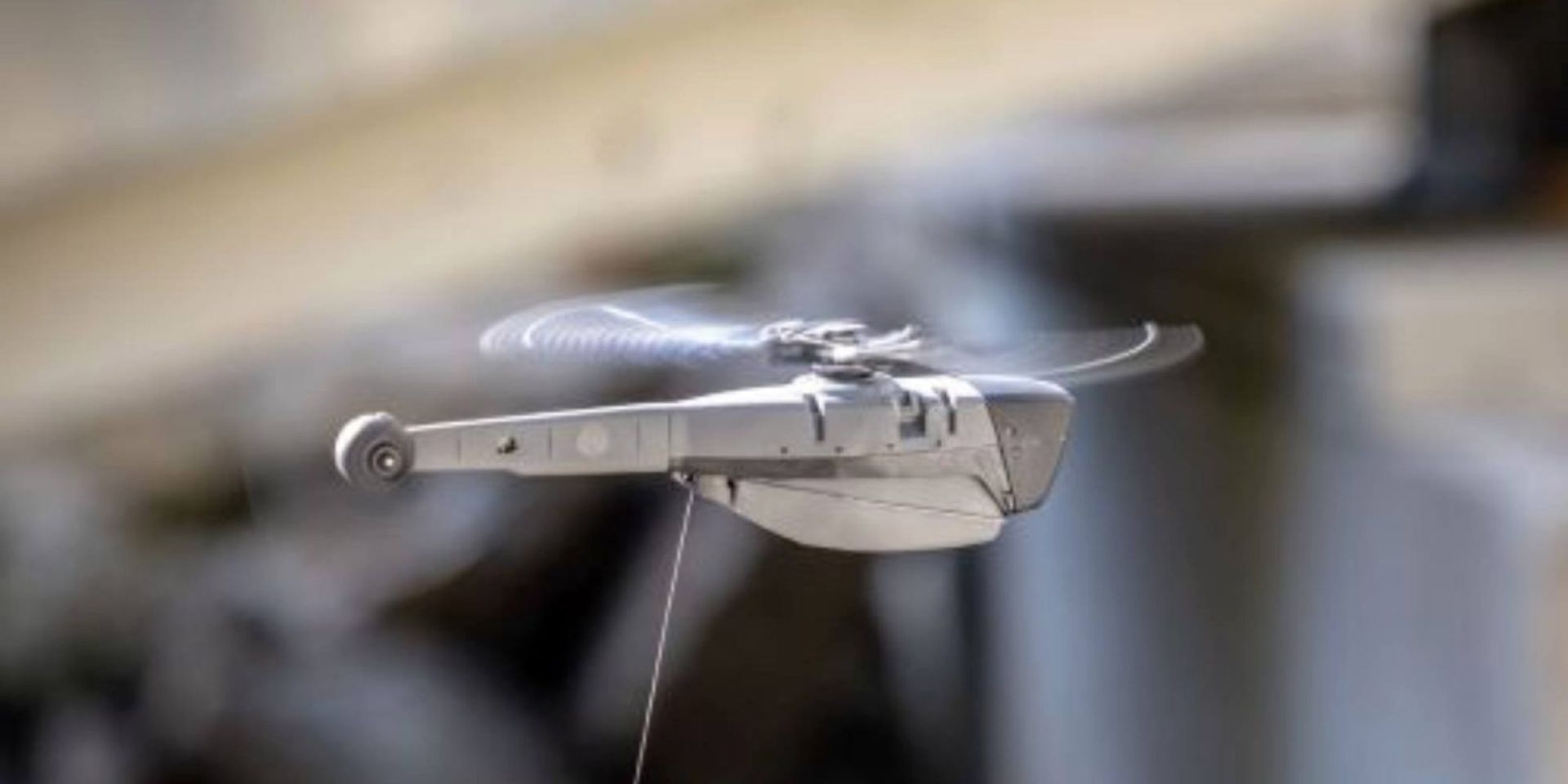
Today unmanned aerial vehicles (UAVs), or drones, are a huge asset for ISR. The Australian Army has drones ranging from the tiny Black Hornet – which is about the size of a whiteboard marker – to larger models with wide ranging surveillance capabilities.

Despite their ubiquity and utility, however, all military UAVs are currently hindered by the same simple problem – the sky changes colour, but they don’t.

Given the huge importance of remaining undetected during ISR operations, the static colour of drones can be a significant problem, but now, thanks to researchers at The University of South Australia’s Future Industries Institute (FII), the solution is at hand.

In a collaboration with the Department of Defence, FII researchers, led by Dr Kamil Zuber, have developed a range of lightweight polymer panels that can change colour on demand.

The polymers are what are known as electrochromic materials, meaning they change colour in response to an electric field, and the exact colours can be tuned to specific voltages.

“Similar technology has been used in luxury cars, for diming mirrors, and on the windows of the Boeing 787 Dreamliner,” Dr Zuber says.

“But those applications are slow, require high power consumption to switch, and the electric flow must be maintained to sustain the change state.

“Our panels, on the other hand, have switching speeds in the range of seconds and offer colour memory, which means they retain their switched colour without a continuously applied voltage.

“They also operate in the range from -1.5 to +1.5 volts, which means you only need to use an AA battery to activate the change.”

In addition to their chameleon-like characteristics, the panels are inexpensive, lightweight and durable, and can be either rigid or flexible, making them ideal for use on drones of all sizes and specifications.

“We have built a small-scale frame of a UAV and put our panels on it. We have demonstrated it against all sorts of different sky states and completed a range of validation testing showing how these materials can respond in actual use,” Dr Zuber says.

“We have five or six different materials, and each of the materials can produce two to three distinct different colours.”

The technology is currently being refined to integrate self-awareness and autonomous adjustment into the system, so drones will be able to automatically change colour in response to changes in the surrounding environment.

“At this stage, we’ve been working mainly on the panels and the hardware, but during the latest stage of the project we’ve developed prototype electronics for the controller, which is something that could test the state of the sky and then automatically adjust the voltage to the panel to tune it to the right colour.

“So, if the UAV passed in front of a cloud, it would turn pale, then when it moved back into blue sky, it would turn back to blue.”


Via: University of South Australia's Future Industries Institute (FII)
Tags: australiadronesmilitary dronesUnmanned Aerial Vehicle
Previous Post

Swedish Special Forces Prepare to Deploy to Mali

Next Post

US-China tensions set to dominate Southeast Asia summit

Related Posts

US needs top cyber coordinator, better hacker ‘deterrence’

‘Digital fog of war’ around Iranian cyberattacks

March 13, 2026

Hostilities on the digital front have intensified since the outbreak of war between the US, Israel and Iran, with many...

US moves closer to retaliation over hacking as cyber woes grow

Cyberattack Disrupts Operations at MedTech Giant Stryker

March 11, 2026

A cybersecurity incident affecting Stryker Corporation—one of the world’s largest manufacturers of medical devices—has drawn renewed attention to the growing...

Next Post
China Spying Sets New FBI Record With 1,000 Open Espionage Cases

US-China tensions set to dominate Southeast Asia summit

Latest Defense News

US needs top cyber coordinator, better hacker ‘deterrence’

‘Digital fog of war’ around Iranian cyberattacks

March 13, 2026
US military says aircraft crash in Iraq killed 4 crew members

US military says aircraft crash in Iraq killed 4 crew members

March 13, 2026
Northrop Grumman moves to boost B-21 Raider output

Northrop Grumman moves to boost B-21 Raider output

March 13, 2026
US Navy evacuates virus-struck aircraft carrier Roosevelt

US military ‘not ready’ to escort tankers through Hormuz Strait

March 12, 2026
Israel cancels leave for combat units after Iran consulate strike

US says Iran campaign cost $11 billion in six days

March 12, 2026
US moves closer to retaliation over hacking as cyber woes grow

Cyberattack Disrupts Operations at MedTech Giant Stryker

March 11, 2026

Defense Forum Discussions

  • Japan Air Self-Defence Force
  • The Russian-Ukrainian War Thread
  • Royal Australian Navy Discussions and Updates 2.0
  • Royal Australian Air Force [RAAF] News, Discussions and Updates
  • Australian Army Discussions and Updates
  • ADF General discussion thread
  • NZDF General discussion thread
  • Royal New Zealand Navy Discussions and Updates
  • Middle East Defence & Security
  • General Aviation Thread
DefenceTalk

© 2003-2020 DefenceTalk.com

Navigate Site

  • Defence Forum
  • Military Photos
  • RSS Feeds
  • About us
  • Advertise with us
  • Contact us

Follow Us

No Result
View All Result
  • Home
  • Defense News
    • Defense & Geopolitics News
    • War Conflicts News
    • Army News
    • Air Force News
    • Navy News
    • Missiles Systems News
    • Nuclear Weapons
    • Defense Technology
    • Cybersecurity News
  • Military Photos
  • Defense Forum
  • Military Videos
  • Military Weapon Systems
    • Weapon Systems
    • Reports

© 2003-2020 DefenceTalk.com