Royal New Zealand Navy Discussions and Updates

StevoJH

The Bunker Group
As an aside, it appears that all of the CEC-kitted surface escorts either have or are being upgraded to Aegis Baseline 9, so non-Aegis kitted escorts may very well not be able to get fitted for CEC.
I’d never actually looked to see what ships had CEC, I didn’t realise it was purely an Aegis thing. The Type 45 Destroyers were supposed to be upgraded with CEC at one point, however it was cancelled.

I assumed it was due to cost, but maybe it was actually due to a fundamental compatibility issue.
 

Todjaeger

Potstirrer
I’d never actually looked to see what ships had CEC, I didn’t realise it was purely an Aegis thing. The Type 45 Destroyers were supposed to be upgraded with CEC at one point, however it was cancelled.

I assumed it was due to cost, but maybe it was actually due to a fundamental compatibility issue.
Not entirely an Aegis-thing as I understand it. USN CVN's have it, and some of the large phatship classes like the LHD's and LPD's. A brief summary on CEC is available from the USN here. Also, US E-2 Hawkeye AEW have versions of it.
 

spoz

The Bunker Group
Verified Defense Pro
No, it doesn’t need Aegis. But because of what it allows you to do (fire somebody else’s missiles, for example) the US is being very careful about who and what gets it.
 

Cadredave

The Bunker Group
Verified Defense Pro
A practical compromise for New Zealand’s frigate replacement could be for NZ to take the initial Japan-built upgraded Mogamis, while Australia uses the follow-on batches to move towards a more Australianised fit, including potential CEAFAR integration.

The Mogami’s radar fit is capable, but OPY-2 is an X-band AESA system, whereas CEAFAR gives Australia an superior X and S-band radar architecture already used across the fleet. That matters for capatbility, commonality, sustainment and future upgrades too.

NZ would still get a capable frigate well suited to its requirements, while Australia avoids locking itself into a small orphan fleet of early-standard ships

Thoughts?
This is neither practical or a compromise, you are deliberately ignoring the reason the RAN & Australian Government have stated why the first three will be built in Japan, a lesson that is now impacting the RN as they lose Type 23 hulls with the first replacement not due within the next 18 months at the earliest if everything goes according to plan.
 

Rob c

The Bunker Group
Verified Defense Pro
Yep, the AI slop has been coming from this guy for weeks. Considering he was waxing lyrical about Ngati a while back I wish he would take note of some of Ngati's post etiquette. (And maybe some of his red ink)
He does from time to time come up with a good idea, but then buries it in rubbish so that it lacks any usefulness. or integrity.
 

Rob c

The Bunker Group
Verified Defense Pro
From the rummor mill, the AH140 is the current leading comtender, due price and Babcock offering significant in country work on the ships. Ome claim was thar we could get 3 AH140's for the price of 2 Morgarmi's. I stressthis is not official, but interresting and I suspect that the 3 for 2 would be dependent on fit out.
 
From the rummor mill, the AH140 is the current leading comtender, due price and Babcock offering significant in country work on the ships. Ome claim was thar we could get 3 AH140's for the price of 2 Morgarmi's. I stressthis is not official, but interresting and I suspect that the 3 for 2 would be dependent on fit out.
If the AH140 was chosen it would seem to be yet another example of a NZ Government prioritizing the "cheapest" deal over what arguably is a more capable platform, a lower risk Japanese build option and ongoing training/operating synergies with our closest ally...
I also wonder what the "significant" in country work would involve give our limited capabilities in this space?
 
Last edited:

Gibbo

Well-Known Member
According to Babcock's AH140 site Arrowhead 140 - Babcock International Group the AH140 offers the following Modular mission fit for tailored capability:

<quote>
"Arrowhead 140’s modular design supports a wide range of mission systems, allowing navies to tailor capability for:
  • Maritime security and constabulary tasks
  • Anti‑surface warfare
  • Task group operations
  • Humanitarian and disaster response
  • Intelligence, surveillance and reconnaissance (ISR)
<unquote>

Does one therefore assume ASW is not a core capability? On the RN's T-31 (Inspiration Class) page when doing a search for 'submarine' the only mention is "Anti-Submarine Rocket (VLA)" Inspiration Class

As an aside IMHO RNZN is going to be lucky to get more than a 1:1 ANZAC replacement... dreams of 4-5 are completely unrealistic ...maybe that magic number is 3 but GOTD ain't going to splash excessive cash unless it's asphalt covered!
 

recce.k1

Well-Known Member
Well we have two good choices ahead - New FFM or T31/AH140.

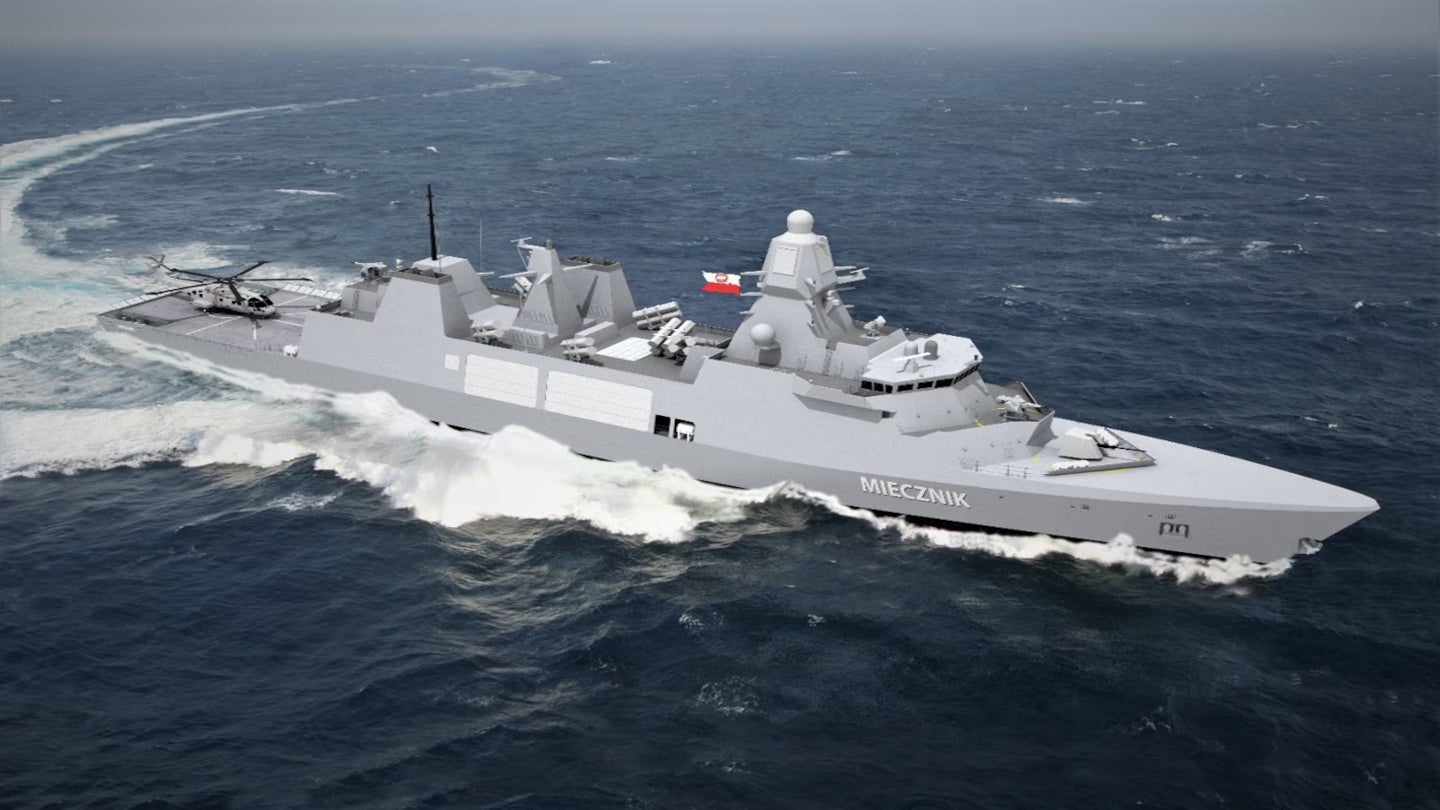
Expect the Navy will wish to continue with ASW and if the latter is chosen, look to the Polish Miecznik variant which features bow-mounted and towed array sonars.

Of course ASW is already a design feature of the Mogami.
 

Xthenaki

Active Member
If the AH140 was chosen it would seem to be yet another example of a NZ Government prioritizing the "cheapest" deal over what arguably is a more capable platform, a lower risk Japanese build option and ongoing training/operating synergies with our closest ally...
I also wonder what the "significant" in country work would involve give our limited capabilities in this space?
Ref:: THE POST - Taranaki Businesses eye up defence spending opportunities. Could be a very positive move At least a start.
 

Cadredave

The Bunker Group
Verified Defense Pro
From the rummor mill, the AH140 is the current leading comtender, due price and Babcock offering significant in country work on the ships. Ome claim was thar we could get 3 AH140's for the price of 2 Morgarmi's. I stressthis is not official, but interresting and I suspect that the 3 for 2 would be dependent on fit out.
The rumour mill in the Army was we were getting Humvees to replace the Series 3 LR tbh no one outside the team looking at the replacements knows anything, one little leak and watch the effluent hit the fan, IMHO its going to come down to interoperability, logistics, whole of life costs & closer defence ties with Australia & Japan.
 

recce.k1

Well-Known Member
The rumour mill in the Army was we were getting Humvees to replace the Series 3 LR tbh no one outside the team looking at the replacements knows anything, one little leak and watch the effluent hit the fan, IMHO its going to come down to interoperability, logistics, whole of life costs & closer defence ties with Australia & Japan.
Could it be a case that two things can be true at the same time? That is as the AH140 was first off the blocks it had the inside running (which aligns with Rob's sources). But now with the Australia choosing the second generation Mogami it has now forced the NZ Govt to reassess its options and even at this early assessment stage it is clear that the Mogami option provides several attractive factors that you have outlined.

The only question I had then was that of manufacturing offsets (and costs). Whilst an AH140 purchase could provide some NZ industry involvement, it seemed to me a Mogami purchase would likely be a one-way transaction to Japan's advantage (i.e. no local involvement and therefore basically $billions to be sent overseas, a bug bear for small nations like NZ). However this article from the Japan Times is suggesting that the Japan Govt is aware of these issues, so that may not be the case, potentially.

Ship construction could also be collaborative. As part of its deal with Japan, Australia is planning to build eight Mogami-class frigates at a shipyard near Perth. Penk said New Zealand is also looking for involvement in the construction of the vessels.

While Japan might be willing to bring New Zealand into the shipbuilding process, led by Mitsubishi Heavy Industries, the rival U.K. offer led by Babcock International Group already has a potential template for New Zealand in its existing deals with Poland and Indonesia to build Type 31 ships in those countries under license.

“How much work New Zealand can get in building the ships is going to be part of the decision,” said Peter Greener, senior fellow at the Center for Strategic Studies at Victoria University of Wellington.

Other factors including capability and cost will also shape New Zealand’s decision, according to Penk, who was appointed defense minister last month.

Defense analysts say both the U.K. and Japanese options are strong choices. The Mogami-class ships are a relatively young and untested offering, albeit with more capabilities such as vertical launch cells for missiles, anti-submarine warfare technology and a stealthy design.

The extra features also come with a higher price tag, and a key question will be what capabilities New Zealand will need on its new ships. The U.K. Type-31 is a modular design that allows extra functions to be added as required.

“The British are likely to put forward a very cost attractive proposal,” Greener said, adding that the Type 31 offer might have an advantage if New Zealand decides to buy both frigates and patrol vessels based on the similar simpler design. Penk has said the country is looking at all options to modernize its navy and add further new ships.

A spokeswoman for Babcock said the Type 31 frigate offered New Zealand a proven option for the kinds of roles New Zealand will have for its new ships. “It does what it says on the tin for what they will need in terms of maritime patrols and humanitarian aid,” she said.

While the Mogami-class frigates are likely to be more expensive, Patalano said the price tag has to be assessed through the life cycle costs. He said a robust local supply chain shared with Australia could help prevent costs ballooning.
Also of note it quotes the DefMin stating that "Penk has said the country is looking at all options to modernize its navy and add further new ships".
I think we all here should keep an open mind about the future RNZN fleet composition (and not assume the likes of 1:1 replacements as some people state matter-of-factly here)!


recce.k1

Well-Known Member
Apparently Defence's pre-Budget announcement will be made tomorrow according to this article and quotes a Navy Commander focusing on the key issues for choosing the ANZAC replacements.
“What's really important for us is not so much the platform, it's more around the supply chain, it's around the partnering with a like-minded nation, you know, ‘What have we got in the region, where can we balance off each other in terms of capability?’
Elsewhere in the article he appears to be surprisingly forthright on where current thinking is pointing to!

However options are being kept open as Defence will also visit the UK to assess the T31.

Our professional defence analysts are also speaking up. But will the Govt listen?
When it comes to frigate fleet size, Professor David Capie, director of the Centre for Strategic Studies (CSS) at Victoria University of Wellington, said typically four vessels were considered a “realistic capability”. “The rule of thumb is you have one in dry dock; one getting ready, fitting up to go on deployment; and one deployed. That three gives you one [spare], and even that's a pretty marginal call, I think. “New Zealand's definitely found that two can leave you with no capability at all for extended periods. ”Given that the Navy’s two offshore patrol vessels were also to be replaced in a similar timeframe, there was an argument for replacing the frigates and these ships with four new frigates, as a “common hull” would simplify the fleet.

The business case would need “very careful weighing”, Capie said. “This is a lot of public money that's going to be spent … Then once that decision is made, you have to try and purchase those ships, slotting into existing order books that shipyards might have. ”
 

Todjaeger

Potstirrer
TBH what might turn out to be the critical driver behind the RNZN frigate replacement selection is not costs, fitout or offsets, but who can manage to make a delivery by the time needed.

Unfort NZ has really, really left the frigate replacement programme too late. IMO NZ should have started work back in 2010-ish on determining what should be in the replacement frigate, with the goal of the RNZN getting first delivery starting around 2027.
 

Cadredave

The Bunker Group
Verified Defense Pro
Could it be a case that two things can be true at the same time? That is as the AH140 was first off the blocks it had the inside running (which aligns with Rob's sources). But now with the Australia choosing the second generation Mogami it has now forced the NZ Govt to reassess its options and even at this early assessment stage it is clear that the Mogami option provides several attractive factors that you have outlined.

The only question I had then was that of manufacturing offsets (and costs). Whilst an AH140 purchase could provide some NZ industry involvement, it seemed to me a Mogami purchase would likely be a one-way transaction to Japan's advantage (i.e. no local involvement and therefore basically $billions to be sent overseas, a bug bear for small nations like NZ). However this article from the Japan Times is suggesting that the Japan Govt is aware of these issues, so that may not be the case, potentially.


Also of note it quotes the DefMin stating that "Penk has said the country is looking at all options to modernize its navy and add further new ships".
I think we all here should keep an open mind about the future RNZN fleet composition (and not assume the likes of 1:1 replacements as some people state matter-of-factly here)!

Our Foreign Minister ole Winnie made a comment very recently along the lines we are part of Asia or words to that affect and how Defence & Trade regardless of who is in power cannot be separated so to me it shows his thinking, Im old enough to know that he is just one voice in Government regardless which way it goes this Country needs to go back to a four Frigate based Navy fully armed for one purpose war fighting.
 

recce.k1

Well-Known Member
Unfort NZ has really, really left the frigate replacement programme too late. IMO NZ should have started work back in 2010-ish on determining what should be in the replacement frigate, with the goal of the RNZN getting first delivery starting around 2027.
I'm in full agreement that would be the ideal outcome. But looking at things realistically for a 2027 delivery from where would the ships come from who have proven designs and are building them - Spain? France? Italy?

NZ isn't unique in that the other FVEY nations (particularly UK, Australia and Canada) have not delivered replacements for their combatants within a 30 year window (eg the T23, ANZAC, Halifax classes).

Historically NZ bought combatants from the UK then Australia, and it would be looking there first and foremost (and not to other European or SE Asian shipyards). So in the 2010's it was the T26 that NZ started assessing but for some reason, presumably the high costs of the project (particularly the Hunter and CSC variants) coupled with design and production delays and escalating costs probably saw NZ's Beancounters having massive fits and fortifying their Scrooge McDuck vault (of course a prudent Govt would have sucked it up, but unfortunately they weren't).

Next in line then was the T31, which was the only likely contender 2-3 years ago. But then came the Australian Surface Fleet Review in 2024 which brought about the Mogami acquisition for the RAN and that has meant a rethink on the NZ Govts behalf.

But the beneficial outcome of these delays is that potentially NZ could re-align again with the RAN if the Mogami is selected (since T26/Hunter was never ruled in). Although the published delivery dates for the replacements are slated as 2034-2036, the DefMin has hinted this could change depending on supplier build times and other factors. Babcock have production slots starting around 2029 (IIRC) and although we don't know what Japan can offer at this point in time their media are talking positively about being able to offer ships to NZ and other SE Asian nations so presumably they have confidence in their ability to build and deliver in a timely manner.
 

recce.k1

Well-Known Member
Pre-Budget announcement today, for the RNZN funding has been set aside to acquire long endurance ISR USV's for operating across the SW Pacific (more Bluebottles or something else?) and a polar capable UAS to operate from the surface vessels to strengthen maritime domain awareness.

Amongst other funding announcements were further pay and condition increases for personnel to better align with the private sector and mention of re-establishing some trades (which weren't specified).


Todjaeger

Potstirrer
I'm in full agreement that would be the ideal outcome. But looking at things realistically for a 2027 delivery from where would the ships come from who have proven designs and are building them - Spain? France? Italy?

NZ isn't unique in that the other FVEY nations (particularly UK, Australia and Canada) have not delivered replacements for their combatants within a 30 year window (eg the T23, ANZAC, Halifax classes).

Historically NZ bought combatants from the UK then Australia, and it would be looking there first and foremost (and not to other European or SE Asian shipyards). So in the 2010's it was the T26 that NZ started assessing but for some reason, presumably the high costs of the project (particularly the Hunter and CSC variants) coupled with design and production delays and escalating costs probably saw NZ's Beancounters having massive fits and fortifying their Scrooge McDuck vault (of course a prudent Govt would have sucked it up, but unfortunately they weren't).

Next in line then was the T31, which was the only likely contender 2-3 years ago. But then came the Australian Surface Fleet Review in 2024 which brought about the Mogami acquisition for the RAN and that has meant a rethink on the NZ Govts behalf.

But the beneficial outcome of these delays is that potentially NZ could re-align again with the RAN if the Mogami is selected (since T26/Hunter was never ruled in). Although the published delivery dates for the replacements are slated as 2034-2036, the DefMin has hinted this could change depending on supplier build times and other factors. Babcock have production slots starting around 2029 (IIRC) and although we don't know what Japan can offer at this point in time their media are talking positively about being able to offer ships to NZ and other SE Asian nations so presumably they have confidence in their ability to build and deliver in a timely manner.
Short of something like divine intervention, I just do not see NZ being able to get a proper replacement frigate delivered, never mind into service, by 2027. Rather, gov't back in 2010 should be begun the planning process for the replacement frigate, with the plan being to have the replacements start entering service in 2027. Instead, the plan is currently to get them replaced during the mid-2030's which depending on exactly where within the mid-2030's that happens, means the current vessels will be 35+ years in service and possibly even as far as 40 years in service.
 

CJohn

Active Member
Pre-Budget announcement today, for the RNZN funding has been set aside to acquire long endurance ISR USV's for operating across the SW Pacific (more Bluebottles or something else?) and a polar capable UAS to operate from the surface vessels to strengthen maritime domain awareness.

Amongst other funding announcements were further pay and condition increases for personnel to better align with the private sector and mention of re-establishing some trades (which weren't specified).


The reference to a polar capable UAS is interesting, the Netherlands based High Eye company have been show casing their Airboxer drone system to a number of countries in this field.


recce.k1

Well-Known Member
The reference to a polar capable UAS is interesting, the Netherlands based High Eye company have been show casing their Airboxer drone system to a number of countries in this field.

Thanks that's interesting. I guess we will follow with interest such NATO initiatives to further develop polar-hardened drones in response to increased Russian and Chinese interest in the Arctic. Or in this case perhaps it's also an opportunity for locally (or Trans-Tasman) developed solutions as apparently the primary user for these systems will be HMNZS Aotearoa initially when undertaking resupply and patrol in the polar regions of the Southern Ocean and Ross Sea?
 
Top