
You are using an out of date browser. It may not display this or other websites correctly.
You should upgrade or use an alternative browser.
You should upgrade or use an alternative browser.
Royal Canadian Navy Discussions and updates
- Thread starter stephen weist
- Start date

- Sm-3 is extremely expensive. I would rule that out for Canada. No announcement on fitting Aegis capable of BMD system in concert with the existing combat system.
- Tomhawk is also fairly expensive and IMO doesn't fit with Canadian defence aims. Its also quite old.
- ASROC is also I think unlikely.
- Canada already has SM-2 so I would expect them to carry over (upgraded?)
- ESSM is carry over (upgrade?)
- Some new SM-6 would appear to be likely and useful (possibly)

John Fedup
The Bunker Group
Certainly upgraded ESSMs are likely as Canada is a partner developer. SM6 probably will be added at some point. SM3 is not likely but LM Canada working with the parent company to do a LM330 interface to Aegis isn’t an impossibility should Canada decide on a BMD capability. Future MK 41 capable missiles will be considered down the road.
- Sm-3 is extremely expensive. I would rule that out for Canada. No announcement on fitting Aegis capable of BMD system in concert with the existing combat system.
- Tomhawk is also fairly expensive and IMO doesn't fit with Canadian defence aims. Its also quite old.
- ASROC is also I think unlikely.
- Canada already has SM-2 so I would expect them to carry over (upgraded?)
- ESSM is carry over (upgrade?)
- Some new SM-6 would appear to be likely and useful (possibly)
I would counter than a Land Attack Missile is very much in line with current Canadian Defence aims and Tomahawk has been mentioned a few times, specifically in Leadmark 2050, and in the PBO report on the CSC program as an indicator on the price for Land Attack missiles. However if land attack could be accomplished by something like LRASM I would see that as a more likely option. The SM-2 one is a good question, were they retained when the Iroquois class was retired, even if they were the new ships are at least another 7-10 years out at a minimum. I foresee ESSM, SM-2, LRASM, and from there it’s a crapshoot.
Long range
Member
The proposed CSC has a high end radar and antisubmarine warfare system if aegis is involved in the CMS then it has a great CMS but putting anything less than a 48 cell strike length vls on it is beyond incompetent a Burke is about 2000 tons larger and has a 96 cell vls

Nope you can't but a Mod can.I am having some serious issues on mobile here, I think it’s likely due to my incompetence but geez.
Is there a specific way to delete a post that was made in error? I have been searching and no luck so far.
The proposed CSC has a high end radar and antisubmarine warfare system if aegis is involved in the CMS then it has a great CMS but putting anything less than a 48 cell strike length vls on it is beyond incompetent a Burke is about 2000 tons larger and has a 96 cell vls
I think the Burke is lucky in that it can mount a large rear VLS section and still have space for its smaller air detachment on either side of the VLS, if I am not mistaken the CH-148 requires a significantly larger hangar and this would not allow a centre line VLS (except maybe in the amidships location like the RN Type 26). The other issue is that realistically the RCN can not afford to fill those additional VLS cells with missiles costing in excess of 2 Million Dollars a piece.
Long range
Member
The cost of the CSC project is estimated between 60 to 64 billion cdn for 15 ships the only models of the proposed CSC I have seen has a 32 cell vls the only pics of the hunter class I have seen has 32 vls ,doing a 6 to 7 yard hull stretch to add 24 to 32 vls plus the cost of the extra missiles would cost probably 200 to 400 million cdn per ship at 400 mil per ship over the 15 ships you would add 6 bill to the total cost so you would go from 66 to 70 bill for the cost of the project roughly 10 percent more the difference would be 15 lightly armed frigates to 15 heavily armed frigates or light destroyers depending on how you would class them or 15 ships with the bare minimum in weapons load to 15 ships that can handle any mission you give them ,the idea that Canada cannot afford a properly funded military is a myth our politicians spend a ton of money on special interest groups to try to get re elected and expect America to defend us cause we're neighbors
The cost of the CSC project is estimated between 60 to 64 billion cdn for 15 ships the only models of the proposed CSC I have seen has a 32 cell vls the only pics of the hunter class I have seen has 32 vls ,doing a 6 to 7 yard hull stretch to add 24 to 32 vls plus the cost of the extra missiles would cost probably 200 to 400 million cdn per ship at 400 mil per ship over the 15 ships you would add 6 bill to the total cost so you would go from 66 to 70 bill for the cost of the project roughly 10 percent more the difference would be 15 lightly armed frigates to 15 heavily armed frigates or light destroyers depending on how you would class them or 15 ships with the bare minimum in weapons load to 15 ships that can handle any mission you give them ,the idea that Canada cannot afford a properly funded military is a myth our politicians spend a ton of money on special interest groups to try to get re elected and expect America to defend us cause we're neighbors
I get where your going with this but 48 VLS Cells on a AAW destroyer is the average amount you see on most NATO Destroyers (Type 45, Horizon, Hobart, F-105) and from what we have seen so far is perfectly plausible on the RCN Type 26 and maybe planned as it stands. 32 VLS Cells on the GP/ASW Variant if equipped is pretty impressive as well, it gives you a potential loadout of 128 ESSM Missles which is nothing to scoff at.
I would be very curious at the missile loadout on an Arleigh Burke Class Destroyer, I would hazard to guess that 1/4 to a 1/3 of the loadout is actually Tomahawks, which would not likely be carried on a RCN AAW Destroyer.
Long range
Member
Everyone classes ships differently some people do it by size some do it by vls cells over the last 20 years or so ships have gotten larger and more multipurpose the new French fti frigate is 4200 tons and can come with 32 vls the CSC is 7000 tons and has a 32 vls the Halifax class we are replacing are 4700 tons and has no vls ,while I think the type 26 hull is the best design I think it doesn't have enough vls cells,the WW2 standards on ship classes is out of date with the modern technology on warships I consider the USN Burke's a destroyer with 96 vls cells not the type 45 or f 100 with 48 vls cells I consider them frigates
Everyone classes ships differently some people do it by size some do it by vls cells over the last 20 years or so ships have gotten larger and more multipurpose the new French fti frigate is 4200 tons and can come with 32 vls the CSC is 7000 tons and has a 32 vls the Halifax class we are replacing are 4700 tons and has no vls ,while I think the type 26 hull is the best design I think it doesn't have enough vls cells,the WW2 standards on ship classes is out of date with the modern technology on warships I consider the USN Burke's a destroyer with 96 vls cells not the type 45 or f 100 with 48 vls cells I consider them frigates
That’s fine, but if the Burke Sacrifices 1/3 of its VLS Cells towards Land Attack Missiles that do not help it in the AAW role, it effectively has the same amount of VLS Cells allotted towards Air Defence.

Black Jack Shellac
Active Member
Everyone classes ships differently some people do it by size some do it by vls cells over the last 20 years or so ships have gotten larger and more multipurpose the new French fti frigate is 4200 tons and can come with 32 vls the CSC is 7000 tons and has a 32 vls the Halifax class we are replacing are 4700 tons and has no vls ,while I think the type 26 hull is the best design I think it doesn't have enough vls cells,the WW2 standards on ship classes is out of date with the modern technology on warships I consider the USN Burke's a destroyer with 96 vls cells not the type 45 or f 100 with 48 vls cells I consider them frigates
I think it depends on what you want.
Canada needs a good ASW frigate, and a reasonable AAW platform, but not so much an ASW ship. We also wanted to have the multi-mission bay, as we seem to do a lot of work in special ops (for lack of a better term). So that is the way they went. I strongly suspect if you wanted to sacrifice the multi mission bay, you could add another 48 cells (or more?) on the back, but what for? Canada could never afford to fill them, unless they cut back on the number of ships. Cost is the main reason you would likely never see an SM-3 as well (I think $US15M a piece?).
I think 32 cells for an ASW frigate is a good number, and though it would be nice to see more on the AAW variant (than 48????), Canada could not afford it. If we wanted to go that route, we would have just bought the Burke. If they do have 48 cells, and half are filled with ESSM at ~2M a piece (96 missiles) and the other half are filled with SM2 at ~2M a piece, that is 240M just for missiles. It gets spendy pretty quick.
As for Aegis, I think the CMS330 is just Aegis light, and can do pretty much what Aegis can do but just does not support all the weapons. We don't need full Aegis as we don't us near the number of different weapons that the US does. And LM will likely set it up to do what we need.
Last edited:

Todjaeger
Potstirrer
That’s fine, but if the Burke Sacrifices 1/3 of its VLS Cells towards Land Attack Missiles that do not help it in the AAW role, it effectively has the same amount of VLS Cells allotted towards Air Defence.
I believe the missile loadout of a Burke varies someone depending on what Flight the destroyer is (as that determines actual number of VLS) as well as the area of operations, as that would dictate mission tasking for the vessel. Having said that though, I believe some of the loadouts have had up to half the VLS cells configured for strike roles using LACM. That would leave around 48 cells for AAW for some flights.
A vessel loaded with ESSM and SM-2/6 missiles in Mk 41 VLS cells can still be fairly potent, given that ESSM can be quad-packed. Two potential configurations for a 48 cell VLS arrangement would be 32 SM-2/6 and 64 ESSM, or 40 SM-2/6 and 32 ESSM.
In terms of costs, I believe ESSM is ~USD$1 mil. per missile, while the latest block SM-2 is ~USD$2.7 mil. and the SM-6 is ~USD$3.5 mil. per missile.
With the missiles being this affordable, it becomes easy to see how large numbers of VLS cells aboard RCN vessels could become either mostly empty, or an expensive proposition...
While no one will confirm it, to go SM-3 you really need the latest Aegis baselines, not just any Aegis baseline, not Aegis lite. Sm-3 isn't a normal sort of weapon that you can just fire and forget and it does its thing. Its at the very edge of what is possible. Its also $20+ million a shot. The upgrades would be similar to those under Project SEA 4000 Phase 6 for Australia's DDG's, around $4-5 billion for 3 ship upgrades. Japan purchased 21 SM-3's at a cost of about $560 million. Sm-3 isn't always successful, Japan had a failed test in jan 2018. Its hard, expensive stuff at the very limit of what is possible.
Pentagon approves sale of SM-3 missiles to Japan – Defence Blog
It also means your locked into future Aegis upgrades. If you want to use weapons and radar, data, that the US doesn't use, then you really need to go with two combat systems like Australia/Japan/Korea.
Not all combat systems are the same. Aegis is key to a networked force. With the CEC capability all the Australian ships will have, they will be able to command and remotely fire and target, fuse data from all other compatible Japanese, US and Korean (aegis) navy ships as well as air units. In this way, Australia's frigates could act more like US Cruisers.
I believe sensor fusion and CEC would be required/advantageous to coordinate a SM-3 launch. Japan and the US have Cooperative Engagement Capability, as does Australia. While CEC doesn't require Aegis, trying to integrate that whole functionality on a ship without it would seem to be reinventing the wheel. AFAIK no one has done it. Older versions of Aegis had two modes, normal and BMD, you gave up some normal functions to do BMD.
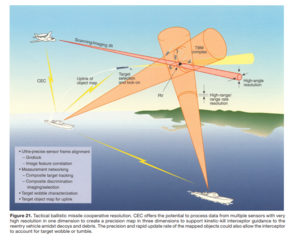
I see Canada struggling to fill 32 VLS. With the cheaper SM-2 production getting patchy (for new orders) around around mid 2020's I wonder if Canada will order in time. Although its likely the production timeline will be extended, Canada has shown a knack for missing production deadlines for orders. I am also sceptical of Canada ordering a full comprehensive set of missiles. Let alone SM-3.
Australia paid about $300m usd for 80 SM-2. So should be around $2 billion for around 480 missiles (15 x 32). Going to 48vls per ship will be 50% higher. Australia requests SM-2 missiles for AWD trials - Australian Aviation.
Peace time loadout is very different to war time. In subs for example, you might just carry 4-6 torpedoes, instead of the maximum of 32+. For a variety of reasons you may not want all your missiles actually on your ships.
I guess I am pessimistic regarding the specification of Canada's ships. Some of what is being talked about is expensive high end kit, I don't see it happening. At least initially. After the program is running, hulls are in the water, more money, more time, more inclination is found it might be worth looking at that. But its long path, its not just ordering a missile from a catalogue. You need all the other systems in place on multiple ships or increasing VLS loadouts.
I would have been a real benefit if Canada had decided to go the Aegis route as well. It would have allowed, made easier that tighter level of network integration.
Pentagon approves sale of SM-3 missiles to Japan – Defence Blog
It also means your locked into future Aegis upgrades. If you want to use weapons and radar, data, that the US doesn't use, then you really need to go with two combat systems like Australia/Japan/Korea.
Not all combat systems are the same. Aegis is key to a networked force. With the CEC capability all the Australian ships will have, they will be able to command and remotely fire and target, fuse data from all other compatible Japanese, US and Korean (aegis) navy ships as well as air units. In this way, Australia's frigates could act more like US Cruisers.
I believe sensor fusion and CEC would be required/advantageous to coordinate a SM-3 launch. Japan and the US have Cooperative Engagement Capability, as does Australia. While CEC doesn't require Aegis, trying to integrate that whole functionality on a ship without it would seem to be reinventing the wheel. AFAIK no one has done it. Older versions of Aegis had two modes, normal and BMD, you gave up some normal functions to do BMD.
I see Canada struggling to fill 32 VLS. With the cheaper SM-2 production getting patchy (for new orders) around around mid 2020's I wonder if Canada will order in time. Although its likely the production timeline will be extended, Canada has shown a knack for missing production deadlines for orders. I am also sceptical of Canada ordering a full comprehensive set of missiles. Let alone SM-3.
Australia paid about $300m usd for 80 SM-2. So should be around $2 billion for around 480 missiles (15 x 32). Going to 48vls per ship will be 50% higher. Australia requests SM-2 missiles for AWD trials - Australian Aviation.
Peace time loadout is very different to war time. In subs for example, you might just carry 4-6 torpedoes, instead of the maximum of 32+. For a variety of reasons you may not want all your missiles actually on your ships.
I guess I am pessimistic regarding the specification of Canada's ships. Some of what is being talked about is expensive high end kit, I don't see it happening. At least initially. After the program is running, hulls are in the water, more money, more time, more inclination is found it might be worth looking at that. But its long path, its not just ordering a missile from a catalogue. You need all the other systems in place on multiple ships or increasing VLS loadouts.
I would have been a real benefit if Canada had decided to go the Aegis route as well. It would have allowed, made easier that tighter level of network integration.
@StingrayOZ do have a source / reference for this illustration? Two reasons, one being IP / citing requirements and second, personally I'm interested in the article that you have got it from. Thanks, NM.
If we are going by what the PBO has said then CEC and some of the more potent missile systems are at least on the table for the CSC, however appetite to spend the money may not. I keep hearing Lockheed mention Aegis in videos and such so I am quite curious to hear more come out about this, the PBO also mentions Aegis in their report on the project and the Senate Defence panel has mentioned it before as well. I am now more and more curious how similar CMS 330 is to Aegis, I would assume it is a similar relationship that COMBATSS-21 and Aegis share as they are all Lockheed products. Lockheed also keeps mentioning their Aegis Common Source Library and how it makes integration of weapons system vastly more simple on ships, It would be interesting to know if this can be leveraged towards CMS 330 as well, or if the version of CMS 330 in the CSC is Aegis wearing a trench coat and a mustache.
John Fedup
The Bunker Group
Once we learn the the radar selection perhaps this will give us a few clues. As the AAW version is first up, the question of 32 or 48 cells should be known soon. Hopefully it is 48 cells for the AAW even if they are not 100% filled at first. Question, how long does it take to load or unload 32 cells. Using the rule of threes, maybe the government will only buy enough missiles to keep 2/3 of the fleet armed. Assuming this is the case, what would be a reasonable on shore inventory for reloading?
Concerning the SM3, several former Liberal cabinet ministers have reversed their positions on BMD. This was around the time of the NK tensions last year. As BMD has also been mentioned by the PBO, it could be something that happens sooner rather than later given the missile proliferation that is underway at the moment. A RCN BMD capability would please the US and be more politically sellable versus a land based system IMO. Until the radar selection and possible Aegis integration with the LM330 CMS are known, this is just idle speculation.
Concerning the SM3, several former Liberal cabinet ministers have reversed their positions on BMD. This was around the time of the NK tensions last year. As BMD has also been mentioned by the PBO, it could be something that happens sooner rather than later given the missile proliferation that is underway at the moment. A RCN BMD capability would please the US and be more politically sellable versus a land based system IMO. Until the radar selection and possible Aegis integration with the LM330 CMS are known, this is just idle speculation.

While CEC does give you data fusion with other platforms, as I understand it (without any access to any sources other than those in the public domain) you can only do so within the capability of your own combat system. Thus, if you have an ABM capable combat system you could use a weapons load out in another ship to fire a missile based on your combat system solutions; but if your system doesn't have that capability then you can't even though you may have the appropriate weapon loadout available and another platform in the CEC group does have that capability; ie the part of the picture you can see is limited by the capacity of your system to interpret that picture. Standing by to be corrected, though.
Sorry, I should have included it.@StingrayOZ do have a source / reference for this illustration? Two reasons, one being IP / citing requirements and second, personally I'm interested in the article that you have got it from. Thanks, NM.
https://www.jhuapl.edu/techdigest/td/td1604/APLteam.pdf - page 19.
Its a dated reference (1995) but actually goes through a lot of the basics which a lot of other papers/articles assume knowledge of.
Cooperative Engagement Capability (CEC) / AN/USG-2(V) Cooperative Engagement Transmission Processing Set also has a dated reference material as well.
But part of CEC is being able to track a threat from multiple platforms to get a firing solution. For something like Sm-3, you really need information before it comes over the horizon, and for accuracy you might need to merge data from multiple sensors, and sensor types (IR + Radar (multiple bands) + other).
Radar measurement data from CEC air units also greatly increase coverage over land, where the altitude of the airborne radar mitigates terrain masking and radar horizon limitations affecting shipboard radars. CEC provides airborne radars the same improvements in track accuracy, track continuity and ID consistency afforded shipboard radars, resulting in improved detection and tracking as well as greater situational awareness.
Additionally, CEC contributes to theater ballistic missile defense by providing a continuous fire-control quality track on the missile from acquisition through splash. Although each ship is only able to maintain track for part of the missile flight, the CEC composite track, based on all the data, is continuous. Cues based on the composite track allow the downrange ships to detect the target earlier and to maintain track longer. The CEC cues and relay of composite track data will also allow defending ships maximum battle space in which to engage theater ballistic missiles when the SM-2 Block IVA missile becomes available.
Ignore the SM-2 block IVA, think SM-3. But not just that, the range of SM-6 makes CEC type data sharing very useful in long range, hard to track or high altitude stuff.
For Canada, it probably isn't a huge priority right now, and they may not do what the RAN did and give every ship CEC capability. The USN only gives cruisers and airborne stuff that capability, which is then pushed out to the rest of the fleet from those nodes. So Canada might only include Aegis and CEC on 4 or 5 ships that would be tasked with air command duties, if they decide that. Japan for example, has only recently included CEC on their very latest ships (3?). Australia putting CEC on everyship raises eyebrows.
The type 26 will have an aegis variant on the Australian spec ships, so they might decide to wait for the first one of those to hit the water and utilize that layout, rather than reinvent the wheel.