iambuzzard
Well-Known Member
You realise you'll have to put up with a 127mm gun! Think you can handle the firepower?Throw those in, and I want my own personal Mogami as well!

You realise you'll have to put up with a 127mm gun! Think you can handle the firepower?Throw those in, and I want my own personal Mogami as well!
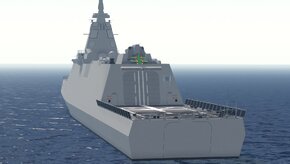
I seem to recall the ASEV is a one-off class of two using radar sets originally intended for AEGIS Ashore - AN/SPY-7(V)1Looking ahead to potential Hobart class replacements. Everyone has mentioned an evolution of the Hunter Class. What about the Japanese ASEV?
Just an idea for discussion.
Costs as opposed to Evolved Hunter, manpower,etc.?
The ASEV seems a bit overkill for Australia. It makes a Hunter look small in comparison. It would be expensive to operate and require a lot of people.Looking ahead to potential Hobart class replacements. Everyone has mentioned an evolution of the Hunter Class. What about the Japanese ASEV?
Just an idea for discussion.
Costs as opposed to Evolved Hunter, manpower,etc.?
I'll be interested where we go with the Hobart replacements. Now is the time to start planning and 6 instead of 3 would be the logical way to go.The ASEV seems a bit overkill for Australia. It makes a Hunter look small in comparison. It would be expensive to operate and require a lot of people.
While I think the spy7 is a good radar, its an orphan in the American world and would be yet another type for Australia to integrate into its logistics system.
Remember Japan selected this system because they had already contracted LM for two Aegis Ashore installations. They later viewed that the fixed sites would be vulnerable to attack, and changed the plan to mount the contracted radar on a ship for mobility and improved survivability.
Had Japan started with a clean sheet of paper, I think they would have utilised a spy6 package and fitted it to an evolved Maya class hull, perhaps with a larger VLS capacity. If they wanted an extra powerful radar, then I'm sure RTX could have upsized the spy6 with more modules than the standard V1 configuration.
For Australia, I would view we either remain with the spy6 family or the ceafar family. Both are capable ballistic missile radars and they align with our knowledge and logistics.

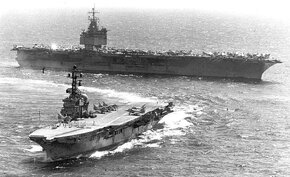
I should note that there is currently very little formalised around the Hobart replacement. The national shipbuilding and sustainment plan only provides the following informationI'll be interested where we go with the Hobart replacements. Now is the time to start planning and 6 instead of 3 would be the logical way to go.
As you guys have mentioned before, the rule of 3 comes into play. One active, one in refit, and one working up.
Is that starting construction in 2035 and first hull in the water in 2042? Awfully slow. The Japanese take about 3 years. We need to learn from them.I should note that there is currently very little formalised around the Hobart replacement. The national shipbuilding and sustainment plan only provides the following information
The earlier enhanced lethality surface combatant fleet review also indicated that in order to meet the above timeframes the initial requirements setting and design work will need to commence by mid 2027.
- Construction to immediately follow the Hunters at Osborne, so first hull around 2042, indicating construction around 2035; and
- We may work with trusted partners on join learning or codevelopment.
How much has changed since this came out only two years ago.
That is it. Everything else is speculation.
I hope the 2026 NDS provides some further guidance, but I think it will be too soon for further detail.

It would be good to give them a chance to fit thing before we start touring around with them. Most things are going to be pretty low risk fitouts with no big integration issues. As spoz and others have mentioned, it is one of the things that is important that probably hasn't been prioritised yet.Taylor Brothers have been good for accomodation, very professional operators.
What about the Japanese ASEV?
Its a bit of an odd development to solve a problem. The Japanese have other classes in development. We could definitely look at what they come up with. The ASEV is kind of its own thing, we don't really have a need for that particular ship. It isn't really designed to go anywhere, they were originally talking about a ocean platform, like a oil rig or cat hull, towed into place.I'm not sure ASEV is actually a design intended for future development, or if its just a way of using radars already ordered by Japan.
Although not military ships, I did work on a few of the Paspaly Pearling boats, some of which were built in Japan. Accommodation was never an issue, however the engine rooms were very compact and I did hear some complaints from engineers who worked on them. All in all they were very good ships.Average height Male in Japan 171cm, in Australia 177.5cm.
I assume Japanese ships are design of living space based on average heights data.
I always wondered if that had a bearing on decision not to go for Soryu submarine.
Very tight living space very difficult to live with in submarine.
I was looking at the clip where RADM Hughes discusses the Upgraded Mogami frigate and at the 4.50 mark he states the Searam is fitted "for". He doesn't say it will be fitted "with". He later goes on to say "we are leveraging off what Japan wants to do as a parent navy and what's compatible with us." Am I reading too much into this or does it seem that Searam will not be included initially. He states the no change mantra but at the same time he seems a little defensive, hedging his bets and choosing his words carefully.And ours will be the Evolved version with 32 Mk41 VLS and a higher bridge. There's also a redesign of the bow. Nice looking ship with room to grow. The TKMS design was too crowded.
Would there ever be space for more vls?And ours will be the Evolved version with 32 Mk41 VLS and a higher bridge. There's also a redesign of the bow. Nice looking ship with room to grow. The TKMS design was too crowded.
Not sure, but certainly some of the wiser heads on here may know.Would there ever be space for more vls?
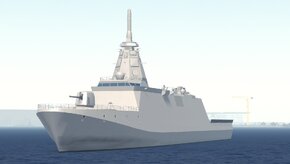
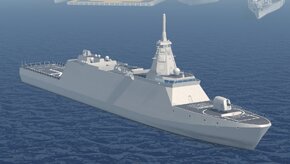
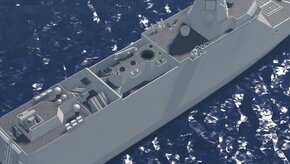
Typically in the past I think we have procured equipment like Phalanx as Foriegn Military Sales directly from the US and then provided it as government furnished equipment to a builder to install. I suspect items such as a SeaRAM for the Mogami might be procured the same way.I was looking at the clip where RADM Hughes discusses the Upgraded Mogami frigate and at the 4.50 mark he states the Searam is fitted "for". He doesn't say it will be fitted "with". He later goes on to say "we are leveraging off what Japan wants to do as a parent navy and what's compatible with us." Am I reading too much into this or does it seem that Searam will not be included initially. He states the no change mantra but at the same time he seems a little defensive, hedging his bets and choosing his words carefully.
SeaRam block 2B has a much better range, somewhere near @20km.Maybe an issue with Japan was female sailors. Its a bit of a newer thing from them, ~2008, and given how long designs etc take, there may not have been ideal accommodations before then. That's not an issue with Mogami as Mogami specifically has female spaces considered in its design. It doesn't have to be a big thing, more that there are just thought out divisions between sleeping/showering/toilet areas, that can be easily assigned if required. Mogami was also built with export in mind. So I assume its addressed.
SeaRAM has similar requirements as Phalanx. RAN might be interested in putting Phalanx on them, at least initially. The extended mogami with ESSM II is quite capable in the missile department, given the RAN operations a gun CIWS may be more useful. Cost wise, RAM cost similar amount to an ESSM II.. So while RAM is very short range, its not exactly cheap and cheerful. For drones, anti-surface work of the type a frigate might face, a gun option may be preferred. Or a mix of SeaRAM and Phalanx could eventually be used in the RAN and fitted as required for the mission. There are laser based options coming onto the market too. So maybe the RAN might be concidering those.
Their appears to be a wider variation in price of the RAM missile compared to ESSM variants with the later being more expensive.SeaRam block 2B has a much better range, somewhere near @20km.