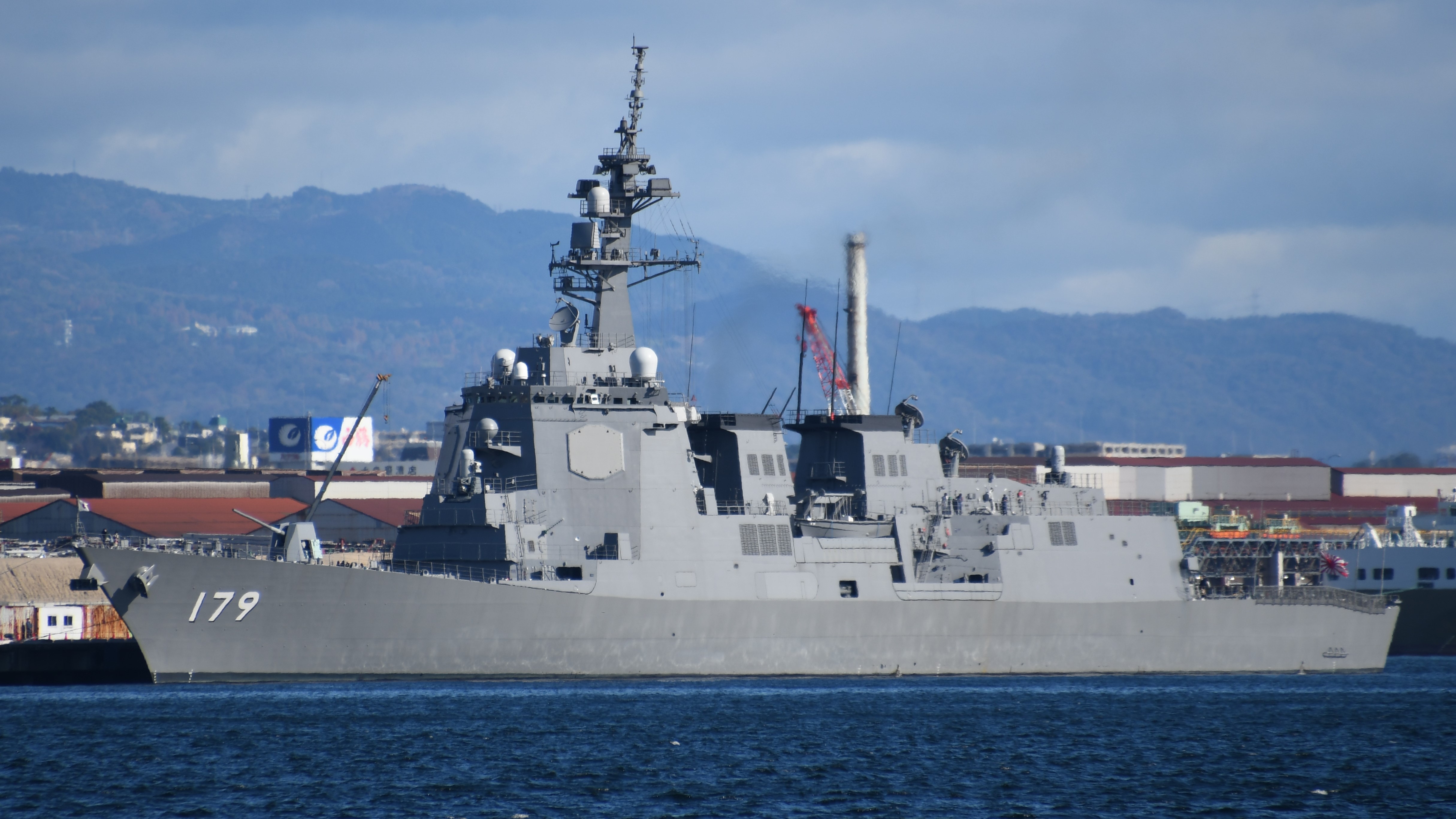
Japanese Maritime Self Defense Force Thread

When I saw that image when the article was published I thought it was junk. It looked to me that someone had seen Aegis Ashore and just stuck it on a stripped-down platform on the basis that's what the naval version would be. Also it doesn't seem to have many VLS cells. I can't believe for a moment that it was drawn with knowledge of official specifications.

Like John F I think it more likely that the ship will have been designed as a very large destroyer, maybe cruiser, that can cooperate with other ships. Japan would be pissing away money by having a floating SM-6 box that needed constant protection.
Would be extremely vulnerable against Subs especially, would require a Sqn of P-1s and a couple of Frigates doing nothing else then protecting it.
 
That is somewhat weird dimensions for a ship, with a Beam to length ratio of 5.25 for 210x40m. That is as wide as an Essex class Carrier but 40 odd metres shorter.
It says "less than" 40 metres. Depends on how much less. The Hyūga class are 197 x 33 m.
 
@vonnoobie gives a link in post #456 that shows a drawing of a Catamaran and those figures would make a lot more sense than a Monohull. I think you will find that Hyuga is 33m wide at the flight deck but not at water level.
 
@vonnoobie gives a link in post #456 that shows a drawing of a Catamaran and those figures would make a lot more sense than a Monohull. I think you will find that Hyuga is 33m wide at the flight deck but not at water level.

Why are you talking about the width at the water level? Aren't most ship "width" measurements made at the beam, given it's the widest point?

I think a few people are reading far too much into this, not least because swerve pointed out the dimensions given are ceilings and not final. At least wait until the design is actually published.
The Hyuga is an Aircraft Carrier and does not fall into the category of "most ships". And like most Carriers the Hyuga's flight deck overhangs the ships hull, so that they have a more streamlined Hull to give them better performance through the water. Comparing the 197/33 to other Carriers, the 33m figure looks like the Flight Deck width not the Waterline width.
 
Hyūga is an ASW helicopter carrier, able to operate as an ASW flotilla leader. She has excellent ASW sensors, & ASW weapons, in addition to being equipped to carry ASW helicopters & their weapons. She's not equipped to operate fixed-wing aircraf & there are no plans to modify her. She's rather small for F-35B.

According to current ideas of what 'aircraft carrier' means, she isn't one.

Oh, & the deck overhang is rather limited, & if you look at pictures you'll see that it's only on the port side, balancing the island on the starboard side.

JapEnsign.jpg
 
Japan to Build Two 20,000-ton Missile Defense Warships, Indian Carrier Commissions
The two Aegis destroyers are expected to have a displacement of around 20,000 tons with a length of 690 feet and a beam of around 130 feet, making them one of the largest and heaviest ship that the JMSDF will operate. In comparison the Izumo class helicopter destroyers have a displacement 19,800 tons (27,000 tons with a full load) with a length of 800 feet and a beam of 124 feet while Japan’s largest destroyers are the Maya class destroyers, which have a displacement of 8200 tons and a beam of 22.2 meters.

The ships are to have a crew of 110 personnel with personnel accommodations being enhanced to enable long deployments on station around Japan. The Ministry of Defense is likely pushing for the first ship to be commissioned in 2027, with the second in 2028, USNI News understands.

 
Here a nice article about the advantages and disadvantages of this MC-130J floatplane concept from Lockheed-Martin.

But there are a lot of disadvantages of this MC-130J floatplane concept, specially compared to the proven Japanese Maritime Self Defense Forces’ (JMSDF) ShinMaywa US-2.

 
Japan to Build Two 20,000-ton Missile Defense Warships, Indian Carrier Commissions
The two Aegis destroyers are expected to have a displacement of around 20,000 tons with a length of 690 feet and a beam of around 130 feet, making them one of the largest and heaviest ship that the JMSDF will operate. In comparison the Izumo class helicopter destroyers have a displacement 19,800 tons (27,000 tons with a full load) with a length of 800 feet and a beam of 124 feet while Japan’s largest destroyers are the Maya class destroyers, which have a displacement of 8200 tons and a beam of 22.2 meters.

The ships are to have a crew of 110 personnel with personnel accommodations being enhanced to enable long deployments on station around Japan. The Ministry of Defense is likely pushing for the first ship to be commissioned in 2027, with the second in 2028, USNI News understands.

Makes sense. Look at how China lobbed all those missiles around all of taiwan after Pelosi visited. And then there's good old North Korea.

I'd be maxing out anti air defense as well.
 
Japan to Build Two 20,000-ton Missile Defense Warships, Indian Carrier Commissions
The two Aegis destroyers are expected to have a displacement of around 20,000 tons with a length of 690 feet and a beam of around 130 feet, making them one of the largest and heaviest ship that the JMSDF will operate. In comparison the Izumo class helicopter destroyers have a displacement 19,800 tons (27,000 tons with a full load) with a length of 800 feet and a beam of 124 feet while Japan’s largest destroyers are the Maya class destroyers, which have a displacement of 8200 tons and a beam of 22.2 meters.

The ships are to have a crew of 110 personnel with personnel accommodations being enhanced to enable long deployments on station around Japan. The Ministry of Defense is likely pushing for the first ship to be commissioned in 2027, with the second in 2028, USNI News understands.
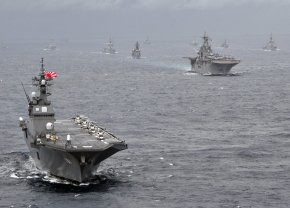
They're not DDGs, but CCGs based on the size alone. Any bigger we'd be looking at BBGs and that would be interesting. If they can get 96 VLS on a DDG51, how many will they be able to get on one of these beasties?
 
Here a nice article about the advantages and disadvantages of this MC-130J floatplane concept from Lockheed-Martin.

But there are a lot of disadvantages of this MC-130J floatplane concept, specially compared to the proven Japanese Maritime Self Defense Forces’ (JMSDF) ShinMaywa US-2.

The Shin Maywa US-2 has a lot going for it and it would in many ways be better than than a MC-130J float plane. I just can't see that really working. You can fly C-130s off aircraft carriers, you can use them as ski-planes, gunships, even VIP transports, but floatplanes? Nah that's one leap to far even for a Herky bird.
 
The Shin Maywa US-2 has a lot going for it and it would in many ways be better than than a MC-130J float plane. I just can't see that really working. You can fly C-130s off aircraft carriers, you can use them as ski-planes, gunships, even VIP transports, but floatplanes? Nah that's one leap to far even for a Herky bird.

The Herc trials on carriers confirmed their use was too risky. The other consideration was the large amount of real estate they used thus limiting flight operations for other aircraft on board. The Shin Maywa US-2 certainly makes more sense than a Herc on floats.
 
Maritime Self-Defense Force submarine Soryu collides with cargo ship

Sonar confused with another ship, submarine collision - Transport Safety Board, August 25, 2022
On August 25, the Japan Transport Safety Board (JTSB) released a report on the accident in which the Maritime Self-Defense Force submarine Soryu collided with a cargo ship off Ashizuri-misaki, Kochi Prefecture, in February of last year. The report was released.
According to the report, the captain and his crew of the Soryu did not notice the cargo ship during sonar detection at the time of surfacing, recognizing only a container ship that was far from the scene. The submarine surfaced after determining that there was sufficient distance to the container ship, resulting in a collision with a cargo ship that was near the submarine.
 Submarines use sonar to detect the direction and type of sound emitted from surrounding vessels to determine the location of other vessels. It can determine the vessel's heading, but cannot detect its distance.


Sonic wave transmitting detectors to be installed in Maritime Self-Defense Force submarines, Ministry of Defense considers...Preventing collision accidents when surfacing June 29, 2021
The Ministry of Defense is considering installing "active sonar" on Maritime Self-Defense Force submarines, which emit their own sound waves to detect the location of other vessels. The Ministry of Defense has refrained from equipping its submarines with active sonar because of fears that they could reveal their position to the enemy. The MSDF submarine Souryu collided with a cargo ship off the coast of Ashizuri Cape in Kochi Prefecture in February, and the ministry has decided that this is necessary to prevent a recurrence of such an accident.
 
Last edited:
Japan Launches Third Taigei-Class Submarine
Japan’s Mitsubishi Heavy Industries has launched the country’s third Taigei-class attack submarine during a ceremony at the company’s shipyard in Kobe City.
Named Jingei (swift swimming whale), the Japan Maritime Self Defence Force (JMSDF) will use the underwater vehicle to support a wide variety of missions, including sinking enemy vessels.
It is part of a 70-billion-yen (US$480-million) contract signed between the Japanese government and Mitsubishi Heavy Industries.
 
Last edited:
The Government of Japan plans to buy up to thirty-two (32) Standard Missile 6 (SM-6) Block I missiles (in two tranches of 16) and an unknown amount of MK 21 Vertical Launch System (VLS) canisters. The State Department of the US has now approved this possible Foreign Military Sale to the Government of Japan of the Standard Missile 6 (SM-6) Block I missiles and related equipment for an estimated cost of $450 million. The Maya-class, Japan's latest, largest and most advanced class of destroyers, will be probably equipped with these missiles.

 
The ships are to have a crew of 110 personnel with personnel accommodations being enhanced to enable long deployments on station around Japan.

For a ship of that size the crew numbers seem a bit light on even as a baseline number. Even the Takanami Class Destroyers have a listed crew number of 175 .
 
Last edited by a moderator:
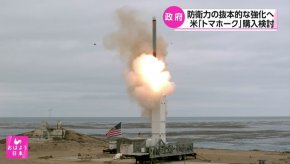
Japan mulls buying US Tomahawk missiles to beef up defense capabilities
.

View attachment 49799

The Japanese government is considering buying US Tomahawk cruise missiles to reinforce its defense capabilities.
It is exploring the possibility of using Tomahawks as deterrence and alternatives until fully deploying "standoff" missiles that can attack targets from beyond enemy range

The government aims to eventually produce standoff missiles on a large scale.
These will include the Ground Self-Defense Force's Type 12 surface-to-ship missile, currently being improved for this purpose. Japan is expected to start operating the improved version in fiscal 2026, or later.
 

Attachments

  • 20221028_06_1177438_L.jpg
    20221028_06_1177438_L.jpg
    118 KB · Views: 1
Last edited:
Japan to deploy attack drones as early as 2025

The Defense Ministry plans to deploy small attack drones in a bid to strengthen the defense of the nation’s remote islands.

The ministry will make preparations for the deployment, introducing U.S.-made and other drones in fiscal 2023 on a trial basis. It aims to deploy several hundred attack drones from fiscal 2025 at the earliest.
 
Experiment vessel plans in works as Japan looks to possess submarines carrying long-range missiles
Moves are being made to build an experiment vessel to examine technical issues toward possibly possessing submarines capable of firing long-range missiles, government sources have said.

The development plan will be included in the National Defense Program Guidelines to be revised by the year-end.

If the development progresses for actual deployment, Tomahawk cruise missiles that the government has approached the U.S. government about purchasing will be an option for the vessel.

The government is considering possessing defensive-minded counterattack capabilities to destroy such facilities as an enemy’s missile launch site. The government plans to use the modified version of the Ground Self-Defense Force’s Type 12 surface-to-ship missiles as well as possible Tomahawk missiles as mainstay long-range missiles for such purpose.
 
Back
Top