
Chinese Air Force (PLA-AF) News and Discussion
- Thread starter ngatimozart
- Start date

John Fedup
The Bunker Group
The only issue I can think of is the rear cargo door/ramp of the C-17, C-390, and C-130. The C-130 is a drogue refueller only AFAIK. Does that somehow make a boom setup problematic? I don't know.
I'm sure that Embraer & Northrop Grumman are aware of that. 
Images published by Embraer, but they're early ones. The final solution may be different.
KC-390 for the US depends on a solution for the refueling boom
Images published by Embraer, but they're early ones. The final solution may be different.
KC-390 for the US depends on a solution for the refueling boom
The KC-130 is primarily operated by the USMC. Do the US Marines operate any aircraft that are refueled by boom?The only issue I can think of is the rear cargo door/ramp of the C-17, C-390, and C-130. The C-130 is a drogue refueller only AFAIK. Does that somehow make a boom setup problematic? I don't know.
Why would they fit a boom if they don’t need it?
John Fedup
The Bunker Group
No, the F-35C, F-35B, and their legacy Hornets use the drogue setup on the KC-130. My comment related to the cargo-door/ramp setup used by military airlifters and their suitability for boom operation, especially the C-17. If the C-17 could have doubled as a refueller, its production run could have been longer. Many users now would add to their fleets, especially the USAF which is really flogging their fleet.The KC-130 is primarily operated by the USMC. Do the US Marines operate any aircraft that are refueled by boom?
Why would they fit a boom if they don’t need it?
John Fedup
The Bunker Group
That would be my conclusion as well but if a boom option was available that didn’t break the bank then if this option kept the C-17 line open longer not a bad option IMHO. The RCAF should have 8-10 not 5. The other 5eyes would like more….especially NZ with none! I think the RCAF will have 9 MRTTs, 7 and 2 more C-17s with a boom refueling option, a decent trade-off…just two cent option.Given aerial refuellers with flying boom type used commercial airliners as a base (KC-97, 135, 767, 46), I would assume the conversion effort is more straightforward and therefore more economical, compared to cargo planes with rear ramps.
C-97 was derived from the B-50 bomber, which (like the B-29) was developed into both hose & drogue & boom equipped tankers.Given aerial refuellers with flying boom type used commercial airliners as a base (KC-97, 135, 767, 46), I would assume the conversion effort is more straightforward and therefore more economical, compared to cargo planes with rear ramps.
Still probably more straightforward than fitting a boom to an aircraft with a rear ramp, but Embraer thinks it can do it. The tail behind the ramp is thought big enough to carry a boom, & Embraer has published pictures showing such an arrangement.

Terran
Well-Known Member
Who says it wasn’t?Always wondered why the C-17 wasn’t considered for this. Would have allowed production to stay operational long enough to enable C-17 users who realized they don’t have enough (thinking Canada and some other 5eyes, especially the USAF as they are really flogging their fleet) to order more.

MDC reveals KC-17 cargo/tanker details
Guy Norris/LOS ANGELES McDONNELL DOUGLAS (MDC) has unveiled details of proposed KC-17 cargo/tanker versions of its C-17 transport, which could form the bulk of as many as 50 aircraft predicted as potential foreign military sales. Details of the aircraft configuration were given to senior British...
the C17 program when it started overlapped the KC10. Both types used the same engine type but the three engine was more efficient on fuel for the mission. Short take off and landing using in these transports comes at a cost of fuel economy. When the C17 program was wrapping up, well it was clear the USAF was looking to start replacing the KC135, the twin engine configuration was proven and it meant not having to slow delivery of the cargo aircraft for the tanker. Boeing had no reason to fight after all they were the leading contender for a replacement and by then were absorbing MD with either the 767 or 777. The C130 Was the exception predominantly by need. Meant to support rotary wing aviation with the occasional fixed wing. Because of the development level of NATO and US bases with equipment for loading and unloading of cargo The C17 could serve for oversized cargo with limited issues . Yet NATO had well proven on Transport Logistics side of the MRTT class tankers. Cargo could be loaded and unloaded as the bases had the container lifters and equipment even on civilian airports.
On the other side of the Iron Curtain, Russia and China were not in the same position. They needed to use their tactical cargo aircraft for Tanker and AWACs platforms. Although the Soviets had “commercial” airliners The production rates were lower and the Russian fields especially military were rougher. Fuel economy was less important than short take off and landing especially as the Russians assumed that there landing strips were going to be bombed anyway. Besides it allowed them to streamline their logistic and maintain operations at bases that were by NATO standards rough and poorly equipped. With only access to cargo loading facilities at very specific locations they needed roll on roll off.
The PLA was even rougher. Until the 1970s they were more or less stagnant at best. After the Sino Soviet division China still wasn’t in a position to be making its own choice. They started shopping westward but After the fall of the Soviet union and the events of the Tiananmen square massacre the Chinese military turned back to the Russians for modernization with the longer term aim of independence. As they sourced both East and West technologies they hit limits. The West would sell them airliners and some even radars and systems but with limited ability to make their own modifications. The Russians were happy for the hard currency and willing to let them do as they pleased but they didn’t have a wide range of options. They were dependent upon the Russians and at the time former Soviet states for the bulk of their aviation host aircraft or the designed there in without an alternative.
In the modern day they have started to develop such however the C919 is predominantly a foreign aircraft with issues of Technical data. The Y20 is Chinese with only a limited foreign components allowing more control. The Y9 and Y15, Similarly are not subject to foreign control laws.
On that subject one thing of note is that the PLA in all its aircraft lacks Boom refuel. They have over the decades shown the occasional image with a boom but none of their aircraft have receptacles for it. They are all Probe and Drogue.
Last edited:

Ananda
The Bunker Group

3.8K reactions · 272 shares | To mark the upcoming 10th anniversary of the Y-20 transport aircraft's entry into service, an aviation regiment of the Chinese People's Liberation Army Air Force conducted a series of combat-oriented training exercises, showcasing the strategic airlifter's growing operational capabilities. The massive transport aircraft formation takes off in tight succession at minimal intervals, with taxiing maneuvers executed in flawless unison. The Y-20 also demonstrates aerial refueling for the J-20 stealth fighter – a delicate "threading the needle" operation high above the clouds. Sweeping over fields, cities and rivers, the footage frames these strategic national assets against the breathtaking backdrop of China’s diverse landscapes. #CoolChina #cgtnreels | CGTN
To mark the upcoming 10th anniversary of the Y-20 transport aircraft's entry into service, an aviation regiment of the Chinese People's Liberation Army Air Force conducted a series of combat-oriented...
 www.facebook.com
Y-20 Elephant Walk and actions by CGTN. They keep churning that transport plane, while US already close down C-17 line.
John Fedup
The Bunker Group
This TWZ article discusses production rates for the PLAAF J-20 and J-17, the former being the most important. Although the performance wrt stealth isn't in the public domain, the J-20's estimated weapons load, range, and other kinematic information are more well known. Stalin's quantity versus quality quote comes to mind, still true accept China's huge industrial capacity combined with likely decent quality means the West may have a problem. A shame NGAD and GCAP couldn't be a combined joint effort but alas even more difficult than the USAF and USN being on the same page wrt fighters. In ten to fifteen years, what will the the inventory of 5th and 6th gen jets look like for the West versus China?
How Many J-20 Mighty Dragon Fighters Does China Actually Have?
How Many J-20 Mighty Dragon Fighters Does China Actually Have?
Ananda
The Bunker Group


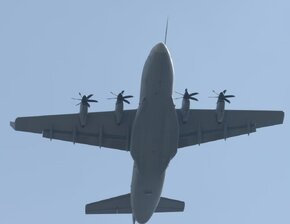
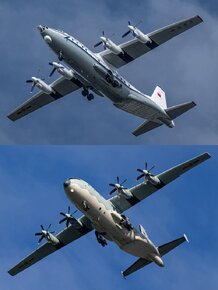
Deino X shown photos from new china turboprop transport Y-15. Many comment talk about it is copy of A400M or C-130J. Forgetting this is evolution from Chinese AN-12 (Y-8/Y-9), and nothing to do with western design.
What's still not clear whether this is going to be Y-9 replacement or augment Y-9 in inventory. Become middle transport between Y-9 and Y-20.
Add:
Y-8 and Y-9, shown Y-15 design is evolution from them, with elements of Y-20 design.
Last edited:
Ananda
The Bunker Group
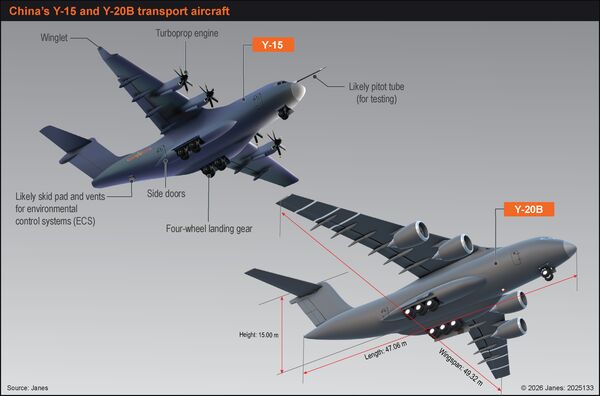
Photographs reveal Chinese turboprop transport aircraft details
New photographs of a turboprop-powered transport aircraft in development for China's People's Liberation Army Air Force (PLAAF) have emerged, presenting the platform's...
 www.janes.com
Janes article on Y-15, their photo comparison shown more clearly elements of Y-20 design, especially in tail and central part of fuselage. While the front fuselage in my opinion Chine designer use their own Y-9 as base. Thus any semblance with A400M more on passing by, and not on design base.
Ananda
The Bunker Group

Chinese fighter jets arrive in Egypt for joint training #coolchina
A PLA Air Force contingent, including J-16 fighter jets and a YY-20A aerial refueling aircraft, arrived at an Egyptian air base on August 21 for the "Eagles ...
 youtube.com
PLAAF seems shown the capabilities of their new YY-20 Tanker to support J-16 on ferry flight from China to Egypt.
John Fedup
The Bunker Group
A drogue setup which seems to be a common feature of refuelling aircraft with rear cargo doors.Chinese fighter jets arrive in Egypt for joint training #coolchina
A PLA Air Force contingent, including J-16 fighter jets and a YY-20A aerial refueling aircraft, arrived at an Egyptian air base on August 21 for the "Eagles ...
PLAAF seems shown the capabilities of their new YY-20 Tanker to support J-16 on ferry flight from China to Egypt.
Ananda
The Bunker Group
Drogue setup is the standard on PLAAF, as they don't seems intend to go with boom setup. Their older H-6 base tankers also with Drogue setup.
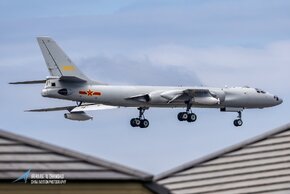
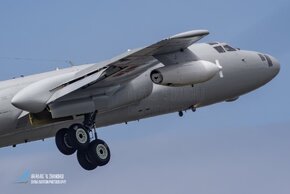
PLAAF also have few older IL-78 Midas ex USSR that they acquired from Ukraine. That also I believe become base set up for their present YY-20 tankers.
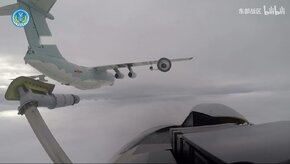
PLAAF also have few older IL-78 Midas ex USSR that they acquired from Ukraine. That also I believe become base set up for their present YY-20 tankers.
Ananda
The Bunker Group
4 type of asset that PLAF bring to Egypt for exercise: YY-20A Tanker, J-16 Fighter, KJ-500 AWACS and Z-20K Helicopter. All being displayed at Al Elemein Air Show, means China also shown all four as export materials.
J-16 is interesting as it is Su-30 base, and some in Chinese media and forum claim the differentiation between J-16 and Su-30 already significant enough. Thus exporting them Will not breach agreement with Russia on Flanker tech transfer.
Ananda
The Bunker Group
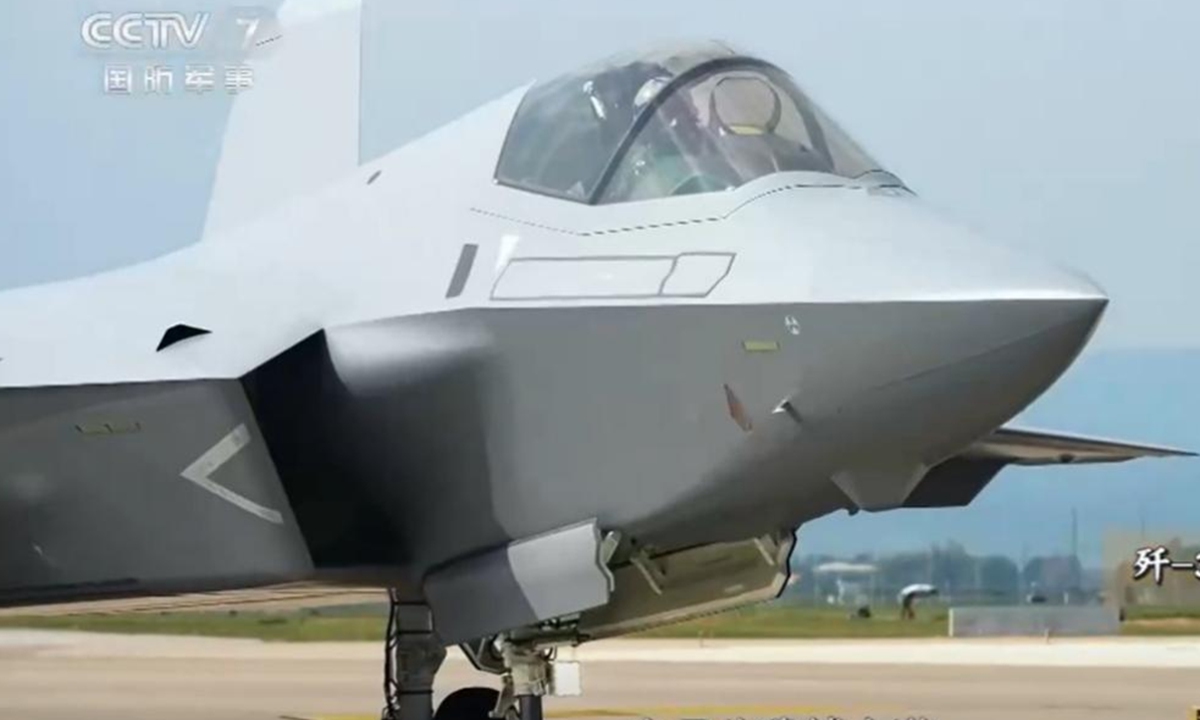
J-35A officialy got code name Yunloong. This is inline with PLAAF nomenclature to call their fighter with dragon (loong). This is also confirmation that J-35A already part of official PLAAF operational inventory line.