Royal Canadian Air Force (RCAF) News and Discussions

QUADRILATERAL Joint Statement on Canada becoming an Observer to GCAP - Canada.ca

Official announcement today that Canada is joining GCAP as an Observer, currently doesn't mean much but we shall see if something comes from this.

Funnily enough, La Presse put out a story on the same day GCAP was announced showcasing Bombardier disinterest in a potential Gripen partnership with Saab.

La Presse à Farnborough | Bombardier n’a pas d’intérêt à assembler des chasseurs suédois

The Swedish company Saab may have speculated that its business partner Bombardier could assemble its Gripen fighters in Canada if the federal government gave it the mandate to renew part or all of its CF-18 fleet. But Bombardier would gain absolutely nothing, quite the contrary. "We already have our hands full," agrees its CEO, Éric Martel.

Bombardier has left the door open to its partner Saab, with whom it has very successfully developed the Global Eye mission aircraft, but Éric Martel confirms that Bombardier would gain nothing by simply assembling aircraft for Saab, without any other added value.

Rather than planning the assembly of a few dozen Gripen fighters, Bombardier is planning to open a new plant where it will do the electronic wrapping of the Global Eye and the installation of radars, which is normally done by its partner Saab in Sweden.

Bombardier must also not alienate the United States, which remains its main market. If the Saint-Laurent company starts assembling fighters and takes the contract away from Lockheed Martin, Donald Trump could very naturally decide to impose juicy punitive tariffs on the business jets that the company sells in the United States.
 

swerve

Super Moderator
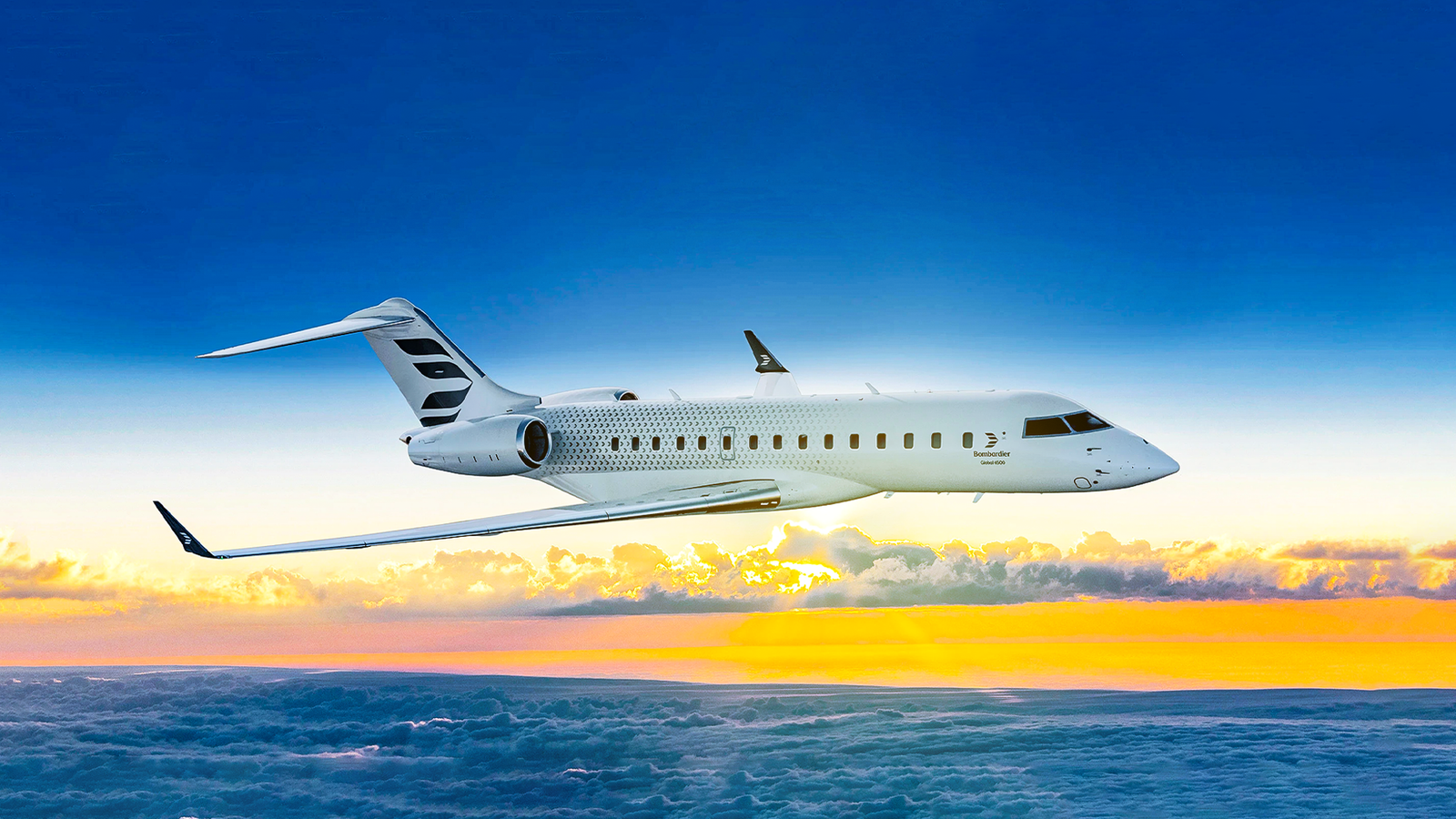
SAAB's been using the name GlobalEye for Erieye ER (updated version with GaN TRMs) on a Global 6000 or 6500 for over ten years.

First order was from the UAE in 2015, initially for two & eventually for five. First delivery was 2020. Sweden ordered two, plus two options, in 2022, France the same in 2025 - then Trump opened the floodgates. Sweden now has three on firm order & the Netherlands has signed a letter of intent to take up the second Swedish option, to be operated jointly with the Swedish three. NATO is negotiating an order for up to ten, Canada wants six, & an unnamed Middle Eastern country has ordered two.

I make that 12 firm orders, two options, & 17 under negotiation, for six countries plus the NATO AEW consortium. The Netherlands is part of that consortium, but reported to also want an aircraft under national control.

There are also eight other countries operating 33 older Erieye radars on lower performance aircraft: Six SAAB 340, 17 SAAB 2000, & 10 Embraer E-99.
 

seaspear

Well-Known Member
I believe that Canadas choice of Global eye is the correct one for its purposes of border patrol , The Wedgetail is best as the attached article for a different role ,I believe that including the Wedgetail in Europe would be more advantageous but suspect politics come into selection
 

swerve

Super Moderator
I believe that Canadas choice of Global eye is the correct one for its purposes of border patrol , The Wedgetail is best as the attached article for a different role ,I believe that including the Wedgetail in Europe would be more advantageous but suspect politics come into selection
The NATO AEW consortium had selected E-7. Then the USA first withdrew from the consortium, & then cancelled the US purchase of E-7. The USAF managed to save its E-7 development project & the construction of prototypes, but it was very precarious. Hegseth seemed mad keen to cancel it completely. That led to the remaining consortium members losing all faith in the future of E-7 & abandoning their purchase. GlobalEye was the only more or less off the shelf alternative, & something was needed as soon as possible.

So yes, it was 100% politics - US politics. Trump & Hegseth made E-7 too risky, & European countries & Canada felt they had to drop E-7, because the unpredictable whims of the current US leadership meant they couldn't rely on it being available. GlobalEye's a sure thing.
 

StingrayOZ

Super Moderator
Staff member
They are pretty different aircraft, with very different specs and capabilities. Given the fact that Canada has no AEW experience, I think Globaleye is probably the easiest to budget, man, acquire and bring into service.

I know there is US pressure, which is odd because the USAF doesn't operate this platform and the USAF had elements within it that fought hard against it. Across multiple administrations. They could have ordered this any time in the last 25 years+.

I don't know if Trump opened the flood gates. I think the key to recent sales have been:

  • Proven worth of AEW capability in Pakistan-India conflict and in Ukraine and in the Iran conflict - This is clearly a very relevant platform, while it is a command and control platform that isn't all it does, tracking low observable drones and munitions is now ultra important, to cue aircraft, ground defence, counter measures. Ground base sensors don't give you the look ahead you really need on LO objects, you only detect small drones quite close close enough to start hitting targets, many have radar returns the size of birds, so it creates an extreme clutter problem over land, and are often best found over sea expanses. In both the P-I conflict and the Iran conflict, the enemy has specifically gone after AEW platforms because they are so critical and give the forces who have them a real edge. Ukraine is more complicated because they are operating along borders, but that also shows how countries not directly involved in combat operations can help tremendously.
  • Airforce modernisations to LO platforms and long range munitions - It makes sense to have your main radar platform detached and not on the LO fighter platform. So airforces operating modern aircraft see this as much more critical going forward. Long range munitions need targeting information beyond what a normal fighter radar can typically give, hence the AEW platform.
  • Collapse of the E3 fleet avalibility - Not really a Trump thing - its 50+ years in the making. But the US is estimated to only have about 4-5 aircraft actually regularly flyable and of limited use in modern battlespaces against LO aircraft and drones and complex engagements. Even then this is now a high maintenance, fragile capability. But Under Trump it is clearer that no country can rely on the US even if they did have the capability.
  • Armed drone platforms - these type of aircraft are clearly valuable in that role - even though Globaleye hasn't demonstrated controlling combat capable drones yet, its clearly possible. Sitting in a nice comfy commercial jet for 6 hrs with multiple operators and a very powerful coms/radar makes sense as a node.
Globaleye I think makes more sense for Canada directly. Between UK and US there will be a fair number of E7s in that portion of the world.
 

swerve

Super Moderator
Between UK and US there will be a fair number of E7s in that portion of the world.
I wouldn't be sure of that.

Until June 2025 the USAF was planning to buy 26 E-7. On 26th June Hegseth cancelled the programme. The USAF managed to keep development of two prototypes converted from secondhand 737s going, & in June 2027 five engineering and manufacturing development aircraft were approved, & Congress voted extra money to pay for them, contrary to government plans, which said they must be paid for using money diverted from other programmes.

That's 26, fully funded, down to 7, grudgingly funded. The E-7 is still an endangered programme for the USAF.

The UK has only ordered three (two of them now flying, the third being converted in the UK). Buying more to bring the number up the original requirement has been suggested, perhaps in conjunction with allies - but the only ally which is buying it is the USA, & at present there's no money there for more than seven & no guarantee of more.
 

StingrayOZ

Super Moderator
Staff member
Hegseth wen back on what he said. The E7 has proven itself essential. They still see it as a stop gap, but essential. I think future orders are likely but in small batches, which is possible because of the 737 airframe. Its not dead.


So that gives the US 7 and the UK 3. Pretty terrible, but the UK has 3, may consider a 4th later, US is acquiring 2+7. But its pretty terrible for the US and the UK, they have sizeable air forces, and will likely be doing a lot of the fighting. But its still better than what they have currently which is zero.

Australia also has plans to replace the 6 it currently operates. Most likely with 6 newer more advanced versions, possibly more similar to the P8 airframe.

Realistically Canada's air force isn't big enough or modern enough to justify so much spending on high end E7 capability. It will be decades of decline and new platforms will take a long time to get up to speed and flying high hours, Even then the F-35 order is so small its barely training capability, not deployment capability, and beyond that there isn't any selected platform. They don't have existing AWACs capability (every existing E7 customer already was or had operated something like that and clearly saw themselves needful in that domain).

E7 key advantage is when the battle space is big and complex. If Canada is taking a self defence posture, that probably isn't them, their space is more vast open patrols. not battlespaces with thousands, or tens of thousands of contacts including civilian, lo munitions, commercial jets, ships, military ships, Ballistic missiles, surface to air systems etc.

Regarding E7 and Globaleye comparisons. Australia's E7 is still flying and running missions daily in the middle east from the UAE controlling the entire airspace in that area as an essential asset.

The UAE, which bought 5 Globaleyes, and is basically right in the middle of conflict, has instead deployed their globaleye, to India for exercises.

They are still trying to stand their capabilities up. And it really depends if you want a full platform based on battle management or something that does some light battle management but also patrol and monitoring.

E7 requires more humans, more money, more training, more active deployments. Its a bigger commitment. Its for bigger airspaces and bigger more complex more peer battlespaces.

Canada currently has no capabilities in that space, the US pressuring Canada to commit to a system itself hasn't been able to commit to is embarrassing.
 

Todjaeger

Potstirrer
The U.S may be going down another path instead of AWAC,S aircraft using satellites ,
That has sort of been the idea from the current administration. As the article mentions though, it remains to be seen whether such a system (or really, a system of systems) can be made to work as desired. Given that the initial funding for the first tranche is over USD$4 bil. there will also likely be a number of questions regarding cost, as well as oversight.

Me personally, I tend to suspect it might turn out a bit more like Reagan's Star Wars SDI rather than an actual, operationally useful capability.
 

John Fedup

The Bunker Group
Hegseth wen back on what he said. The E7 has proven itself essential. They still see it as a stop gap, but essential. I think future orders are likely but in small batches, which is possible because of the 737 airframe. Its not dead.


So that gives the US 7 and the UK 3. Pretty terrible, but the UK has 3, may consider a 4th later, US is acquiring 2+7. But its pretty terrible for the US and the UK, they have sizeable air forces, and will likely be doing a lot of the fighting. But its still better than what they have currently which is zero.

Australia also has plans to replace the 6 it currently operates. Most likely with 6 newer more advanced versions, possibly more similar to the P8 airframe.

Realistically Canada's air force isn't big enough or modern enough to justify so much spending on high end E7 capability. It will be decades of decline and new platforms will take a long time to get up to speed and flying high hours, Even then the F-35 order is so small its barely training capability, not deployment capability, and beyond that there isn't any selected platform. They don't have existing AWACs capability (every existing E7 customer already was or had operated something like that and clearly saw themselves needful in that domain).

E7 key advantage is when the battle space is big and complex. If Canada is taking a self defence posture, that probably isn't them, their space is more vast open patrols. not battlespaces with thousands, or tens of thousands of contacts including civilian, lo munitions, commercial jets, ships, military ships, Ballistic missiles, surface to air systems etc.

Regarding E7 and Globaleye comparisons. Australia's E7 is still flying and running missions daily in the middle east from the UAE controlling the entire airspace in that area as an essential asset.

The UAE, which bought 5 Globaleyes, and is basically right in the middle of conflict, has instead deployed their globaleye, to India for exercises.

They are still trying to stand their capabilities up. And it really depends if you want a full platform based on battle management or something that does some light battle management but also patrol and monitoring.

E7 requires more humans, more money, more training, more active deployments. Its a bigger commitment. Its for bigger airspaces and bigger more complex more peer battlespaces.

Canada currently has no capabilities in that space, the US pressuring Canada to commit to a system itself hasn't been able to commit to is embarrassing.
Even if the case could be made that the higher capabililites of a future improved E7 are justified (which is likely not the case for Canada) and the pricing is reasonable,... "cough", given the current state of US-Canada relations, any attempted E7 acquisition would be political suicide. GlobalEye exists, a future E7, maybe not.
 

Vanquish

Active Member
Another "should have been in the bag order" is now on hold thank to the IOTUS, America's greatest businessman (in his mind). I will be interesting to see if a new Congress will change the current relationship. IMHO, doubtful.

Black Hawk down: Trump's trade war pauses Canadian helicopter deal
Another unfortunate situation caused by Trump. Canada would also like to get rid of the Cyclone. The best option to replace them is the Seahawk and we know that road is going to be exceedingly rough.
 

John Fedup

The Bunker Group
Another unfortunate situation caused by Trump. Canada would also like to get rid of the Cyclone. The best option to replace them is the Seahawk and we know that road is going to be exceedingly rough.
Haven't seen any recent news on the C-148. Is $hit still continuing? Certainly any future Seahawk acquisition would require a massive discount as compensation for the paper promise specifications on the CH-148, albeit it was prior to LM's Sikorski purchase. The EH101 cancellation by %unt Chretien still lingers. Not sure on what AW has as replacement for the the EH (AW)101. Does the requirement for a larger naval helicopter still exist? Was the EH101 decided upon back in the day as a cost effective way to add it in as a CSAR (later to become the CH-149)?
 

swerve

Super Moderator
Hegseth wen back on what he said. The E7 has proven itself essential. They still see it as a stop gap, but essential. I think future orders are likely but in small batches, which is possible because of the 737 airframe. Its not dead.
Yes, but the USA now looks like a very unreliable supplier, & that makes potential customers very wary. The fact that Hegseth cancelled it, apparently on a whim, & then allowed reinstatement (but without funding: it had to be diverted from other programmes until congress voted some money) makes the project look too insecure to rely on it for something that's seen as both essential & urgent.

NATO must have considered waiting until the US saw sense, but that would have meant a delay, possibly of a few years until Trump has gone, & the E-3s are wearing out. Replacement is urgent.

So that gives the US 7 and the UK 3. Pretty terrible, but the UK has 3, may consider a 4th later, US is acquiring 2+7. But its pretty terrible for the US and the UK, they have sizeable air forces, and will likely be doing a lot of the fighting. But its still better than what they have currently which is zero.
The UK originally ordered five E-7 & a radar for each, & took delivery of all the radars. Officially the two surplus ones are being kept as spares, but the UK could buy bare or secondhand 737s & convert them. The two which have been delivered were converted in Birmingham, where the third is now being finished.

Non US E-7 customers have all disappeared since Hegseth cancelled it.

S. Korea already had 4 in service & was looking at whether to buy more or something else. Dropped it from the competition & bought one of the other two options.

NATO had selected it. Changed its collective mind & switched to GlobalEye.

Two other customers (one unnamed) have chosen to buy GlobalEye.

Why? Looks rather obvious, doesn't it? They don't trust the current US government, & worry that some of the same people may be in the next one. US politics have become a major risk factor. Projects that are essentially certain to continue being supported, e.g. F-35, look safe, but others don't necessarily, & E-7 is particularly risky.
 

John Fedup

The Bunker Group
One possible risk with the F-35 is that the joint UK, Australian & Canadian mission planning facility is located in Florida.
A US location made sense pre-Trump2 for the UK and Australia. As Canada's F-35 acquistion was moving at a snail's pace, Canada didn't matter and may never matter if the buy is limited to 16 jets. A US state location other than Florida would be a plus.
 

StingrayOZ

Super Moderator
Staff member
S. Korea already had 4 in service & was looking at whether to buy more or something else. Dropped it from the competition & bought one of the other two options.
I looked into this, they were looking for something smaller and cheaper to augment the E7s. They intend to keep the E7 and upgrade them. Turkey as well intends to keep and upgrade theirs as well. But they all look like evolving into slightly different platforms, with different systems and equipment.

GlobalEye exists, a future E7, maybe not.
I think that is a clear thing now, and the US has itself to blame for that. It seems like Australia is committing to develop the existing and newer version of E7, like it did with the original E7. Its not a US program, they don't operate them, yet. They have been funding and developing the E7 upgrades and updates, which is helpful. Which has been even more frustrating for Australia, because the idea was that the US would join the program, and all the Americans have done is messed it up with their chaos. The idea wasn't that Australian continually develops bespoke AEW platforms forever. But the way things are now, Australia would likely foot the bill for another generation, perhaps the brits would join us, and existing Sk and TK would be interested, but aren't 5 eyes. Which is why Canada would be a great customer.

It may be useful that future E7 are based off the P8 platform, as that would make the E7 and P8 common, and you would get things like hard points etc.

One possible risk with the F-35 is that the joint UK, Australian & Canadian mission planning facility is located in Florida.
That's more about electronic systems than a2a or strike or flight plans, UK and AU have mixed fighter fleets so even being cut off from F-35 US mission planning wouldn't completely disable the airforces and the F-35 could still do A2A and A2G.. Being with Australia/UK/Canada would be the tightest mission planning facility. It is a risk and Trump has shown that he doesn't see anything off limits in terms of leverage or to get his way. So you don't even need anything unprecedented to happen now.
 
Last edited:

Terran

Well-Known Member
I am not going to talk about the Source of these issues other than to point out what seems to be at play is the Carney Administration having walked away from a trade deal now trying to apply pressure on the US government despite having a very inferior position, economically and militarily. This said the US isn’t going to invade Canada that stopped being a thing after World war 1 and the events of the 1995 American Canadian war Documented in the film Canadian Bacon…
(Mods that was a Joke. That some people seem to think the plot of that movie will happen in the near future is amazing)

Now then. The E7 issues are know and they were related to the instability of the desire for it from the US DoW. The F35 has been a hot potato its whole life and Canada’s two main parties seem to row over it again and again.
That Carney’s Goverment claims it wants to develop Canada’s domestic military industry is admirable, Yet it’s not something you can do overnight and it’s best done when you have a strong economic system to start with. Today Canada has no indigenous military rotary wing industry. They have American Canadian cross boarder industry’s as such Canada’s rotary wing aviation is predominantly Bell, Boeing, Lockheed Martin (Sikorsky). With Airbus.
the three Factories in Canada that manufacture Helicopters are Airbus, Bell and Safari Helicopters the later being an American HQ’s ultralight chopper.

The Sikorsky S70 series Blackhawk and Seahawk are probably the most Proven and popular modern Helicopters in Special operations and ASW/ASuW naval operations globally. Finding an alternative isn’t going to be easy by any measure. Today though there are more realistic options than in the past. But they all have trades. If Canada did cancel the program what are the alternatives

For the SOF Role in Leonardo you have the AW149. It was designed from the start to be the “Blackhawk killer”. It uses avionics developed for the Leonardo AW139, it’s got a lot of the same capabilities as the Blackhawk including external weapons kits. It’s been ordered by three NATO states North Macedonia, Poland and it just won the NMH in the UK. One thing it lacks is an air to air refueling kit. Leonardo Helicopters doesn’t have any existing Canadian manufacturing so it importing aircraft with assembly in Italy. Then again at less than 20 aircraft Canadian assembly for this order would make no sense. Unless they were coming off an existing production line in Canada which none of these do. It does however use GE CT7 series engines the same family as Blackhawk which have critical components manufactured in Canada.
Another Leonardo Helicopter option might be to buy newer H149 configured for SOF. It’s used by the RAF to support their conventional SOF units. Plus it might be a good idea to use this contract to refurbish existing CH149 as well. Of course larger aircraft generally cost more. Assembly England or Italy.

Airbus really doesn’t have a 1:1 that’s proven yet. The H175M comes close. H175M Has a lot design has a lot of potential but also controversy. It’s not actually an Airbus design but a design of AVIC II. It’s a Chinese Helicopter that Airbus Joint ventured in partnership for so there is a bit of a security issue. It lacks the additional kits the Blackhawk and AW149 have. On the plus side it has a P&W Canada PT 6 Engine. Airbus Canada doesn’t currently manufacture parts for the H175M. Assembly France.
H160M would be an alternative option but its lighter and still has yet to be proven still a paper airplane. It’s civilian base the H160 does have parts manufactured in Canada. Engine is Safran Arrano who has a repair shop but no parts manufactured in Canada. Assembly France.
On the Upper side you have the H725 Caracal. Proven helicopter, albeit as larger than the CH149. France uses it for SOF. Because of size it would likely be more expensive and closer to a CH147 replacement. It has some Canadian parts content but it’s French as a Bagett. Turbomeca Makila manufactures the engines. Assembly France.

NH90 is used widely across NATO and beyond, with France having a SOF Variant template. Unfortunately it’s also a troublesome helicopter with Australia, Norway and Sweden having abandoned the Type likely to be of interest to Canada. Its a joint venture between Airbus Leonardo and Fokker but Airbus seems to be the controlling interest with some Canadian content. Engine options that GE CT7 series again or Rolls Royce RTM 322 same as the CH149. Assembly France, Germany, Spain and Italy.

Bell 525 Relentless? Bell’s one of the oldest name in Rotary wing but it’s predominantly played at the lighter side of things with its bread and butter military model being the H1 series in its Iroquois or Cobra lines. Canada using a variant of the Iroquois. However they never really had a Blackhawk rival. The Bell 214ST was probably the closest but it never went military. There has been talk of a Bell 525M off an on a bid was offered for the British NMH program but it didn’t survive to downselect. Though Bell is American part of Textron it has manufacturing facilities in Canada and they make some parts. Engine is the GE CT7 series. However buying it not only is manufacturing in Texas USA but it’s a paper airplane. The type is still in civilian certification cycle and no military prototypes leading to a potential CH148 cycle.
Bell MV75. Still in development will replace most US S70, will have all the goodies. Rolls Royce Engines AE1107C has Canadian manufacturing. As does the Helicopter itself. Final assembly Texas.
Why post this one? Why not. Cancellation of the S70 order because of a trade dispute is going to have longer lasting consequences than the dispute. The Dispute pause is predominantly performative politics. (Say that 5 times fast) If it leads to a cancellation and then alternate programming then you are likely not to see a replacement for the CH146 until the middle of the next decade at which point might as well fold it into the Next Tactical Aviation Capability Set (nTACS) as the requirement will still be there, well the pissing contest between DC and Ottawa won’t be. Because at least one of the figures at the top of it hopefully both won’t be there.

If there still is political pressure to “Canadian-ize”. Then as large an order as possible would allow more investment into domestic assembly. 100 new choppers is easier to make an argument for more domestic production than just 16. However 100 is still rather small for this class of system. If it was closer to 600 it would make more sense. It is the same problem as with the Gripen. Less than 100 units means that the Canadian Taxpayer has to shoulder more per plane than buying them via import, especially with a low cost Brazilian line.
Globaleye had the Virtue of already routing through Canadian and European industry. It might not have had the performance advantages of E7 but it’s the Bird in hand.
 

StevoJH

The Bunker Group
I am not going to talk about the Source of these issues other than to point out what seems to be at play is the Carney Administration having walked away from a trade deal now trying to apply pressure on the US government despite having a very inferior position, economically and militarily. This said the US isn’t going to invade Canada that stopped being a thing after World war 1 and the events of the 1995 American Canadian war Documented in the film Canadian Bacon…
(Mods that was a Joke. That some people seem to think the plot of that movie will happen in the near future is amazing)
Regardless of intent to invade, Canada cannot ignore the repeated statements of the President of the United Statements declaring his desire to Annex Canada into the United States.

Said President has also made demands as part of negotiations that would result in a reduction of Canadian sovereignty and has also made extremely hostile statements and decisions that affect the Canadian Automotive industry and even interfered with the opening of a Bridge (of all things, a bridge?!?) that was completely paid for by Canada with part ownership gifted to a US State.

Now then. The E7 issues are know and they were related to the instability of the desire for it from the US DoW. The F35 has been a hot potato its whole life and Canada’s two main parties seem to row over it again and again.
That Carney’s Goverment claims it wants to develop Canada’s domestic military industry is admirable, Yet it’s not something you can do overnight and it’s best done when you have a strong economic system to start with. Today Canada has no indigenous military rotary wing industry. They have American Canadian cross boarder industry’s as such Canada’s rotary wing aviation is predominantly Bell, Boeing, Lockheed Martin (Sikorsky). With Airbus.
the three Factories in Canada that manufacture Helicopters are Airbus, Bell and Safari Helicopters the later being an American HQ’s ultralight chopper.

The Sikorsky S70 series Blackhawk and Seahawk are probably the most Proven and popular modern Helicopters in Special operations and ASW/ASuW naval operations globally. Finding an alternative isn’t going to be easy by any measure. Today though there are more realistic options than in the past. But they all have trades. If Canada did cancel the program what are the alternatives

For the SOF Role in Leonardo you have the AW149. It was designed from the start to be the “Blackhawk killer”. It uses avionics developed for the Leonardo AW139, it’s got a lot of the same capabilities as the Blackhawk including external weapons kits. It’s been ordered by three NATO states North Macedonia, Poland and it just won the NMH in the UK. One thing it lacks is an air to air refueling kit. Leonardo Helicopters doesn’t have any existing Canadian manufacturing so it importing aircraft with assembly in Italy. Then again at less than 20 aircraft Canadian assembly for this order would make no sense. Unless they were coming off an existing production line in Canada which none of these do. It does however use GE CT7 series engines the same family as Blackhawk which have critical components manufactured in Canada.
Another Leonardo Helicopter option might be to buy newer H149 configured for SOF. It’s used by the RAF to support their conventional SOF units. Plus it might be a good idea to use this contract to refurbish existing CH149 as well. Of course larger aircraft generally cost more. Assembly England or Italy.

Airbus really doesn’t have a 1:1 that’s proven yet. The H175M comes close. H175M Has a lot design has a lot of potential but also controversy. It’s not actually an Airbus design but a design of AVIC II. It’s a Chinese Helicopter that Airbus Joint ventured in partnership for so there is a bit of a security issue. It lacks the additional kits the Blackhawk and AW149 have. On the plus side it has a P&W Canada PT 6 Engine. Airbus Canada doesn’t currently manufacture parts for the H175M. Assembly France.
H160M would be an alternative option but its lighter and still has yet to be proven still a paper airplane. It’s civilian base the H160 does have parts manufactured in Canada. Engine is Safran Arrano who has a repair shop but no parts manufactured in Canada. Assembly France.
On the Upper side you have the H725 Caracal. Proven helicopter, albeit as larger than the CH149. France uses it for SOF. Because of size it would likely be more expensive and closer to a CH147 replacement. It has some Canadian parts content but it’s French as a Bagett. Turbomeca Makila manufactures the engines. Assembly France.

NH90 is used widely across NATO and beyond, with France having a SOF Variant template. Unfortunately it’s also a troublesome helicopter with Australia, Norway and Sweden having abandoned the Type likely to be of interest to Canada. Its a joint venture between Airbus Leonardo and Fokker but Airbus seems to be the controlling interest with some Canadian content. Engine options that GE CT7 series again or Rolls Royce RTM 322 same as the CH149. Assembly France, Germany, Spain and Italy.

Bell 525 Relentless? Bell’s one of the oldest name in Rotary wing but it’s predominantly played at the lighter side of things with its bread and butter military model being the H1 series in its Iroquois or Cobra lines. Canada using a variant of the Iroquois. However they never really had a Blackhawk rival. The Bell 214ST was probably the closest but it never went military. There has been talk of a Bell 525M off an on a bid was offered for the British NMH program but it didn’t survive to downselect. Though Bell is American part of Textron it has manufacturing facilities in Canada and they make some parts. Engine is the GE CT7 series. However buying it not only is manufacturing in Texas USA but it’s a paper airplane. The type is still in civilian certification cycle and no military prototypes leading to a potential CH148 cycle.
Bell MV75. Still in development will replace most US S70, will have all the goodies. Rolls Royce Engines AE1107C has Canadian manufacturing. As does the Helicopter itself. Final assembly Texas.
Why post this one? Why not. Cancellation of the S70 order because of a trade dispute is going to have longer lasting consequences than the dispute. The Dispute pause is predominantly performative politics. (Say that 5 times fast) If it leads to a cancellation and then alternate programming then you are likely not to see a replacement for the CH146 until the middle of the next decade at which point might as well fold it into the Next Tactical Aviation Capability Set (nTACS) as the requirement will still be there, well the pissing contest between DC and Ottawa won’t be. Because at least one of the figures at the top of it hopefully both won’t be there.
If Canada wants to purchase non-US helicopters there are many options available. Canadian assembly is definitely possible if desired, though the level of Canadian content would likely be fairly low.

There isn't really an alternative to Chinook at the high end, but other than that, options exist.

If there still is political pressure to “Canadian-ize”. Then as large an order as possible would allow more investment into domestic assembly. 100 new choppers is easier to make an argument for more domestic production than just 16. However 100 is still rather small for this class of system. If it was closer to 600 it would make more sense. It is the same problem as with the Gripen. Less than 100 units means that the Canadian Taxpayer has to shoulder more per plane than buying them via import, especially with a low cost Brazilian line.
Globaleye had the Virtue of already routing through Canadian and European industry. It might not have had the performance advantages of E7 but it’s the Bird in hand.
IMO Gripen would be a mistake at this point in time. Realistically Typhoon or Rafale are probably better options. GCAP is too far away, I highly doubt the RCAF Hornet fleet is going to be viable for another 10-15 years.

The only reason the F-35 deal hasn't been completed is the hostility that the US President has shown towards Canada which makes it extremely difficult to politically justify such an expensive purchase.
 
Top