
Royal Australian Navy Discussions and Updates 2.0

hauritz

Well-Known Member
I note the article says the sweet spot for an arsenal barge is between 12-48 tubes, as the best optimisation towards distributed lethality. That matches to the RAN's 32 cell LOCSV concept which arose from the 2024 surface fleet review, and was still included in the 2026 IIP.

So it is still in vogue, just it is moving to an autonomous navigation/propulsion platform, rather than a crewed system, and I think will be more numerous than 6 once it has matured.
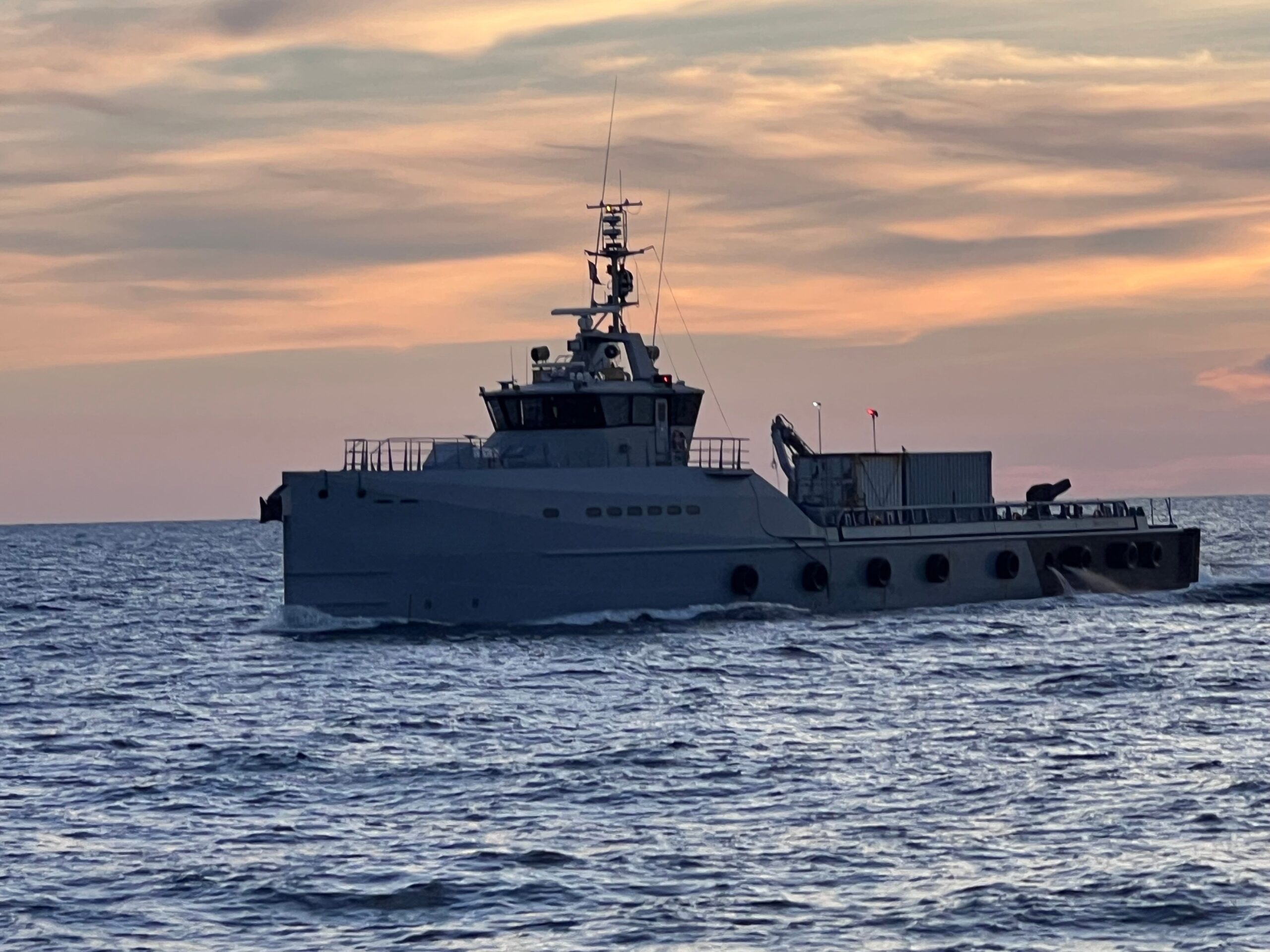
Not sure what the status of the LOCSV is these days. The USN seems to have moved away from the concept and are looking at MUSVs instead. Means that if we are going to be fast followers we may also switch to a smaller vessel. Other options are going it alone on a LOCSV design or switch to something like the British Type 31, which is very much just a paper ship at this stage. The MUSV on the other hand sounds like it is ready for production.
Interestingly these vessels are being built on spec. There hasn't been an official order from the USN. Makes me think our navy should consider leasing one of them for trial purposes.

Just looking into the future. The navy has already committed to several dozen Ghost Sharks, over 50 Bluebottles, Speartooth LUUVs, and likely to acquire Sea Archer and Longbow USV as well as a class of either MUSVs or LUSVs by the mid 2030s. That will probably be well over 100 autonomous vessels of various types. These will need to be maintained and we will need to work out how to deploy them and retrieve them. Huge task when you sit down and work out the logistics of it all. Then of course you will have huge amounts of data to process which will result in bandwidth issues. You then also have EW issues with adversaries either hacking, jamming or simply overwhelming our satellite communications with garbled junk data.

Introducing a huge fleet of drones means dealing with corrosion, bio-fouling, launch and recovery, EW, jamming, mechanical breakdown, preventative maintenance, recharging batteries and probably a whole bunch of other stuff we are yet to find out about.
 

SammyC

Well-Known Member
Not sure what the status of the LOCSV is these days. The USN seems to have moved away from the concept and are looking at MUSVs instead. Means that if we are going to be fast followers we may also switch to a smaller vessel. Other options are going it alone on a LOCSV design or switch to something like the British Type 31, which is very much just a paper ship at this stage. The MUSV on the other hand sounds like it is ready for production.
Interestingly these vessels are being built on spec. There hasn't been an official order from the USN. Makes me think our navy should consider leasing one of them for trial purposes.

Just looking into the future. The navy has already committed to several dozen Ghost Sharks, over 50 Bluebottles, Speartooth LUUVs, and likely to acquire Sea Archer and Longbow USV as well as a class of either MUSVs or LUSVs by the mid 2030s. That will probably be well over 100 autonomous vessels of various types. These will need to be maintained and we will need to work out how to deploy them and retrieve them. Huge task when you sit down and work out the logistics of it all. Then of course you will have huge amounts of data to process which will result in bandwidth issues. You then also have EW issues with adversaries either hacking, jamming or simply overwhelming our satellite communications with garbled junk data.

Introducing a huge fleet of drones means dealing with corrosion, bio-fouling, launch and recovery, EW, jamming, mechanical breakdown, preventative maintenance, recharging batteries and probably a whole bunch of other stuff we are yet to find out about.
Yep. A bunch of war robots will require an army of maintenance robots to support them. Possibly some humans will be needed to scrape the barnacles off.

In regards to the LOSCV concept, I would be suprised if it makes it to the next IIR unchanged. The offboard weapons and sensor approach still works, just the technology is changing so fast, that what is cutting edge at the beginning of the year is behind the pack 12 months later. It is a big reason that drone procurements of any kind are being made in small batches, so that we don't end up with warehouse full of obsolete equipment.

I can't see the optionally crewed requirement making it into the production version at all, and I can see the build schedule comming way forward.

I remember reading that the five year ghost shark contract included annual product upgrades for instance, meaning that the 2031 units will likely be substantially more effective than then 2026 originals.
 
Top