> Before writing further on
reducing pilot life risk by 5gen TEDBF, i collected many points & divided them into 2 groups depending upon inclination more to 4gen or 5gen.
So, later in another post i'ld put the 5gen inclined points.
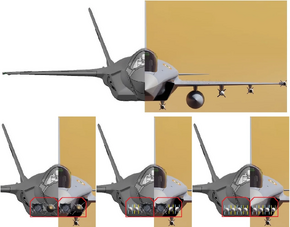
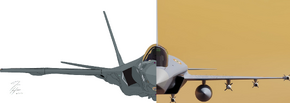
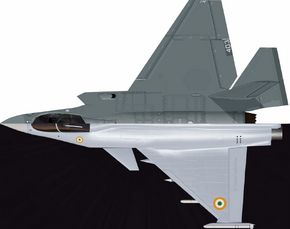
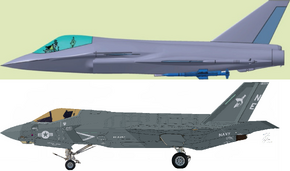
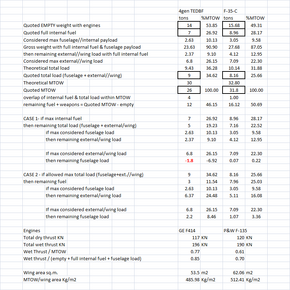
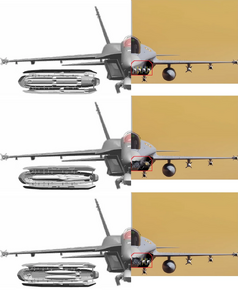
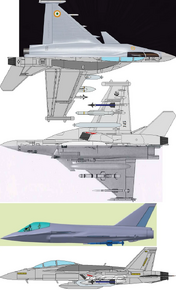
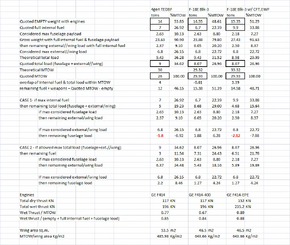
> 1st, for 4gen lovers i would like to do an approximate scaled comparison of this 4gen TEDBF with USN 4gen TEDBF the F-18 SH bcoz they would have same 2x F414 engines. And then present some points in my opinion.
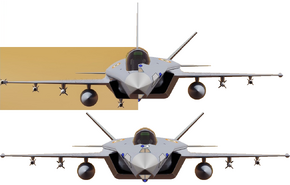
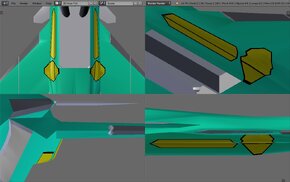
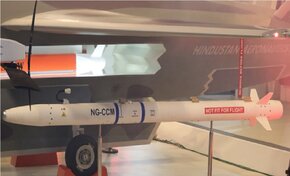
NOTE - AFAIK the EWP'll be implemented, but dorsal CFTs have been cancelled due to technical/performance issues, still i'm considering that theoretically, analogous to a hypothetical model. Considered CFT weight = 2x400 Kg & fuel in them = 2x1.6 tons, EWP weight = 408 Kg & its payload = 1,134 Kg.
> In emerging 6gen era, behind global 4gen jets are different nation's/people's different justifications -
+ Everybody want to save money , newer stuff is costlier, older stuff is cheaper, people can spend saved money on other assets, salty marine environment makes maintenance costly, etc but -
- defence has always been costly matter in every gen's era - 2gen'll be costly, 3gen'll be costly, 4gen'll be costly.
- salty marine environment has never ever stopped R&D from 1st gen towards 5gen then 6gen with RAM, RAS improvements.
- India is socialist economy, not capitalist, if only the beauraucratic system can be tweaked.
- Economise but also field future tech IN TIMEside by side, which didn't happen so far.
- Economy should be boosted by absorbing citizens into industry & shifting from more consumer to more producer model. IT boom happened in 1990s, this is mid-2020s. Exploit supercomputing, AI/ML, robotics, etc. Vehicles, appliances, etc makers should compete globally.
- Whichever Force doesn't have budget is destined to get defeated by technology.
+ continue old business, market, ecosystem by R&D/producer nations for lagging/importing nations, whiile India's present & future exports are skeptical.
- USA supplies/services Taiwan, S.Korea, Indonesia, Singapore, Pakistan, Philippines, Thailand, Israel, UAE, Bahrain, Jordan, Egypt, Saudi Arab, Kuwait, Greece, Turkey, Poland, Romania, Denmark, Norway, Portugal, cannad, Chile, Argentina. Only S.Korea & Turkey have made their own jets KF-21, Kaan.
- Russia after big history, supplies/services Algeria, India, Iran, Etheopia, etc.
- UK supplies/services Qatar, Turkey, Saudi Arabia, Austria, Italy, Germany, and Spain.
- France supplies/servies Egypt, India, Qatar, Greece, Croatia, Indonesia, UAE, Serbia, Ukraine.
- China trying to expand beyond Pakistan, Indonesia, Nigeria, etc.
- India needs to get out of the above list of importing nations, but making too many new 4gen will create import tender for future 5/6gen even after AMCA which cannot be only 5gen for big India. STOBAR AC can have medium 5gen & CATOBAR AC can have 5.5-6gen N-AHCA.
- Whether all above customer nations will buy Indian 4gen LCA, MWF, TEDBF, etc or USA, China, EU, Russia will try to sell them affordable 5gen is debatable.
They're making modification of exisitng 4gen since past few decades while India attempting multiple brand new 4gen from scratch for next few decades.
+ 4gen can be given many MLUs - radar, cockpit, Networking, composites, RAS, some RAM, sensor pods, LR weapons, even a DEW pod, but -
- still 4gen body'll be most visible object in sky to be hunted by 5gen.
- using LR weapons on 4gen is compelling thing to use their last series, not ideal/desired/efficient which is actually with stealth sneaking closer & increasing NEZ, that's where 5gen got limited IWB & 6gen will fulfil.
- Stealth jet has higher chance of breaking lock.
- And now 5gen also threatened by 6gen R&D.
- Hence on both sides of battle if USA, China, EU, Russia fight eachother in proper blown war not just skirmishes, in 2030s/40s whenever,
they'll also suffer big 4gen losses, that would be the job of 5/6gen
But 1 of most ignored point is that last series of 4gen'll hide behind 5/6gen & UCAVs if AI fully matured, while India's 5gen & UCAV R&D sluggish & no 6gen R&D -
- USN has F-35, will have FA-XX,
- PLAN is ready for J-35, will have J-50,
- Russia is sluggish, but might disclose next gen successor of Su-33 any day.
- France will have N-FCAS, could relax & jump to 6gen as Russia is sluggish.
- Indian 4gen TEDBF will shout "AMCA help us!".
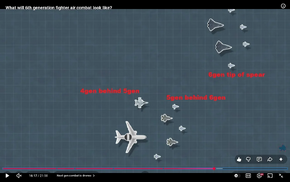
+ UCAVs will cover 4gen like bodyguard. Sure, that's the future to protect even the 6gen. But -
- it needs agile, true naval AI-UCAV with ATWR>1 which is difficult for boomerang shaped UCAV.
- Land based UCAV R&D is sluggish, naval UCAV TD not there yet.
- Next it needs full scale model test on STOBAR, CATOBAR.
- Enemy will also use their UCAVs against 4gen, 5gen.
- UCAVS can also be put in 5gen, 6gen categories.
- Chinas has shown at least 5 types of UCAVs, some are manned fighter sized.
+ 4gen to be used in uncontested areas, in other words for brooming, mopping, against weaker adversaries, but-
- this happens after 5/6gen does SEAD/DEAD,
- 4gen can also do SEAD/DEAD with networking & LR weapons but enemy SAMs, AAMs are also getting networked IADS & LR.
- IADS will be fortified by layered defence.
- hence this still doesn't reduce threat to 4gen by mobile SAMs, MANPADS, IADS, 5/6gen.
- Enemy's Stealth jets are like moving 'contested area'.
+ People want to be self reliant free from imports, that's good, but should happen IN TIME bcoz a jet is matter of 20+40 years. ADA slide indicated 4gen TEDBF in 2038+ & wind tunnel test also yet to happen. China's economy & military was like India's decades back, but -
- 5gen FC-31 paperwork began in 2007, flew in 2012, 4gen LCA-N flew same year.
- After AMCA paperwork in 2010, IN approached ADA for 5gen jet but ADA stating -
= N-AMCA conversion not efficient,
= Navy-1st design'll impact & upset IAF,
= no cleansheet design either bcoz ADA is tiny, lacks manpower for CAD/CFD, wind tunnel tests of multiple projects, or previous govts. not giving funding, etc, but 5gen to be built on top of brand new naval 4.5gen which was wrong bcoz, there's experience from LCA, LCA-N, MWF designs & started AMCA project & DRDO was working on RAM, RAS, etc.
- IN had to settle for 4gen TEDBF & paper work in 2019, Otherwise a cleansheet 5+gen TEDBF TD in parallel to AMCA would be ready in 15 years by now.
- 6gen J-50 speculated to be naval, flew last year, India doesn't even've official diagram of domestic naval/AF 6gen but looking for possible naval FCAS, AF-GCAP.
- 5gen J31/35 ready now, the 4gen design has been frozen

to make in next decade.
- Russia also gives surprises. After revealling Su-75 in 2021, what if it revealled & offered naval Su-75 or some other design?
- IMO too many Rafale-M also not good. Earlier i thought that like plans for converting KF-21 to true 5gen, if 4gen TEDBF airframe can be upgraded like that then some LSP can be done. 4gen TEDBF could've been flying TD by now like X-35. But it's too late & wind tunnel test yet to happen hence IMMEDIATELY start stealth design exploiting supercomputing, AI/ML, etc, otherwise it'll automatically become problem later like MiGs as AMCA nears completion, it means when things are too late then no option is cheap overall, today appearing cheap, later it'll backfire.