The Russian-Ukrainian War Thread

KipPotapych

Well-Known Member
No country as the right to invade another because they don't like the politics of that country and there have been democratic elections since that incident that have pointed in which direction the population wanted to progress.
I am not sure I agree with the former proposition. A country probably does have a right to invade another country due to its internal politics that have direct consequences for its security, etc. An obligatory reminder, of course, is that I am not talking about this particular situation and excusing Russia or whatever it is I am supposed to say for the “excited” crowd.

The latter, I do not think the argument holds much water for various reasons. One and most obvious being that a good chunk of the country has never got to vote in the following elections. Note that today this is being provided as one of the reasons for not holding elections. Another being that history has happened between the removal and the next and following elections. Another one is Zelensky’s campaign and what he supposedly stood for. Another one is that we do not know how a Yanukovych equivalent would fare like in the last election (my guess is not as bad as some/most may think) and so on. I think it is fairly easy to argue that things are not static and that there is a lot we do not know.

What we can state with a fair degree of (or utmost) certainty is that the mood today is fairly clear. Question marks still exist, such as war and peace, what costs, willingness to participate, etc.

Edit: Correcting myself here, giving it a quick second thought: none of the question marks really matter as far as the mood is concerned due to freedom of choice argument, without undue influence.
 
Last edited:

personaldesas

Active Member
The opposition removed a lawfully elected president in what was effectively a coup d'etat executed by an active minority in the capital. It doesn't matter who Russia preferred, it does matter that Yanukovich won an election in Ukraine.
By analogy, if Trump succeeded with his nonsense on January 6, 2021, would that be kosher? Note that the events of 2013-14 in Ukraine are portrayed as democracy in action and everyone (figuratively speaking) cheered. Trump’s shenanigans should be viewed in the same light if we want to keep it all in the same perspective. I guess one thing that was missing in Washington in 2021 is Antonov giving out burgers to the participants while cheering them on.

My point is that because the opposition “rejects” the elected leader or his/her initiatives… frankly, nobody cares. All opposition has to do is propose a better plan of action, win support of the populace and the next election. I gather things may have gone differently for Ukraine (and Russia, as well as the world). Or not? We will never know as, unfortunately, this is not a simulation that can be reset and replayed.
I agree Yanukovych was legitimately elected and his removal skipped the constitutional process. I don't condone that. It's clearly a symptom of something being democratically amiss. But I don't think it compares to the likes of Chile 1973, where democratic govs were removed and elections stopped. In Ukraine, parliament voted him out, his own party included, after he'd fled. And Ukraine held new elections soon after.

So @deyhere's framing suggests that by removing Yanukovych, the 2014 opposition (or somehow the West) left russia no better choice but to invade eight years and two democratically elected presidents later. Hence my question.

These two are connected, and it's not Russia that sabotaged the Minsk Accords. The Minsk Accords were an outcome Russia was satisfied with. Ukraine signed them and then sabotaged implementation. People keep forgetting just what the Minsk Accords required from Ukraine.
Agreed
 
Last edited:

Hoover

Active Member
These two are connected, and it's not Russia that sabotaged the Minsk Accords. The Minsk Accords were an outcome Russia was satisfied with. Ukraine signed them and then sabotaged implementation. People keep forgetting just what the Minsk Accords required from Ukraine.
Agreed
No, I don´t. Minsk was not followed by both fractions. Russia didn´t retreated their forces, the Luhansk and Donezk forces dind´t removed their heavy weapons out of the combat zones, and Ukraine didn´t, too. Both sides never had any intentions to fulfill the Minsk treaties.
 

personaldesas

Active Member
No, I don´t. Minsk was not followed by both fractions. Russia didn´t retreated their forces, the Luhansk and Donezk forces dind´t removed their heavy weapons out of the combat zones, and Ukraine didn´t, too. Both sides never had any intentions to fulfill the Minsk treaties.
I wouldn't go as far as they never had any intentions, but there were multi faceted reasons why neither implemented it.
 

personaldesas

Active Member
Countries are large and complex institutions. Even people often act as individuals in a inconsistent and contradictory manner. Countries even more so. I'm not sure Ukraine has a singular will about the outcome of the current war. Remember we keep seeing polling data that shows Ukrainians are against continuing the mobilization and are also against territorial concessions to Russia. But they're also not volunteering to serve. So Ukraine's will is... make Russia lose, magically, without any real military effort on Ukraine's part? There is a complex balancing act here between what it would cost to achieve a given outcome and what external resources (without which Ukraine faces defeat) will be available. And that decision can be badly skewed by misaligned incentives, and by foreign influence. I don't think the west can make the Ukrainian public fight if they're absolutely against it. But the collective west can help shape narratives and perceptions, and manage public opinion, make a continuation of the fight accepted if not outright preferred.
Sure, the West shapes opinion. So does Russia, and so do third parties everywhere. But I think we agree that's very different from any kind of coercion.

And fair point on "will". Ukraine isn't one actor. I put that too loosely.

You're right that many don't want to fight themselves but still reject territorial concessions. I just don't think that's incoherent. People want their side to win and don't want to be the one who dies for it. I'd expect similar attitudes on any side of any war. It just bites harder in Ukraine, because it has far fewer people and less money (or North Koreans I guess) than Russia to fill the ranks. And the reasons people give in polls are fear, unfair mobilization, and lack of equipment, not doubt about the goal. That points to problems the state needs to fix, not to Ukrainians not knowing what they want.

Also interesting: in the KIIS poll this January, people who rejected giving up the rest of Donbas for security guarantees were asked why. 35% said Russia wouldn't stop there. 25% said they don't believe Western guarantees are real. That doesn't read like a public heavily influenced by Western support on this decision.

But generally, I think this framing takes agency away from Ukrainians. They can weigh the situation, the adversary, and the help on offer. If help skews their judgment, what follows? That the West should hold back, because Ukrainians can't be trusted to make the right decision about their own fate? I don't buy that. It's their call, including the risk that it goes badly.
 
Last edited:

personaldesas

Active Member
Most recently, yes, the US has and has failed to get results, partially due to the ineptitude of America's current leadership. But it does cut against the proxy argument.
I guess the silver lining is that two inept governments have now shown the world how costly starting a war is: Russia in Ukraine, and the US in Iran. That hopefully will deter more.
 

personaldesas

Active Member
View attachment 55666

In other words, if the presidential election was hold in late December 2013, after signing the agreement with Russia earlier in the middle of the month, he would likely be reelected to his post.
That's actually not what the polls say, but I understand where the confusion comes from.

Ukraine has a two-round system. He'd lead the first round, but pollsters also asked about the runoff. From early 2013 until his removal, he lost to Klitschko, Yatseniuk, Tymoshenko and Poroshenko in every single poll. The only opponent he could beat was Tiahnybok, and not always.

Yanukovych vsFeb 2013 (Rating)Mar 2013 (KIIS)Apr 2013 (GfK)Oct–Nov 2013 (IFES)Nov 2013 (KIIS)7–17 Dec 2013 (Rating/SOCIS)20–24 Dec 2013 (DI/Razumkov)*24 Jan–1 Feb 2014 (SOCIS/KIIS)*
Klitschko38–6240–6133–6736–6439–6137–6343–5736–64
Yatseniuk45–5546–5546–5446–5442–5845–5542–58
Tymoshenko48–5249–5144–5649–5143–57
Poroshenko43–5746–5438–62
Tiahnybok51–4953–4757–4357–4347–5351–4946–54

* After the Moscow deal (17 Dec 2013).

The Moscow deal gave him a short bump. In the first poll after it, the gaps narrowed and he edged Tiahnybok. The next poll, in late January, had him losing all five again.

So if you believe the polls, it's very unlikely he'd have been reelected. Not saying this justifies anything though, it's just for context.
 
Last edited:

deyhere

Member
I agree Yanukovych was legitimately elected and his removal skipped the constitutional process. I don't condone that. It's clearly a symptom of something being democratically amiss. But I don't think it compares to the likes of Chile 1973, where democratic govs were removed and elections stopped. In Ukraine, parliament voted him out, his own party included, after he'd fled. And Ukraine held new elections soon after.

So @deyhere's framing suggests that by removing Yanukovych, the 2014 opposition (or somehow the West) left russia no better choice but to invade eight years and two democratically elected presidents later. Hence my question.


Agreed
Maybe if the opposition waited for his term to expire, then kicked him out in free and fair elections, Russia wouldn't have invaded. Ukraine lost Crimea in 2014, we can argue that Russia invaded instantly, they didn't wait eight years.
 

rsemmes

Active Member
But the collective west can help shape narratives and perceptions, and manage public opinion, make a continuation of the fight accepted if not outright preferred.

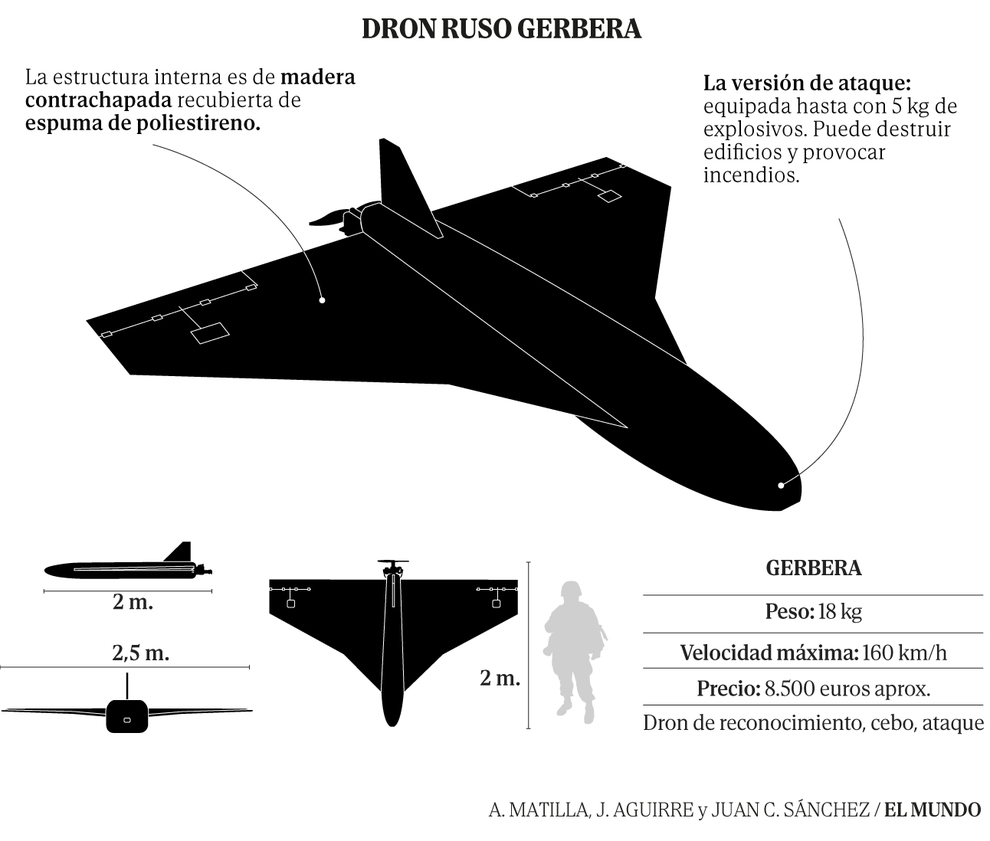
For some reason, the article is providing one side's speed in m/s the other in km/h, the (estimated) production of one side but not of the other. Also...
"But just as Ukraine has developed its drone and missile capability to almost match Russia’s... The balance of power remains uncertain."
-I tend to disagree.
"...with a new ruthlessness of targeting."
-About Russia, but
"...an attack mission into occupied Luhansk."
-Ukraine killing Ukrainian civilians is not mentioned.
"Ukrainian military propaganda is excellent at highlighting successful missions on social media, but the wider picture of the impact of its drone strikes on Russia is harder to discern. The impact could be harder for Ukraine. Ukraine, meanwhile, faces economic pressure at a time when its war budget is overspent and needs to find £40bn more next year. Neither side is close to defeat or a crisis. As Ukraine tries again to refinance and, most urgently, get through the winter."
-It is not easy to argue against that but you always have wishful thinking. I wonder who is closer to a crisis.
 

rsemmes

Active Member
Maybe if the opposition waited for his term to expire, then kicked him out in free and fair elections, Russia wouldn't have invaded. Ukraine lost Crimea in 2014, we can argue that Russia invaded instantly, they didn't wait eight years.
Maybe if Khrushchev hadn't ceded Crimea to Ukraine...
A lot of what ifs... I think who did it first is as relevant as "the right to invade". Are we going to start talking about International Law now? Applied to what country since when? That goes for the "shape narratives and perceptions, and manage public opinion".
 

rsemmes

Active Member
And now Denmark...

Within approximately six months, Russia will be able to wage a local war in a country bordering Russia.
-That is after the Ukrainian victory... or at the same time?
At the same time, there is a low but growing risk that Russia will launch a limited military attack against one or several NATO countries bordering Russia. A limited military attack would be a desperate move on Russia’s part.
-Even if Russia has no troops, but it will take that desperate measure because Ukraine is threatening Kursk.
Within approximately two years, Russia will pose a credible threat to one or several NATO countries and thus be ready for a regional war against several countries in the Baltic Sea region. Within approximately five years, Russia will be ready for a large-scale war on the European continent.
-So, Russia is about to crumble "Ukraine’s sustained long‑range attacks are causing still more extensive damage deep inside Russia. Russia is suffering heavy losses for marginal territorial gains. At the same time, the Russian economy is on the brink of a major crisis." and, at the same time, it will recover that quickly.
Western economic and military support to Ukraine is vital to the country’s capability to hold back Russian forces and to raise the cost to Russia of sustaining the war. It is highly unlikely that President Putin will be willing to compromise on his fundamental objectives for the war.
-Those two points are not that clear to everyone. More wishful thinking.
Is the media narrative different to the assessment by the governments?

From Spain...
The CIA warns Spain, France and Italy of a Russian drone attack by ships in the Mediterranean.
-For some reason, it would not do the same thing neither in the Baltic nor in the Atlantic.
 

personaldesas

Active Member
Maybe if the opposition waited for his term to expire, then kicked him out in free and fair elections, Russia wouldn't have invaded. Ukraine lost Crimea in 2014, we can argue that Russia invaded instantly, they didn't wait eight years.
Sure, he was removed from power. But a few facts I still find hard to reconcile with the coup détat narrative, and that look more like his base of power collapsing:

- The opposition couldn't have removed him on its own. It had only a minority of parliament seats. It took the parliament elected in 2012, where his own party was the largest faction. The vote was 328 to 0, including dozens of his own party's MPs.
- His party was already falling apart. 28 MPs quit his faction on 21 February, and 41 of its 205 were gone within two days.
- On 20–21 February, parliament ordered security forces out of central Kyiv and suspended his interior minister.
- The new majority didn't cling to power. It called a presidential election for three months later, and parliamentary elections followed in October.
- A month after he fled, his own party expelled him.

Don't get me wrong, there was weird shit going on and a ton of pressure from the street. But at the end of the day, it was elected officials in a parliament who voted on it. That doesn't make it a clear-cut coup to me.
 
Last edited:

rsemmes

Active Member
I wonder if in the next exchange of corpses, after all those great Ukrainian advances, Russia will hand over 100 against 3.000 returned by Ukraine; maybe 1.000 to 1.000?
It is not going to provide an estimate of casualties, but it will be interesting.
 
Top