MARKMILES77
Well-Known Member
The F-5 attack might explain why a Kuwati pilot shot down F-15s.

Sorry, but this is nonsense an completely so.For example, when the EU industries gets their act together, they will have similar assets in inventory by hundreds of thousands, if not even millions.

Have you been licking angry toads, intensively?NOW is the time to do "NIGHT TIME" Air Drops (parachute) of small arms and ammo all over the civilian residential neighborhoods in Tehran and other locations. It doesn't matter if the arms land in their streets, yards or on their roof tops. Hand guns, semi auto rifles, grenade launchers and sniper rifles would enable the Iranian people to cause great chaos and casualties to the IRGC. It is the last thing that the IRGC would be expecting. The answer to ending the regime has to come from within from an armed population. They are 90 million "BOOTS" on the ground. ARM them. Let them fight for their freedom. We cannot just leave them to the mercy of another regime. They have been slaughtered by the thousands. Seeing family and friends butchered by this regime gives them the motivation and hate for the regime to fight to the death. Put yourself in their place. I would be praying for weapons to come raining down like manna from heaven. They can truly break the regime and IRGC. ARM THEM! In addition, I don't understand why we haven't carpet bombed all along the shore areas along the Straight of Hormus. I am a Marine Vietnam vet. Air drops of arms and ammo were commonplace in Vietnam. If it worked there, it will surely work in Tehran and other cities in Iran. I can only hope that someone reading this will see the sense in this and get it to someone that will take action on it. Arms through an intermediary was not smart. What I am proposing is.

Probably waiting for an attack order from their hero after his MAGA gang gets clobbered in the Nov midterm elections.I wonder what are all those American militias waiting for to liberate themselves from their government. At least, they are, in some way, organized.
Not really. In fact, not at all."Approximately 93 to 94 million motor vehicles (including passenger cars and commercial vehicles) are produced globally every year, based on recent data from 2023 and 2024. "
Need i say more ? A car is a way more challenging and arduous to produce than a Missile.
There is a reason Toyota produces and sells 10M cars a year, while Bugatti and Aston Martin, et al, do not. For the same reason, Toyota Corolla is the best selling vehicle of all time, followed by (in no particular order) VW Golf, Honda Civic, Ford F-150. The same reason also applies to stockpiles and production of various weapons and systems. For example, “dumb” artillery ammunition stockpiles are measured in millions of rounds, while “smart” rounds don’t even come close. There are millions of “dumb” bombs laying around; “smart” bombs are a rarity in comparison (I am not talking about conversion kits, etc). Whether you like it or not, things have to make economic sense; otherwise, entities go broke, including countries.Its just that people are not interested on missiles and the demand is still quite low. While people are very interested on cars and the demand is quite high.
The number of cars produced and sold are determined by the market. Just like other assets people buy. They are productive assets and have productive value/return on investment. A half-a-million-dollar combine generates income that pays for the asset itself and the income it generates is higher than the cost of the asset, which is why it is economically viable and relevant.Humans are capable or producing even a billion cars each year if they just want to. But there is little reason to, because around 100 million each year is the number that is needed and they do not have market for more. So they just produce the amount they can sell.
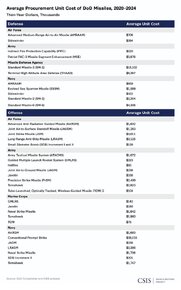
I am not. Laughing. Here are some estimated costs of the US missiles:If you claim, that for example, a country like US could not produce one million cruise missile each year if they decide to do so. You are wrong.

 warontherocks.com
Again, whether you like it or not, it does.You also seem to look money from a strange perspective. You represent money as an all mighty force, that moves everything that happens in the world.
It is and you can’t.That it is a limiting factor so that "you cannot do this because you do not have money" but in reality you can.
Complete nonsense again. Money is the medium of exchange. Things have value due to availability, as they always did before money had ever existed. Money simplify barter that involves goods, labour, etc, even money itself. Credit - another form of money - permits for development via borrowing to produce income. Borrowing that does not produce income or produces less than the costs of borrowing is bad debt that leads to insolvency. You need to read a book. On the subject, I would recommend The Ascent of Money by Niall Ferguson. Another good read is How Countries Go Broke by Ray Dalio.Money is only an artificial tool to motivate people, and especially on capitalist systems people have used to only move and be motivated trough money.
What? Again, you cannot produce things out of thin air. You can decrease the cost of cruise missiles via scaling, though you would eventually run into scarcity of components, etc, but you cannot just produce them because you think you can. The entire argument is… well, dumb.Military Efficiency can never be motivated on a large scale by money only. There needs to be other motivators or factors too. If your military only acts trough money, it will bankrupt the country.
This is some take from a fantasy that has no basis in reality. Again, look at the numbers. You are hallucinating. The world’s total output is about $120T today. Your world war scenario will look like what is happening in Ukraine today, not production that you think should happen.They will start to produce them not only in millions, but hundreds of millions. But this is what you can call a "World War Scenario".
In this article (UA -> grain of salt), they discuss the costs of various Russian missiles:And then the military equipments are given outrageous, artificially high prices that do not relate on how they are produced in a similar way, than in civil industry.

 militarnyi.com

 defence-blog.com
So why does Ukraine not produce gazillion cruise missiles? It is certainly at the point you describe, where this should be happening. Why is Iran not launching (tens of) thousands of missiles it reportedly still has? Why does Russia produce and launch thousands of low-cost Gerans instead of producing gazillion ballistic missiles that are mostly not intercepted? Why not gazillion Oreshniks with proper warheads, to the point that precision does not even matter? Why invest in nukes at all if you can simply produce millions of cruise missiles that can deliver total victory in short order over any landmass on Earth? Why is there economic and geopolitical competition in the world if anyone at any point can simply switch to cruise missile production and dominate the world? Laughing.For example, Iran and Ukraine both are in a situation that they cannot think the military matters on money alone. The way Russia and US is doing. Because their situation is way more dire.
Sure, limited by the resources available.Humans have a capacity to produce enormous amount of stuff if they so choose.
From what I've read, Russia's cruise missile stocks seem to be above the number required to destroy all NATO airbases. Can the U.S. claim to present the same danger? I honestly can't figure out who's bluffing.Not really. In fact, not at all.
There is a reason Toyota produces and sells 10M cars a year, while Bugatti and Aston Martin, et al, do not. For the same reason, Toyota Corolla is the best selling vehicle of all time, followed by (in no particular order) VW Golf, Honda Civic, Ford F-150. The same reason also applies to stockpiles and production of various weapons and systems. For example, “dumb” artillery ammunition stockpiles are measured in millions of rounds, while “smart” rounds don’t even come close. There are millions of “dumb” bombs laying around; “smart” bombs are a rarity in comparison (I am not talking about conversion kits, etc). Whether you like it or not, things have to make economic sense; otherwise, entities go broke, including countries.
The number of cars produced and sold are determined by the market. Just like other assets people buy. They are productive assets and have productive value/return on investment. A half-a-million-dollar combine generates income that pays for the asset itself and the income it generates is higher than the cost of the asset, which is why it is economically viable and relevant.
I am not. Laughing. Here are some estimated costs of the US missiles:
View attachment 54753
Per: Cost and Value in Air and Missile Defense Intercepts
Take a Tomahawk at an average cost of $2M. You are looking at $2T to produce 1M units. This is insane from any perspective. Cost aside, there is no military purpose to such an endeavour. Missile production aside, these have to be launched as they do not just take flight on their own. These launchers cost magnitudes more. Furthermore, the infrastructure, that is not dual-use, to produce these assets would cost asinine amount of money. None of what you are talking about makes any sense.
Again, and most importantly, these quantities completely lack military purpose.
Another article on the costs:
The Hidden Cost of a Missile: Why the Headlines Get Cost Wrong
Since late 2023, the U.S. Navy has fired nearly $1 billion worth of munitions to protect ships in the Red Sea from low-cost Houthi drones and missiles.
Again, whether you like it or not, it does.
It is and you can’t.
Complete nonsense again. Money is the medium of exchange. Things have value due to availability, as they always did before money had ever existed. Money simplify barter that involves goods, labour, etc, even money itself. Credit - another form of money - permits for development via borrowing to produce income. Borrowing that does not produce income or produces less than the costs of borrowing is bad debt that leads to insolvency. You need to read a book. On the subject, I would recommend The Ascent of Money by Niall Ferguson. Another good read is How Countries Go Broke by Ray Dalio.
What? Again, you cannot produce things out of thin air. You can decrease the cost of cruise missiles via scaling, though you would eventually run into scarcity of components, etc, but you cannot just produce them because you think you can. The entire argument is… well, dumb.
This is some take from a fantasy that has no basis in reality. Again, look at the numbers. You are hallucinating. The world’s total output is about $120T today. Your world war scenario will look like what is happening in Ukraine today, not production that you think should happen.
In this article (UA -> grain of salt), they discuss the costs of various Russian missiles:
From Kalibr to Kinzhal: How Much Do Russian Missiles Really Cost?
Information from procurement documents obtained by Militarnyi sheds light for the first time on the supply of missiles to the Russian army.
Another one:
Analysts break down real cost of Russian missiles
Ukrainian defense news outlet Militarnyi has released a comprehensive analysis of classified procurement documents outlining the true cost and production volumes of Russia's long-range missile arsenal. According to the report, the documents shed new light on the scale and financial
Use your search engine of choice to find the Chinese, European, and others’ costs of production. They are all comparable for a reason. No one cracked the nut yet.
So why does Ukraine not produce gazillion cruise missiles? It is certainly at the point you describe, where this should be happening. Why is Iran not launching (tens of) thousands of missiles it reportedly still has? Why does Russia produce and launch thousands of low-cost Gerans instead of producing gazillion ballistic missiles that are mostly not intercepted? Why not gazillion Oreshniks with proper warheads, to the point that precision does not even matter? Why invest in nukes at all if you can simply produce millions of cruise missiles that can deliver total victory in short order over any landmass on Earth? Why is there economic and geopolitical competition in the world if anyone at any point can simply switch to cruise missile production and dominate the world? Laughing.
Sure, limited by the resources available.
Anyway, you are talking nonsense. I am going to pass on replying if the posts that follow are in the same universe (which is not where we all live). You sound like the Spaniard that we had recently had the pleasure of hosting.
Seriously though the people who come up with some of these concepts need to be checked for hallucinations too. In the civilian world we can do market research but in the military world Ukraine is used for testing or Afghanistan/Iraq before etc etc. if the man on the frontline is not asking for it then we should focus our precious peace dividend elsewhere.I'm probably going to regret this post.
Missiles cost what they do, because in peacetime they are not required in sufficient quantities to justify the investment to put them into real mass production. The cost of constructing the production facilities and operating them are greater than constructing missiles manually for current construction volumes.
Increase the demand and eventually production costs will decrease significantly.
I personally hope that we don't end up in a situation where that is required, because money will be the least of our problems.
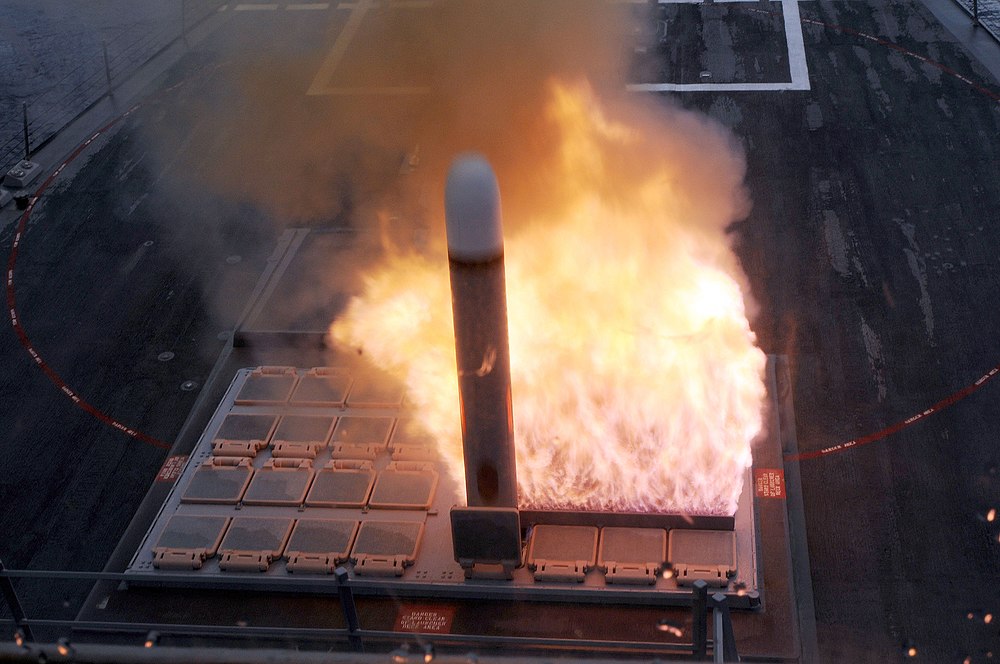
The agreements, lasting up to seven years, are intended to increase annual production and accelerate deliveries of Tomahawk Land Attack and Maritime Strike variants, AMRAAM missiles, SM-3 Block IB interceptors, SM-3 Block IIA interceptors, and the SM-6 missile.Production Targets: The goal is to quadruple Tomahawk production from around 60–100 per year up to 1,000 per year, alongside substantial increases for SM-6 interceptors (over 500 annually) and AMRAAM missiles (at least 1,900 annually)
 ukdefencejournal.org.uk

What an odd claim where have you read this? The word "destroy" is of course nice and fungible, since an airbase isn't the jets, it's the runways, hangars, logistics support facilities, and control towers. Many of these things are relatively easy to repair. But leaving that aside, I don't think Russia's cruise missile inventory is anywhere that large. And it wouldn't make sense for it to be.From what I've read, Russia's cruise missile stocks seem to be above the number required to destroy all NATO airbases.
If it was as high as SamB claims, Ukraine would be a smoking hole in the ground.What an odd claim where have you read this? The word "destroy" is of course nice and fungible, since an airbase isn't the jets, it's the runways, hangars, logistics support facilities, and control towers. Many of these things are relatively easy to repair. But leaving that aside, I don't think Russia's cruise missile inventory is anywhere that large. And it wouldn't make sense for it to be.
Russia definitely had a bigger stockpile than expected. And Russia has been able to boot up production to keep the effort going. But cruise missiles are a relatively expensive way to deliver payload. And NATO is huge.If it was as high as SamB claims, Ukraine would be a smoking hole in the ground.
I remember seeing reports early in the Ukraine war about how quickly they were burning through their stockpiles of modern missiles.
It was a picture that I built up. After reading people like yourself, and others doing the blog post rounds as well as open source information. I don't expect the Kremlin comes out and makes public their battle plans. But any reasonable person would anticipate counter moves and keep powder dry in reserve.What an odd claim where have you read this? The word "destroy" is of course nice and fungible, since an airbase isn't the jets, it's the runways, hangars, logistics support facilities, and control towers. Many of these things are relatively easy to repair. But leaving that aside, I don't think Russia's cruise missile inventory is anywhere that large. And it wouldn't make sense for it to be.
I'm sure Russia has some reserves of munitions for a possible confrontation with someone other than Ukraine. But even if Russia has a couple of thousand cruise missiles in their back pocket (and I don't think they do), they don't have enough to destroy all airbases in NATO.It was a picture that I built up. After reading people like yourself, and others doing the blog post rounds as well as open source information. I don't expect the Kremlin comes out and makes public their battle plans. But any reasonable person would anticipate counter moves and keep powder dry in reserve.
Or perhaps everyone was banking on the Kremlin emptying the bins in the first 48 hours. Munitions are not the issue; however, it is the assumptions behind them. Consider Libya and Iraq. One atrocity framed by amateurs, a single miscalculation turned a protest into a symbol and a symbol into a learning and counter cycle. Libya was small enough to be obscure. Iraq taught the world that the West is willing to use force against civilians. Libya simply confirmed it. So too did Georgia tell on Putin. The silence in the corridors, the admission of what had been done. Exercising power over the weak is a lesson that nations refuse to learn. Even when loyal officers and ambassadors obey, the damage is already done. There is another layer that few consider. But Iraq sat on cheap to extract oil as did Libya. They wanted to sell to Russia, so Sudam, Gaddafi and now two Iranian Ayatollahs have been eliminated. Yet every worker in the world, their trade managers, are all quiet. And when civilians are crushed at logistical hubs, the flow of trade does not stop, but the willingness to cooperate does. Dock workers take longer, freight managers take longer to file manifests, and local officials become less enthusiastic in their compliance. It's not enough to be called sabotage, but it is enough in millions of lost man-hours and trillions in additional government debt globally. It's the silence that has slowly spread. The world is full of heroes, villains, and fools; ultimately, their stories end up at the pub. There are no such tales of great or dastardly deeds being shared over a pint. When leadership acts without clarity, subordinates begin to question the chain of command. not openly and not in reports, but in their confidence. Nations cannot function if it doubts its officers above them, and Libya planted that doubt. The West's failures are not just a recruitment tool. More subtly, it is a wedge that separates officers from policy and silently makes them feel as if their respective nations are losing their way. Once officers believe they serve incompotence rather than order, they defect or worse, become apathetic.I'm sure Russia has some reserves of munitions for a possible confrontation with someone other than Ukraine. But even if Russia has a couple of thousand cruise missiles in their back pocket (and I don't think they do), they don't have enough to destroy all airbases in NATO.
Oh!Iraq taught the world that the West is willing to use force against civilians.
I would say that is a lesson well learned and always applied.Exercising power over the weak is a lesson that nations refuse to learn.