European Union, member states and Agencies

SolarisKenzo

Well-Known Member
  • Thread Starter Thread Starter
  • #363
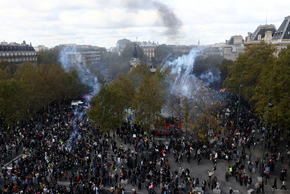
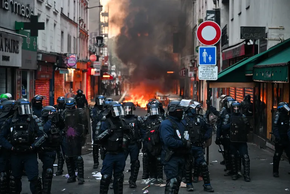
We had a weekend of very heavy clashes all across Europe. Big cities were the center of massive protests.
In total, estimates are that several hundred cities and towns were affected by organized protests, most of them not violent. In France alone almost one million people participated.
The total number of protesters across the european continent is difficult to estimate but is around several million.
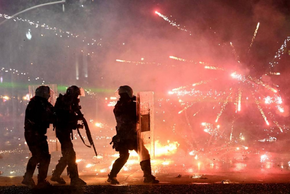
In some major cities, such as Milan, Paris, and Tirana, there have been very violent clashes.

Most demonstrations were led by student groups and young-people organizations.

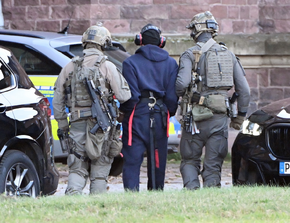
Several thousand people were arrested. The injured are approaching ten thousand. No deaths reported.
It is not uncommon in Europe, but the scale this time was certainly impressive and the fact that it was a continent-wide protest is certaintly interesting.

Main reasons for the protests were:
- more money to public schools and universities
- high energy prices and housing
- anti-government (especially anti-fascist protests)
- anti USA and anti Israel rallies (solidarity with Gaza)

In Albania massive clashes happened after the local Government said it will allow a US company (linked to Kushner) build a 5-stars resort.
Some administrative buildings were damaged and many "big companies" shops were destroyed. Especially american owned ones (like starbucks, nike, etc etc).
In Milan protesters rioted a footlocker and then gave the stolen clothes to homeless people.

Some images from the continent.
1792485477358.png
link

1792485885560.png
link

1792485962436.png
link

1792486134114.png
 

John Fedup

The Bunker Group
EU riots

The reasons list,

Main reasons for the protests were:
- more money to public schools and universities
- high energy prices and housing
- anti-government (especially anti-fascist protests)
- anti USA and anti Israel rallies (solidarity with Gaza)

The first two can't easily be addressed given the fiancial pressures several natons face (especially France). Add in the very necessary increased defence expeditures and the problem is even more difficult. I saw a report about classroom hours being too long yet students have 16 weeks off per year....kind of explains long days!

As the other two, just the usual BS, likely with hostile player assistance.
 

kato

The Bunker Group
Verified Defense Pro
I saw a report about classroom hours being too long yet students have 16 weeks off per year....kind of explains long days!
Nah, France has about 28-30 hours of education per week in their curriculum just like virtually all other European school systems. However typically French schoolkids always have a rather long lunch break (1.5-2 hours) inbetween that, and may have free hours (supervised free time for homework etc) inbetween as well to fit the curriculum into a full-time 08:00-17:30 timeframe (or 8:30 to 18:00).

This school structure in France is traditional and was introduced in 1881, it's not a recent thing - there were some modifications in the 70s, mostly to cut loopholes. And considering almost 150 years of history it's not something that will be changed anytime soon.

Younger kids have the same general full-time school timeframe, but may have wednesdays off at home - this also has a historic reason: this day was reserved for religious education by church if parents chose to send their kids to that. The long summer vacation is also a historic thing - it was back then introduced to break resistance from farmers because with that long vacation kids would be home to work in the harvest.
 

KipPotapych

Well-Known Member
Thanks, kato. Interesting concept, I should read about it. Here, school starts early September (in some case late August) and ends in late June. The first bell rings (usually) at 8:30-9:00, which slightly varies by school, and the last bell at 15:10-15:20. Then, it is home, after school care, etc, parents/caretakers’ problem and expense. Lunch is 30-40 minutes.
 

John Fedup

The Bunker Group
Nah, France has about 28-30 hours of education per week in their curriculum just like virtually all other European school systems. However typically French schoolkids always have a rather long lunch break (1.5-2 hours) inbetween that, and may have free hours (supervised free time for homework etc) inbetween as well to fit the curriculum into a full-time 08:00-17:30 timeframe (or 8:30 to 18:00).

This school structure in France is traditional and was introduced in 1881, it's not a recent thing - there were some modifications in the 70s, mostly to cut loopholes. And considering almost 150 years of history it's not something that will be changed anytime soon.

Younger kids have the same general full-time school timeframe, but may have wednesdays off at home - this also has a historic reason: this day was reserved for religious education by church if parents chose to send their kids to that. The long summer vacation is also a historic thing - it was back then introduced to break resistance from farmers because with that long vacation kids would be home to work in the harvest.
The free time explains the long school day but 16 weeks off, Wednesday off for younger students, what are teachers doing and are they paid during these off times? If so, it doesn’t leave much room for additional funding.
 

John Fedup

The Bunker Group
Thanks, kato. Interesting concept, I should read about it. Here, school starts early September (in some case late August) and ends in late June. The first bell rings (usually) at 8:30-9:00, which slightly varies by school, and the last bell at 15:10-15:20. Then, it is home, after school care, etc, parents/caretakers’ problem and expense. Lunch is 30-40 minutes.
Still, 16 weeks versus 8 weeks off in summer time plus XMas and spring break, ~30% more time off, perhaps more if Xmas is an additional off period in France. That is a significant cost for a system that needs more money. What would Doug Ford do:p
 

kato

The Bunker Group
Verified Defense Pro
what are teachers doing and are they paid during these off times?
Teachers in France (like most of Europe) are paid on a salary for a specific number of classroom education hours that depends on which grades they're teaching at what level and with what certifications. In secondary school that's usually 19 real-time hours classroom teaching. Additional time is spent on preparation, administrative duties etc. For comparison in Germany with much the same model it's also 19 real time hours classroom teaching.

French teachers are paid rather badly though by international comparison (relative to their education level) - the base salary is about 20% above minimum wage, additional pay is awarded based on bonuses, overtime, seniority/service time etc. Even taking those into account, only Italy has lower average pay for teachers in Western Europe.
 

SolarisKenzo

Well-Known Member
  • Thread Starter Thread Starter
  • #372
Still, 16 weeks versus 8 weeks off in summer time plus XMas and spring break, ~30% more time off, perhaps more if Xmas is an additional off period in France. That is a significant cost for a system that needs more money. What would Doug Ford do:p
European (or most european) school systems are very, very old. And not all of them have been changed at all in the last decades.
As Kato said, the french one is from XIX century.
The italian one is called the "Gentile system", being based on the fascist Gentile-Mussolini school reform of 1923. It's still the exact same system, nothing substantial has changed. That's why you still have religious-education at school, very early start-hour (7.30 -8.00), etc etc

Very long summer break has two main reasons:
1) in the south and in the islands it is too hot to go to school. People usually stay at home - especially in the middle of the day - and the temperatures are just not sustainable. Schools in the north (in the alps for example) start earlier and end later.
2) summer work. In the past you had to have the kids at home to help with the harvest. Today teenagers are still widely employed by wine makers for the harvesting of wine grapes. Large or commercial brands use machines, but very expensive or exclusive wines still have to be harvested by hand.
 

John Fedup

The Bunker Group
European (or most european) school systems are very, very old. And not all of them have been changed at all in the last decades.
As Kato said, the french one is from XIX century.
The italian one is called the "Gentile system", being based on the fascist Gentile-Mussolini school reform of 1923. It's still the exact same system, nothing substantial has changed. That's why you still have religious-education at school, very early start-hour (7.30 -8.00), etc etc

Very long summer break has two main reasons:
1) in the south and in the islands it is too hot to go to school. People usually stay at home - especially in the middle of the day - and the temperatures are just not sustainable. Schools in the north (in the alps for example) start earlier and end later.
2) summer work. In the past you had to have the kids at home to help with the harvest. Today teenagers are still widely employed by wine makers for the harvesting of wine grapes. Large or commercial brands use machines, but very expensive or exclusive wines still have to be harvested by hand.
Yes, I can the hot summers as a real issue and they are getting longer. Even in southern Ontario, the last 2-3 prior to our summer break, the temperatures are excessive. Many schools here now have air conditioning.
 

kato

The Bunker Group
Verified Defense Pro
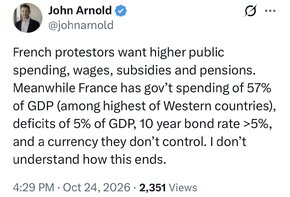
This seems to sum it up rather well, no?
France spends a lot more on pensions compared to other euro countries right now (except Italy, which is even higher). This is partially due to how pensions are structured differently across EU countries.

See https://www.banque-france.fr/system/files/2025-10/825117_BDF259_4_Depenses publiques_EN_VFfinale.pdf (from 2025, with the 57% number) for an analysis by the national bank with comparative charts. Page 3 has comparative numbers.

Don't really need to comment much about what an American hedge fund trader thinks about European spending though. Can't get much more antithetical. It's also mostly exactly that crowd online claiming that this is "high", mostly demanding massive cuts to social security.
 

John Fedup

The Bunker Group
France spends a lot more on pensions compared to other euro countries right now (except Italy, which is even higher). This is partially due to how pensions are structured differently across EU countries.

See https://www.banque-france.fr/system/files/2025-10/825117_BDF259_4_Depenses publiques_EN_VFfinale.pdf (from 2025, with the 57% number) for an analysis by the national bank with comparative charts. Page 3 has comparative numbers.

Don't really need to comment much about what an American hedge fund trader thinks about European spending though. Can't get much more antithetical. It's also mostly exactly that crowd online claiming that this is "high", mostly demanding massive cuts to social security.
The last paragraph in the link sums up the issue.
 
Top