
Royal New Zealand Air Force
- Thread starter Lucasnz
- Start date



Its a tactical airlifter same size as a C-130J just faster, what NZ lacks is a capability to move oversized cargo long distances ie NH-90 sized loads.Why not the Embraer C-390 Millennium?
Unlike the C-2, it has significant international sales success, selected by Portugal, Hungary, Netherlands, Austria, Czech Republic, South Korea, Sweden & Uzbekistan as well as Brazil.
Unfortunately with our pollies never going happen only via sea from NZ defence force or on someone else aircraft sad unfortunately short sighted. So far only order 2 commercial aircraft and nearly 10 months and still not signed anything on the only option for naval helicopters while other's have they will be luck if see them in 2028 . Slow even in a unstable environment pollies only use word's I thought with the current government this would change but now know nothing has changed.Its a tactical airlifter same size as a C-130J just faster, what NZ lacks is a capability to move oversized cargo long distances ie NH-90 sized loads.
Big cuts to Govt dept's due next few years and whilst they wax lyrical about AI but they dont seem to have addressed, let alone thought about, the cost of both AI itself & consolidating Govt Dept's IT systems as the Dept's themselves are consolidated. I hope they do realise AI & massive IT systems changes are not free and will almost certainly gobble up most if not all of the 'savings'. With cuts across the board on top of those already made the GOTD knows their spend-up on Defence will become increasingly unpopular and so regardless of what's being said they won't want to be rushing out & splashing big cash on the NZDF, in fact they won't be able to afford it ...regardless of what we all here know NZ's 'should ' be doing. Trying to avoid being political here but also trying to add context as to why big ticket items will be limited.Unfortunately with our pollies never going happen only via sea from NZ defence force or on someone else aircraft sad unfortunately short sighted. So far only order 2 commercial aircraft and nearly 10 months and still not signed anything on the only option for naval helicopters while other's have they will be luck if see them in 2028 . Slow even in a unstable environment pollies only use word's I thought with the current government this would change but now know nothing has changed.

recce.k1
Well-Known Member
Share your concerns, they are real however I've heard the Finance Minister effectively say Defence won't be affected and that further investment is singled out as one of the Coalition Govt priorities.Big cuts to Govt dept's due next few years and whilst they wax lyrical about AI but they dont seem to have addressed, let alone thought about, the cost of both AI itself & consolidating Govt Dept's IT systems as the Dept's themselves are consolidated. I hope they do realise AI & massive IT systems changes are not free and will almost certainly gobble up most if not all of the 'savings'. With cuts across the board on top of those already made the GOTD knows their spend-up on Defence will become increasingly unpopular and so regardless of what's being said they won't want to be rushing out & splashing big cash on the NZDF, in fact they won't be able to afford it ...regardless of what we all here know NZ's 'should ' be doing. Trying to avoid being political here but also trying to add context as to why big ticket items will be limited.
The Foreign Minister is effectively saying the same.
Curiously he reckons:

Peters said the country needed to be spending 3 percent of GDP on defence, adding that he could make that happen "within a year".

'Our voice is not strong' - Foreign Affairs Minister Winston Peters on NZ's place on the global stage
The foreign minister says New Zealand doesn't have a strong voice on the international stage because successive governments have failed to pump the necessary money into defence.
 www.rnz.co.nz
Anyway, expect some announcements in coming days as the Budget is next week.
kiwipatriot69
Active Member
Coincidently, 'Secretary of War' lol Pete Hesegth of the Us Administration has berated Nz for our 2 % defence budget on tonight's news calling those who do are deadbeats and should be raised to 3.5 percent ,I wonder if this will make any difference to our defence policy with the implied threats also made ?

John Fedup
The Bunker Group
The only difference is likely less American kit being purchased when the budget for defence is hopefully increased.Coincidently, 'Secretary of War' lol Pete Hesegth of the Us Administration has berated Nz for our 2 % defence budget on tonight's news calling those who do are deadbeats and should be raised to 3.5 percent ,I wonder if this will make any difference to our defence policy with the implied threats also made ?
Totally agree with this sentiment, buy kit from different vendors to ensure we are not held hostage.The only difference is likely less American kit being purchased when the budget for defence is hopefully increased.
There nothing coming before the Election can't even move forward toothless government same old when comes to Defence. Need to make fast choices when comes to proven technology that already in use with partnered nations that using same equipment. Nsm is no brainer already on the Australian Anzacs . The P-8A well you only run with 70s design missile because of cost . NZ going have limited strike capability not because we are not capable it will be the cap the government puts on. Because we are going to have limited strike capability we must go with most advanced.
kiwipatriot69
Active Member
Part of the problem is Us Iran war depleted a huge chunk of their missile stocks, and for that matter dozens of their MQ 9 Reaper drones that the Seaguardian is based off, got destroyed by Iran too. Which would of been a front runner as a persistent long range maritime drone the Nzdf say they want.There nothing coming before the Election can't even move forward toothless government same old when comes to Defence. Need to make fast choices when comes to proven technology that already in use with partnered nations that using same equipment. Nsm is no brainer already on the Australian Anzacs . The P-8A well you only run with 70s design missile because of cost . NZ going have limited strike capability not because we are not capable it will be the cap the government puts on. Because we are going to have limited strike capability we must go with most advanced.
Acquired and have now fired a pair :RNZAF P-8's to fast-track acquisition of the Harpoon as it's "interim" air-to-surface strike capability this year? If so this makes sense both for interoperability with the RAAF and USN (leveraging support and training)
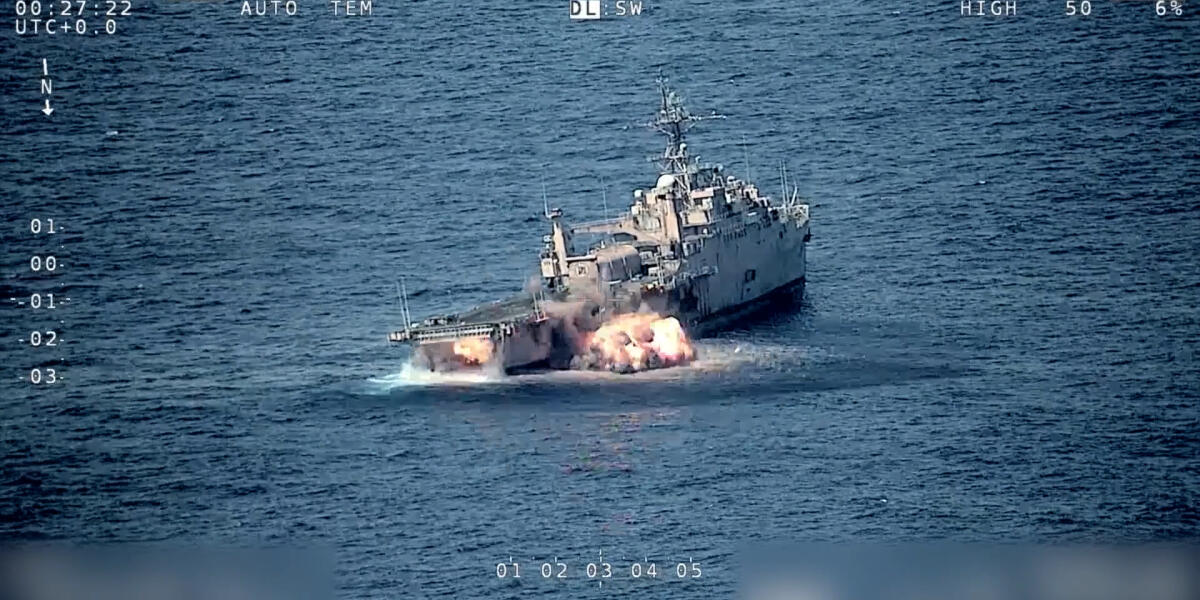
RNZAF P-8A Poseidon successfully launches Harpoon missiles
A Royal New Zealand Air Force (RNZAF) P-8A Poseidon has launched Harpoon missiles for the first time during an international exercise near Guam.
 www.nzdf.mil.nz
RetirementIsGood
Member
That article says "missiles, supplied by the Australian Defence Force" so we borrowed a couple.
Presumably ours have been ordered but not yet delivered, and we'll pay back the RAAF when ours arrive?
Presumably ours have been ordered but not yet delivered, and we'll pay back the RAAF when ours arrive?
recce.k1
Well-Known Member
Clip showing USN and RNZAF ground crews loading and positioning one of the missiles onto the aircraft pylon (credit: Guy Plopsky).

 x.com
x.com
Curious that the guidance fins are installed once the Harpoon is attached to the pylon, is it standard procedure to have it done this way? Just wondering about the extra time this takes when preparing the aircraft for a sortie (or was it for the benefit for the RNZAF crew to correctly demonstrate the procedure to the USN crew supervising perhaps)?
Curious also about the Harpoon model variant used, AGM-84J-1, which apparently was a designation for the pre-Block II development type?
Also Stuff feature a longer clip showing both missiles hitting the target vessel.
Guy Plopsky (@GuyPlopsky) on X
Royal New Zealand Air Force (RNZAF) personnel load an AGM-84J-1 Harpoon anti-ship missile onto a P-8A Poseidon multi-mission maritime aircraft, assigned to No. 5 Squadron, at Andersen Air Force Base, Guam, June 24, 2026, during exercise Valiant Shield 26. (/U.S. Air Force video by S…
Curious that the guidance fins are installed once the Harpoon is attached to the pylon, is it standard procedure to have it done this way? Just wondering about the extra time this takes when preparing the aircraft for a sortie (or was it for the benefit for the RNZAF crew to correctly demonstrate the procedure to the USN crew supervising perhaps)?
Curious also about the Harpoon model variant used, AGM-84J-1, which apparently was a designation for the pre-Block II development type?
Also Stuff feature a longer clip showing both missiles hitting the target vessel.
I hope Rnzaf doesn't buy Australian Harpoon missiles that Australia will soon be retiring they are old technology .We need missiles that alter there course and elevation in flight. Harpoon is sea skimming only. I have feeling NZ government will buy them saying short term solution and only small amount but know how that goes in NZ Defence force .
I couldn't care less if we purchase Harpoon, for the simple reason we dont have anything in our arsenal that gives us the ability to strike.I hope Rnzaf doesn't buy Australian Harpoon missiles that Australia will soon be retiring they are old technology .We need missiles that alter there course and elevation in flight. Harpoon is sea skimming only. I have feeling NZ government will buy them saying short term solution and only small amount but know how that goes in NZ Defence force .
recce.k1
Well-Known Member
Not so much that, more like LRASM (AFAIK) is yet to be declared operational by the US Navy for the P-8.Not there is no money just no will .
From what I understand the USN and RAAF will integrate LRASM into the P-8 as part of the Increment 3 Block 2 upgrade programme. Initial Operational Capability (IOC) for Inc 3Blk 2 was "only" declared in April.
Once the USN and RAAF reach Final Operational Capability (FOC), we can then start our Inc 3 Blk 2 upgrades in confidence (i.e. no risks + sign off from the US).
Which means in the meantime we will need an "interim" capability, like all other P-8 operators who continue to use Harpoon, and then to get up to speed on supporting a new (for us) weapon system. Which with thanks to the RAAF and USN (and interoperability) means we can do so a lot quicker than from scratch.
It appears we have so far only been lent a small number of Harpoons from the ADF mainly for proof of concept trials, so would it be better to wait a few years for LRASM to be supplied or also try and quickly acquire some Harpoons from existing allied stocks to provide a strike capability "now"?
recce.k1
Well-Known Member
Actually from what I understand the version of Harpoon that Australia has supplied us can "pop up".I hope Rnzaf doesn't buy Australian Harpoon missiles that Australia will soon be retiring they are old technology .We need missiles that alter there course and elevation in flight. Harpoon is sea skimming only. I have feeling NZ government will buy them saying short term solution and only small amount but know how that goes in NZ Defence force .
Kinda would have been interesting if one missile fired last week skimmed and the other popped up for compare and contrast purposes.
But no doubt there would have been a reason for them both to skim. Increased odds of hitting?
It's only new version that can adjust Australia doesn't hold. NZDF needs to move into the future at quicker pace . We hear that they have purchased the helicopters but nothing is signed . We have a Army that is equipped for war in 80s/90s . We need new equipment Air defence, Artillery,Drones , modernisation of armour vehicles, infrastructure.Navy needs nearly everything new ship's, weapons, infrastructure. Airforce weapons , more helicopters always to few , long range drones , and infrastructure.