Following recent testing failures, the director of the Missile Defense Agency told Congress today that he is committed to a full evaluation of the way forward for the nation’s ballistic missile defense system.
Navy Vice Adm. James Syring told members of the Senate Appropriations Committee’s defense subcommittee that the most recent flight test, conducted July 5, was intended to assess the ability of a ground-based interceptor to intercept a target in mid-course. Although the missile launched successfully, it failed to intercept its target, he added.
The payload — an upgraded Capability Enhancement-I exo-atmospheric kill vehicle — is designed to separate from the missile carrying it, Syring said.
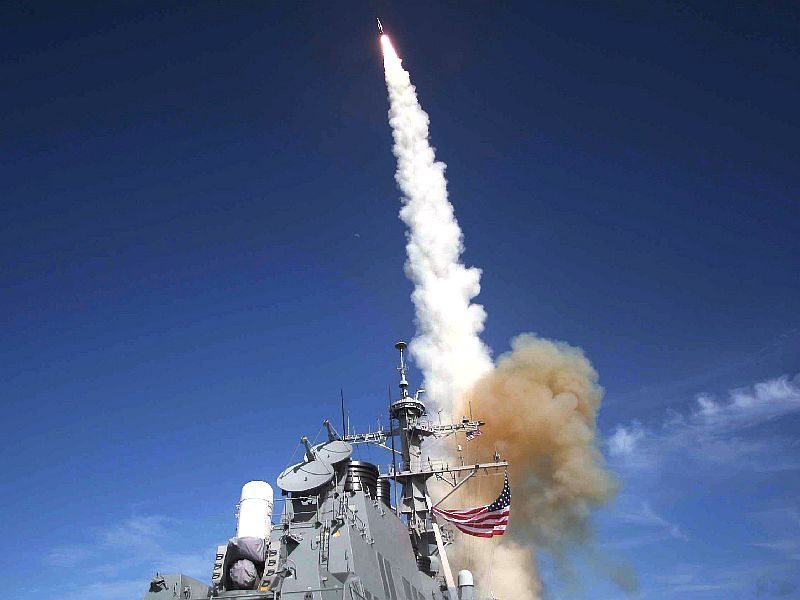
While the most recent test is considered a failure because the payload failed to separate, he said, it achieved secondary objectives, including demonstrations of the system’s sensors and the first use of an Aegis Ballistic Missile Defense system as a ground-based, midcourse defense launch-armed sensor.
The cause of the failure is still under review, Syring said, but he underscored his commitment to the program and noted that this was the first failure in four tests of this particular version of the kill vehicle.
“We’ve seen separation issues in previous flight tests, before the CE-I, earlier on in the prototype testing. And those have been corrected,” he told committee members. “We’ll find out what happened here, and we’ll correct this as well.
“I am committed to conducting a full evaluation of the path ahead for the [ground-based midcourse defense] program,” he continued, “to include more regular testing, an acceleration of the CE-II upgrades after intercept testing or redesign, and upgrade of the current [exo-atmospheric kill vehicle],” Syring said.
Regardless of the path the agency embarks upon, he said, it will aggressively attack any substantiated quality control problems coming out of the failure review board.
Future testing dates are still under consideration, Syring said, and could involve a repeat of the most recent test.
“What’s important is continued testing,” he noted. “And I’ve requested in the [fiscal year 2014] budget two intercept tests and at least one intercept test in subsequent years.”
Syring acknowledged that he couldn’t guarantee additional funding wouldn’t be necessary, but, he said, “the budget, as it’s currently structured, has adequate funding to complete the development of the CE-II, to test the CE-II [and] to complete the upgrades to the CE-I fleet.”
The admiral told the committee that while ground-based interceptor systems have been deployed before being fully developed, that decision was made with good reason.
“The GBIs currently fielded were fielded very quickly to meet a growing threat and that served a very good purpose,” he said. “It was always our intent … to incrementally improve the GBI system over time, and that’s what we’re doing.”
Syring said he remained confident that the interceptor fleet is ready to defend the nation, including from intercontinental ballistic missile attacks. “We have extensive model and simulation capability that projects the results of our conducted intercept testing into the longer range environment,” the admiral told the Senate panel.
Speed and distance is important, Syring noted, adding that he expects to have an ICBM target available in 2015 to use in testing. “Our models and simulations and ground testing … indicate that we would be successful,” he said.
In March, Defense Secretary Chuck Hagel ordered the operational fleet of ground-based interceptors increased from 30 to 44 by 2017. That decision assumes successful testing of the next-generation exo-atmospheric kill vehicle, the CE-II, Syring told the committee. And, he said, that the results of the most recent test review do not point to any problematic common components within the currently planned production ground-based interceptors.
Additional deployments of ground-based interceptor systems are under consideration, Syring said.
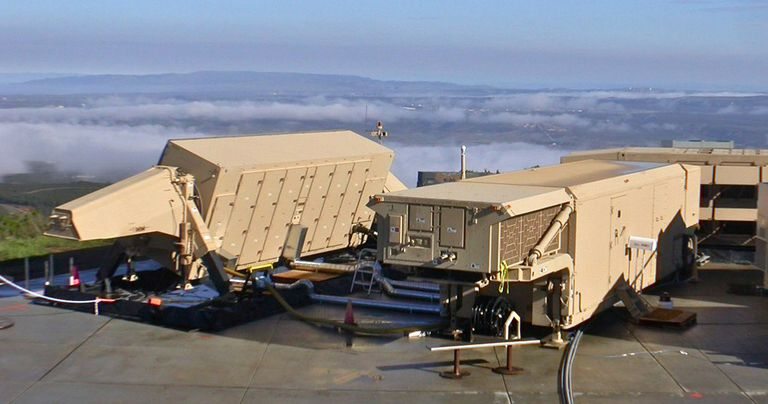
The agency is evaluating locations in the continental United States for possible future deployment sites, he said. It is also working with Japanese partners to deploy a second AN/TPY-2 anti-ballistic missile mobile radar system to Japan in order to provide more robust sensor coverage for homeland defense.
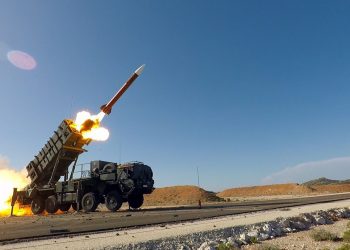
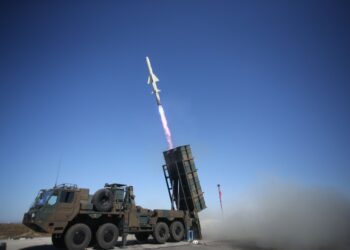
“We will continue to strengthen regional defenses with funding to operate and sustain command, control, battle management and communications and the TPY-2 radars at the fielded sites,” Syring said. “We will also deliver more interceptors for the terminal high- altitude aerial defense program and Aegis ballistic missile defense.”
As part of the European missile defense strategy in response to threats from Iran, Syring told the committee his agency will continue to fund upgrades to Phase 1 of the European Phased Adaptive Approach. The strategy, authorized by President Barack Obama in 2009, features a mix of sea- and land-based missile interceptors and sensor systems.
“This approach is based on an assessment of the Iranian missile threat, and a commitment to deploy technology that is proven, cost-effective, and adaptable to an evolving security environment,” according to a White House fact sheet released at the time.
The Missile Defense Agency also is on schedule to complete Aegis Ashore — the land-based component of the Aegis Ballistic Missile Defense System — in Romania by 2015 and in Poland by 2018, Syring said.