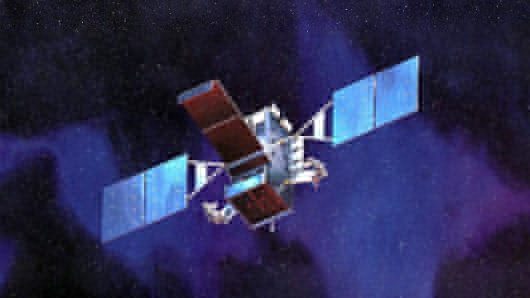
The U.S. Air Force and Lockheed Martin have delivered the second Geosynchronous Earth Orbit (GEO-2) Space Based Infrared System (SBIRS) spacecraft to Cape Canaveral Air Force Station, Fla., where it will be prepared for a March liftoff aboard a United Launch Alliance Atlas V rocket.
Featuring a mix of satellites in geosynchronous orbit, hosted payloads in highly elliptical earth (HEO) orbit, and ground hardware and software, the SBIRS program delivers resilient and improved missile warning capabilities for the nation while also providing significant contributions to the military’s missile defense, technical intelligence and battlespace awareness mission areas.
On January 11, GEO-2 was safely transported from Lockheed Martin’s Sunnyvale, Calif., facility to nearby Moffet Air Field. The 60th Air Mobility Wing of Travis Air Force Base, Calif., then loaded the satellite aboard a C-5 aircraft and successfully shipped the spacecraft to Cape Canaveral Air Force Station.
“We performed a disciplined integration and test campaign for GEO-2 and are now looking forward to successfully launching this spacecraft to ultimately help protect our nation and allies with unprecedented global, persistent infrared surveillance capabilities,” said Jeff Smith, vice president of Lockheed Martin’s Overhead Persistent Infrared (OPIR) mission area.
“As we continue to produce SBIRS assets, we expect to drive even greater efficiency into our operations to reduce costs for the government while still ensuring mission success.”
Prior to launch, engineers will complete post shipment testing, fuel the satellite’s propulsion system and encapsulate the spacecraft inside the launch vehicle’s payload fairing. The fairing will then be mated on top of the Atlas V launch vehicle for final integrated testing and closeout preparations for launch. Approximately 24 hours before launch, the Atlas V/SBIRS GEO-2 vehicle will roll to the launch pad for lift off.
Leveraging lessons learned from GEO-1, the SBIRS team was able to improve efficiency in the assembly, integration and test of GEO-2. From GEO-1 to GEO-2, the team reduced schedule time for similar activities by nearly 30 percent.
Lockheed Martin’s SBIRS contracts include four HEO payloads, four GEO satellites, and ground assets to receive, process, and disseminate the infrared mission data. The team has also begun initial work on the fifth and sixth GEO satellites. Two HEO payloads and GEO-1 have already launched into orbit.